

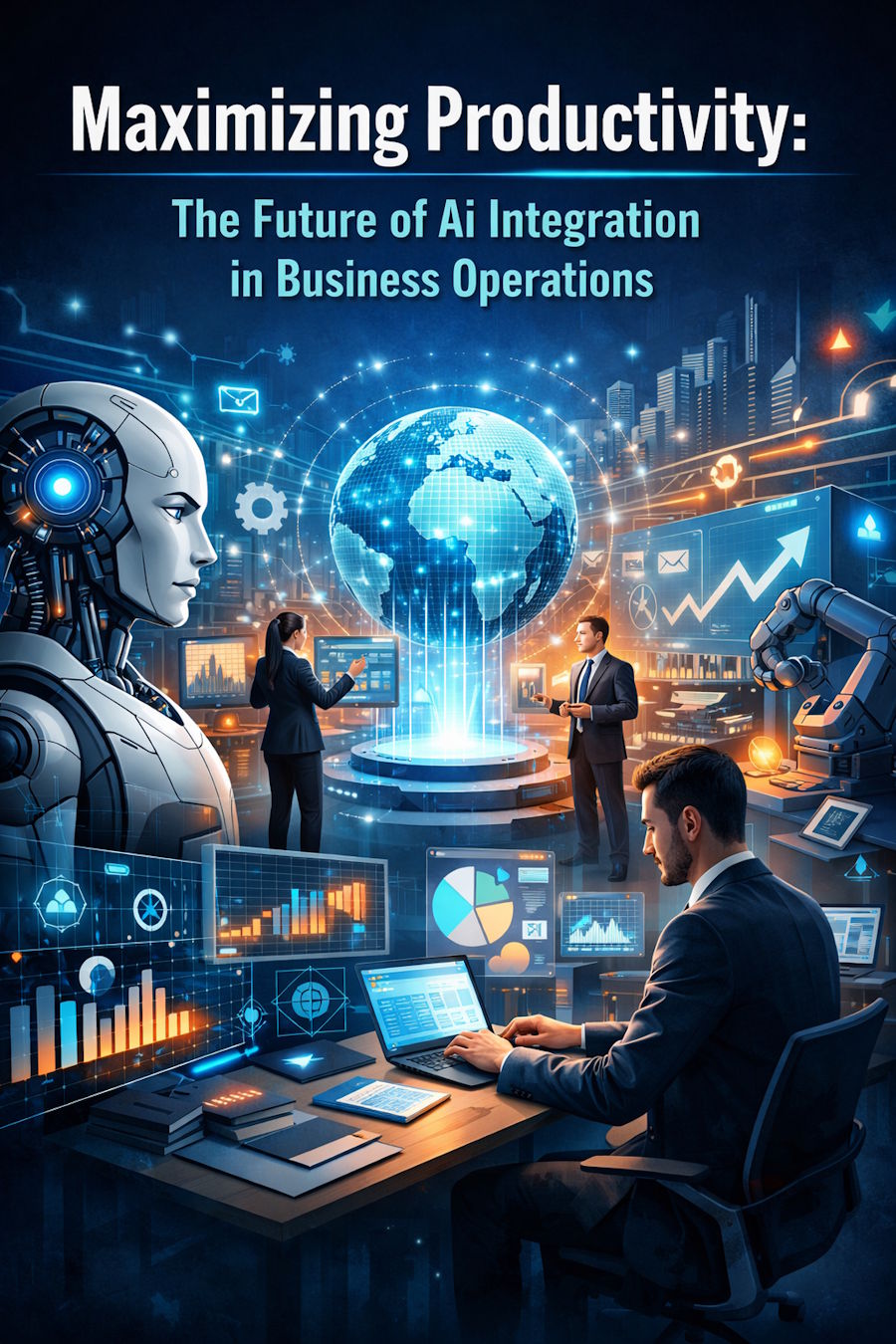
In the evolving landscape of business, the integration of Artificial Intelligence (AI) has emerged as a pivotal force capable of transforming operations and streamlining processes. From reducing repetitive tasks to offering advanced analytics for decision-making, AI is reshaping how businesses function. As companies strive for efficiency and agility, AI stands out as a key player in driving productivity. This article explores the potential of AI in redefining business practices, focusing on its role in innovation and its impact on various sectors. The journey into the future of AI integration in business operations promises insights into an era that embraces intelligence and automation.
The Role of AI in Modern Business
AI has swiftly become a cornerstone of modern business operations. In many industries, AI technologies are being used to enhance efficiency, improve accuracy, and filter through massive amounts of data. Businesses are leveraging AI for various purposes such as customer service, supply chain management, and marketing. By processing vast quantities of information, AI helps organizations gain insights that drive decision-making and strategic planning.
At the core of this transformation are machine learning algorithms and natural language processing systems. Machine learning enables systems to learn from data and make predictions or recommendations. Meanwhile, natural language processing provides the capability for machines to understand and respond to human language. Together, these technologies allow AI to perform complex tasks that were once exclusive to human intelligence.
Microsoft Business Support
Among the frontrunners in AI innovation is Microsoft, which is enhancing productivity through solutions such as Microsoft Copilot. This AI-driven tool is designed to assist businesses by automating administrative tasks, optimizing communications, and providing analytical insights. Microsoft copilot business support aims to streamline tasks and facilitate smoother operations across various departments, from HR to finance. By providing suggestions and enhancing collaboration tools, it nurtures an environment where teams can focus on strategic tasks while routine processes are efficiently managed.
This intelligent integration is not limited to automation; it extends to augmenting employee skills. With features that offer real-time data analysis and project management assistance, Microsoft Copilot allows employees to make informed decisions backed by solid data. Such capabilities exemplify how AI can act as a copilot for companies, guiding them through the intricate corridors of business operations with ease and precision.
AI in Customer Service
The integration of AI in customer service is revolutionizing how businesses interact with their customers. Chatbots and virtual assistants are now commonplace, providing 24/7 service and handling multiple queries simultaneously. These AI-powered tools can solve customer issues efficiently, allowing human agents to focus on more complicated problems.
The use of AI in customer service not only increases response time but also personalizes the experience. Automated systems analyze customer data to anticipate needs and tailor responses accordingly. This personalization is crucial in building rapport with customers and enhancing customer satisfaction. Furthermore, AI systems learn from every interaction, constantly improving and evolving to better meet the needs of consumers.
Optimizing Supply Chain Management
In the realm of supply chain management, AI technology is proving invaluable. Predictive analytics, powered by AI, enables businesses to foresee possible pitfalls and optimize logistics. Through data-driven insights, companies can make informed decisions regarding inventory management, transportation, and demand forecasting.
AI also enhances transparency and accountability within the supply chain. With the ability to track goods and monitor conditions in real-time, businesses can ensure quality is maintained throughout the supply chain. Moreover, AI integration reduces the likelihood of human error and increases efficiency. As a result, businesses can achieve cost savings while delivering superior service.
AI-Driven Marketing Strategies
Implementing AI in marketing strategies offers businesses a competitive edge. AI technologies analyze consumer behavior, enabling marketers to craft personalized campaigns that resonate with targeted audiences. This level of personalization can significantly increase engagement and conversion rates.
Furthermore, AI tools suggest optimal times for message delivery and provide insights into trending topics, allowing businesses to stay relevant. AI's capabilities extend to content creation, social media management, and even SEO, wherein AI algorithms help optimize content for search engines. This multifaceted approach enables businesses to reach their audience effectively and efficiently.
AI and Employee Experience
AI is also impacting the workplace, enhancing the employee experience. Workplace AI tools automate mundane tasks, freeing employees to focus on innovation and creativity. AI applications in HR, such as recruitment and employee training, streamline processes, reduce biases, and elevate the overall employee journey.
Moreover, AI systems can gauge employee sentiment and provide actionable insights to improve work environments. By analyzing feedback and trends, companies can proactively address concerns, fostering a transparent and inclusive culture. As AI continues to evolve, it promises to redefine the employee experience, making workplaces more engaging and productive. - iboysoft.com
AI in Financial Management
Financial management is another area where AI integration is making significant inroads. AI systems automate routine financial operations such as payroll, expense management, and reporting. The real-time data processing speeds up financial decisions and enhances accuracy.
Furthermore, AI-powered analytics deliver valuable insights into budget management and financial planning. Predictive modeling tools assess economic trends, helping businesses prepare for potential scenarios. With AI, companies have a robust tool to navigate complex financial landscapes, thereby reducing risks and improving profitability.
Ethical and Legal Considerations
As AI becomes increasingly integrated into business operations, ethical and legal considerations arise. Privacy concerns, data protection, and algorithmic biases are areas requiring careful attention. Businesses must ensure that AI systems operate transparently and ethically while complying with relevant regulations.
Implementing strategies such as regular audits and ethical guidelines can mitigate potential issues. Engaging with stakeholders and promoting transparency is crucial in maintaining trust. Businesses must balance innovation with integrity and accountability as they harness AI's power.
The Future of AI in Business
The future of AI in business is a landscape full of potential and innovation. As technology continues to advance, AI will become even more embedded in business functions, driving efficiency and enhancing capabilities. With solutions like copilot support, companies will be better positioned to maximize productivity and navigate complex market dynamics.
AI's evolution will likely bring forth new tools and applications, altering our conception of work and productivity. While challenges are inevitable, the benefits of AI integration promise a future where businesses work smarter, leveraging AI's power to reach new horizons of success.
Conclusion
The integration of AI in business operations marks a significant shift in how companies function. By leveraging AI's capabilities, businesses can achieve unprecedented levels of productivity, innovation, and customer satisfaction. As technology progresses, companies that embrace and adapt to AI-driven transformations will lead the charge into the future, reaping the rewards of efficiency and strategic foresight. Embracing AI not only enhances operational efficiency but also opens doors to novel opportunities, promising a future of growth and success in the ever-competitive business landscape.