

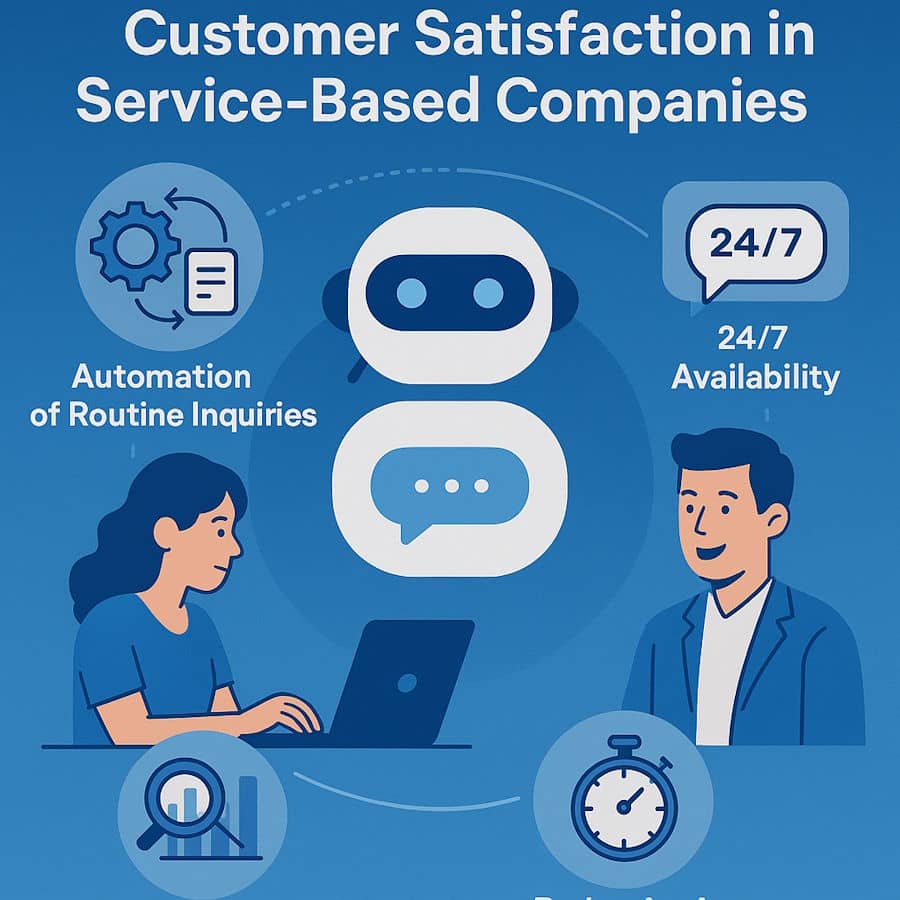
Companies in service industries now face increasing pressure to meet higher customer expectations. Customers demand faster responses, personalized solutions, and consistent support. AI agents help service-based companies deliver better experiences by improving how they respond, analyze, and connect with customers.
These intelligent tools allow teams to manage tasks more efficiently while maintaining a personal touch. As the article explores, automation, real-time insights, and continuous availability all contribute to stronger satisfaction and smoother service experiences.
Automation of routine customer inquiries for faster response times
AI agents make customer service faster by handling simple and repeated questions that often slow down help desks. Chatbots answer basic requests about hours, pricing, or account status within seconds. Customers spend less time waiting, and service teams can focus on more complex cases that need human attention.
Companies that use custom AI software development services tailor these systems to match their processes and customer needs. Well-designed automation tools understand common phrases, analyze intent, and deliver accurate replies across multiple channels. This approach keeps communication consistent and reduces the risk of error.
Automation does more than reply quickly. It collects useful data about customer behavior and frequent issues. Service managers can use this data to adjust workflows or improve training. As a result, response accuracy improves, and customers notice faster, more dependable support.
Real-time data analysis to personalize customer interactions
Real-time data helps service-based companies understand customer needs as they happen. AI agents can review messages, chat feedback, and purchase activity within seconds. This allows them to suggest accurate solutions or offers that match the customer’s situation.
By analyzing these interactions, AI detects patterns and preferences that guide future responses. For example, it might identify frequent service issues or note a customer’s preferred communication style. As a result, companies can adjust their support approach before problems grow.
Faster insights also help teams reduce delays in resolving customer issues. AI agents can pass precise context to human staff, which saves time and keeps conversations consistent. This process helps customers feel understood and valued throughout their experience.
As organizations expand their automation efforts, well-designed AI support workflows help AI agents resolve routine requests, gather the right context, and seamlessly escalate complex cases to human agents without disrupting the customer experience.
In addition, real-time data supports ongoing improvement. Each interaction adds new information, creating a cycle of learning that makes responses more accurate and personalized over time.
Building reliable AI agents also depends on strong technical foundations within a company’s development teams. Many customer support tools, especially mobile applications and backend services, rely on languages designed for scalability and clarity. Resources such as a Kotlin developer course can help developers deepen the skills needed to maintain and optimize these systems over time. By strengthening internal expertise, companies ensure their AI solutions remain adaptable, efficient, and aligned with evolving customer expectations.
24/7 availability through AI-powered chatbots
AI-powered chatbots allow customers to receive help at any time of day. They operate without the limits of business hours, which means users can get answers to basic questions or request support instantly. This constant access raises convenience and reduces frustration from waiting for a human agent.
Many customers prefer quick responses rather than waiting in a queue. Chatbots handle large volumes of queries at once, so response delays become shorter. As a result, companies can maintain smoother operations even during peak hours.
Furthermore, chatbots can manage simple requests while human staff focus on more complex issues. This balance creates a better service flow. It also leads to fewer missed inquiries and greater customer satisfaction.
By offering consistent availability, AI agents help build trust. Customers know help is always ready, and this dependability often improves their overall view of the company.
Reduction in resolution times improves customer experience
AI agents help service teams address customer inquiries faster by sorting and responding to common requests without delay. They process information instantly and provide consistent answers that reduce hold times. This direct approach allows customers to receive support almost as soon as they reach out.
Shorter wait times create a smoother experience and often raise satisfaction levels. Customers tend to appreciate quick and clear communication, which builds trust in the service provider. Therefore, faster resolutions not only solve problems but also leave a better impression of the company.
In addition, AI agents let human representatives focus on more complex issues that require personal attention. As a result, staff can deliver higher-quality help where it matters most. The combined effect of speed and accuracy improves efficiency and helps maintain positive relationships with clients.
Improved first-contact resolution rates via AI assistance
AI support tools help service teams solve customer issues during the first call or chat. These systems analyze each request and match it with the best answer available. As a result, customers receive faster replies and fewer follow-up interactions.
Smart routing features also direct each case to the right agent based on skill and topic. This approach reduces wait times and prevents customers from repeating details across channels. In turn, agents can resolve questions in one interaction rather than multiple touchpoints.
Real-time suggestions further improve first-contact results. AI monitors customer conversations and supplies instant guidance or next-step actions. This support helps agents make accurate responses that fix problems quickly.
Automated follow-ups and predictive tools add more value. They track cases, identify repeat issues, and help prevent future calls for the same concern. By handling simpler requests automatically and supporting complex ones with data, AI systems lift both efficiency and satisfaction rates.
Conclusion
AI agents have changed how service-based companies interact with customers. They help businesses respond faster, solve issues more accurately, and tailor support to individual needs. As a result, customers often feel more satisfied and valued.
These systems use real-time data to guide decisions and improve service efficiency. Companies gain practical insights that lead to better communication and more consistent service quality.
Adopting AI agents can also reduce waiting times and increase staff productivity. Employees can focus on complex requests while AI handles routine inquiries.
As technology advances, AI agents will likely play an even greater role in maintaining strong customer relationships. Their continued development supports smoother service operations and positive customer experiences.

