

According to Market Data, there are over 250,000 new websites and around 1,500 new Apple Store apps created every day. And for good reason.
For businesses, staying at the forefront of technology is key to reaping the benefits of innovations like AI, AR/VR, and others that can boost operational efficiency, improve customer experience, deliver superior performance, and optimize costs.
The challenge, however, is that many businesses are held back from scaling because they still have unstructured processes.
Left unmanaged, a lack of clarity and cohesion can result in a lot of negative consequences like budget overruns, poor code quality, security risks, insufficient resource allocation, and reputational damage.
This is why businesses turn to providers of software development services. With a structured process, it's easier and faster to leverage emerging technologies for business success.
That’s what we talk about in this blog post.
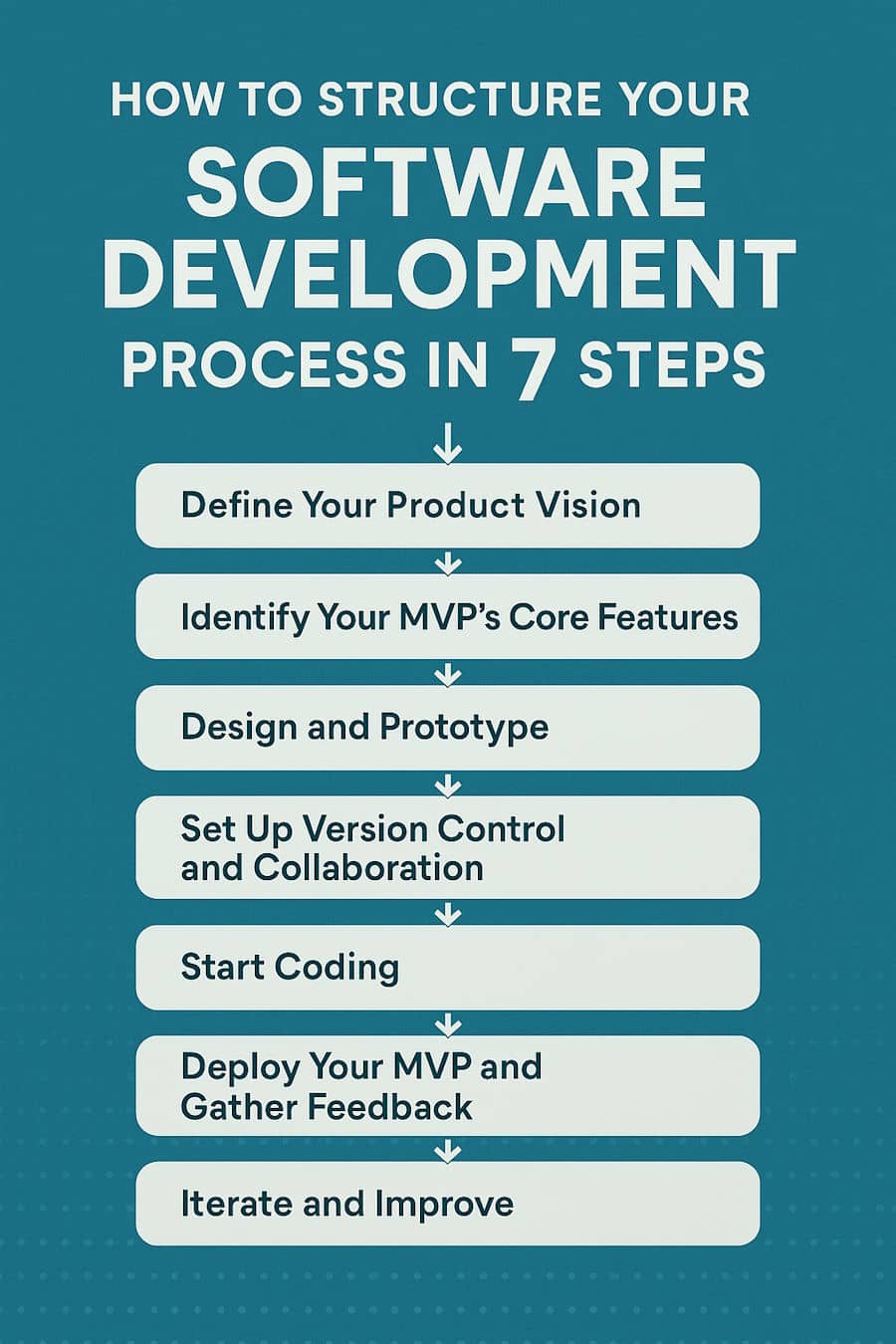
7 Steps to a Structured Software Development
Ad-hoc processes cannot deliver what expert providers of software development services can: speed, quality, and scalability. With a structured process, you can reduce risks and costs.
Here are seven steps to follow.
1. Define Your Product Vision and Audience
Every great software product starts with an idea. At this stage, you need to have a clear product vision and strong knowledge of your target audience. This makes sure that your process is aligned with what you're building, who it's for, and why it's important.
To start, define your problem statement and user personas. Also conduct market and competitor research to gauge how saturated your niche is and identify your differentiators. And as early as this stage, establish success metrics so you can evaluate your MVP.
2. Identify Your MVP's Core Features
Next, it's time to start building your MVP. Your MVP is how you can validate whether:
- There's a need for your software product
- There's an audience who wants to buy your product
Now the question is, how do you identify the core features that your MVP must prioritize? Some helpful frameworks include:
- MoSCoW, or must-have, should-have, could-have, won’t-have, which can be effective for quick decision-making
- Kano Model, which aims to distinguish between bare minimums and features that truly deliver customer delight
- User story mapping, which visualizes how each feature you're thinking of including shapes the customer journey
Remember: the key thing is to keep your MVP lean but functional. It should work enough to solve a real problem and gather feedback, but it doesn't need to be as big yet.
3. Design and Prototype
Next, start with either your user design or your prototype. You can use wireframes to map out the user journey and set the key flows in your product until it all feels intuitive. Or you can go ahead and build an actual prototype to gather feedback early.
It is also during this phase that you should define your tech stack and architecture. Keep it simple, but make sure you have a solid foundation, which will help you scale later.
4. Set Up Version Control and Collaboration
A solid version control system is the secret to keeping your project stable, while also ensuring your team is aligned. That's why from day one, you need Git with its separate branches for features, development, and main releases to maintain quality and accountability.
There are also collaboration tools such as GitHub that are critical for tracking issues, managing updates, and documenting progress.
With proper DevOps, you can keep your codebase organized, maintainable, and ready to scale.
5. Start Coding
At this junction, you can begin actual development. Specialized software development company recommend working in agile sprints to ensure fast iterations, as you continually refine the core features that your MVP needs.
Test early, especially for individual functions, connected workflows, and usability. This is important to catching issues as soon as they crop up and addressing them promptly, so you can have a smoother path to launch.
6. Deploy Your MVP and Gather Feedback
Once the MVP is ready, get ready for a controlled launch. Gather a few beta testers to validate your MVP against real-world benchmarks and document their feedback. Also, use staging environments to spot issues before your product goes live.
Use the metrics you have initially established to assess success, such as user retention, feature usage, or activation. Track and monitor them to guide your next steps. And if you have the specialized skills required for it, focus on CI/CD systems to automate builds and updates, which can significantly reduce manual errors.
7. Iterate and Improve
Once you've crossed launch, your MVP transforms into something that should deliver continuous learning for your organization. Be proactive about monitoring and analyzing user feedback, performance data, and error reports to iterate and improve features and user experience.
From Prototype to Full-Scale Production
Following a structured process that starts with defining your project scope and ends with post-launch monitoring and support can ensure good outcomes for your software project. And when you partner with a trusted provider of software development services, you further equip your business with the leverage needed to scale and grow beyond your initial expectations.

