

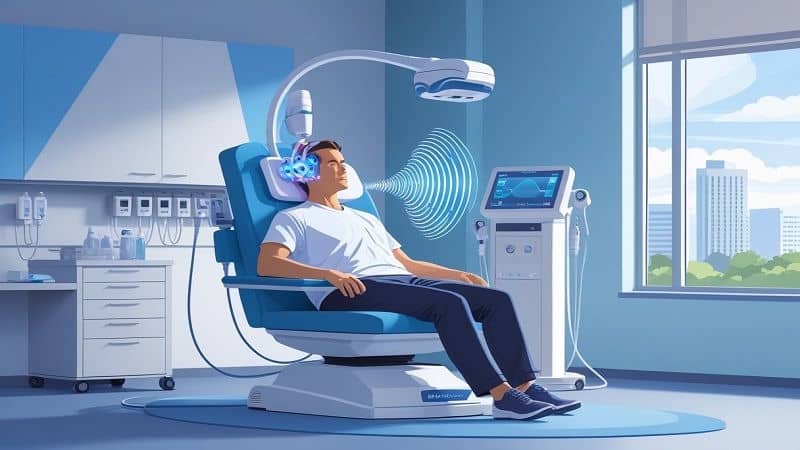
Living with obsessive-compulsive disorder can significantly impact daily functioning, relationships, and overall quality of life. Traditional treatment approaches like medication and therapy help many people, but some patients continue to experience persistent symptoms despite trying multiple interventions.
BrainsWay Deep Transcranial Magnetic Stimulation (dTMS) is an FDA-cleared treatment option for OCD that uses magnetic fields to stimulate specific brain regions, offering a non-invasive alternative for patients in Raleigh, NC who haven't found relief through conventional methods. The therapy received FDA clearance in August 2018 based on multicenter clinical studies demonstrating its effectiveness.
This treatment uses specialized H7 coils to reach deeper brain structures associated with OCD symptoms. Several clinics in the Raleigh area now provide this therapy, making it accessible to local residents seeking alternatives to medication-only approaches or looking to enhance their current treatment plan.
BrainsWay dTMS: FDA-Cleared Therapy for OCD in Raleigh, NC
BrainsWay's Deep TMS system received FDA clearance in 2018 specifically for treating obsessive-compulsive disorder, offering adult patients in Raleigh access to an evidence-based, noninvasive intervention. This TMS device uses specialized technology to reach deeper brain regions associated with OCD symptoms, providing an option for those seeking alternatives to traditional treatments.
How Deep TMS Targets Obsessive-Compulsive Disorder
Deep TMS utilizes the H7-coil, a specialized component designed to stimulate neural pathways linked to obsessive-compulsive disorder. The coil generates magnetic pulses that penetrate deeper into brain tissue compared to standard TMS devices, reaching areas like the anterior cingulate cortex and medial prefrontal cortex.
These brain regions play critical roles in the regulation of obsessive thoughts and compulsive behaviors. The magnetic pulses modulate neural activity in these structures, helping to normalize the overactive circuits characteristic of OCD.
Treatment sessions typically last 20-30 minutes. Adult patients remain awake during the procedure and can resume normal activities immediately afterward. The noninvasive nature of the TMS treatment means no anesthesia or sedation is required.
Benefits of BrainsWay dTMS for OCD
The FDA clearance for this mental health disorder treatment stemmed from clinical trials demonstrating significant symptom reduction. Patients often report decreased frequency and intensity of intrusive thoughts along with reduced urges to perform compulsive rituals.
Key advantages include:
- Non-systemic approach: No medication enters the bloodstream
- Outpatient convenience: Sessions fit into daily schedules without hospitalization
- Favorable tolerability: Most patients experience minimal side effects, typically limited to mild scalp discomfort
- Complementary option: Can be used alongside existing psychotherapy or medications
Many adult patients experience improved quality of life as OCD symptoms diminish. The ability to function at work, maintain relationships, and engage in daily activities often improves as treatment progresses.
Eligibility for dTMS Treatment
Candidates for BrainsWay dTMS typically include adults diagnosed with obsessive-compulsive disorder who have not achieved adequate relief from conventional treatments. A comprehensive psychiatric evaluation determines suitability for the TMS device.
Patients with metal implants in or near the head, such as cochlear implants or aneurysm clips, generally cannot receive treatment due to the magnetic field. Those with seizure disorders or certain neurological conditions require careful assessment.
Individuals currently receiving adequate benefit from medications or psychotherapy may not be immediate candidates. The FDA-cleared therapy is often considered when standard interventions have proven insufficient or intolerable.
Understanding TMS Therapy: Procedure, Effectiveness, and Comparison
TMS therapy uses magnetic pulses to stimulate underactive brain regions associated with mental health disorders, offering an FDA-cleared alternative when antidepressant medication treatment proves insufficient. The procedure is non-invasive and differs significantly from other brain stimulation methods in both application and side effect profile.
What to Expect During a TMS Session
A typical TMS session lasts between 20 to 40 minutes, during which patients remain awake and seated comfortably. The treatment uses a specialized device that delivers focused magnetic pulses to specific brain regions, particularly areas linked to major depressive disorder and OCD.
During the first session, clinicians determine the appropriate stimulation intensity by measuring the motor threshold. This calibration ensures the magnetic field reaches the correct depth and strength for therapeutic benefit.
Patients feel a tapping sensation on the scalp where the magnetic coil is positioned. The device produces a clicking sound with each pulse, so ear protection is typically provided.
Treatment typically requires:
- 5 sessions per week
- 4 to 6 weeks of treatment
- 20 to 30 total sessions for standard protocols
BrainsWay Deep TMS (dTMS) reaches broader and deeper brain structures compared to traditional transcranial magnetic stimulation, which can enhance effectiveness for treatment-resistant cases. Patients can resume normal activities immediately after each session, as the procedure requires no sedation or recovery time.
Safety and Potential Side Effects
Transcranial magnetic stimulation has demonstrated a favorable safety profile across multiple clinical studies. The most common side effects are mild and typically decrease after the first few sessions.
Common side effects include:
- Scalp discomfort or mild pain at the treatment site
- Headaches (usually responding to over-the-counter pain relievers)
- Tingling or twitching of facial muscles
- Lightheadedness
Serious adverse events are rare. Seizures occur in fewer than 0.1% of patients, making the risk comparable to that associated with antidepressant medication treatment. TMS is contraindicated for individuals with magnetic-sensitive metal implants in or near the head, such as cochlear implants or certain aneurysm clips.
The therapy does not cause cognitive impairment, memory loss, or systemic side effects often associated with medications. Patients with comorbid anxiety symptoms, anxious depression, or depressive episodes can safely receive treatment without increased risk.
Comparing TMS to Antidepressant and ECT Treatments
TMS occupies a distinct position between antidepressant medications and electroconvulsive therapy (ECT) in the treatment hierarchy for mental health disorders. Unlike medications, TMS produces no systemic side effects such as weight gain, sexual dysfunction, or gastrointestinal issues.
Response rates for TMS in major depressive disorder range from 50% to 60%, with remission rates of approximately 30% to 40%. BrainsWay dTMS has shown response rates up to 82% in some studies due to its ability to stimulate deeper brain structures.
ECT remains more effective for severe, treatment-resistant depression and bipolar disorder but requires anesthesia and carries risks of memory impairment. TMS provides a middle ground for patients who have not responded to medications but wish to avoid the cognitive effects and procedural requirements of ECT.
The FDA has cleared TMS for major depressive disorder, OCD, and smoking cessation. Research continues into applications for late-life depression, MS-related depression, and anxiety symptoms, expanding treatment options for various mental health conditions.

