

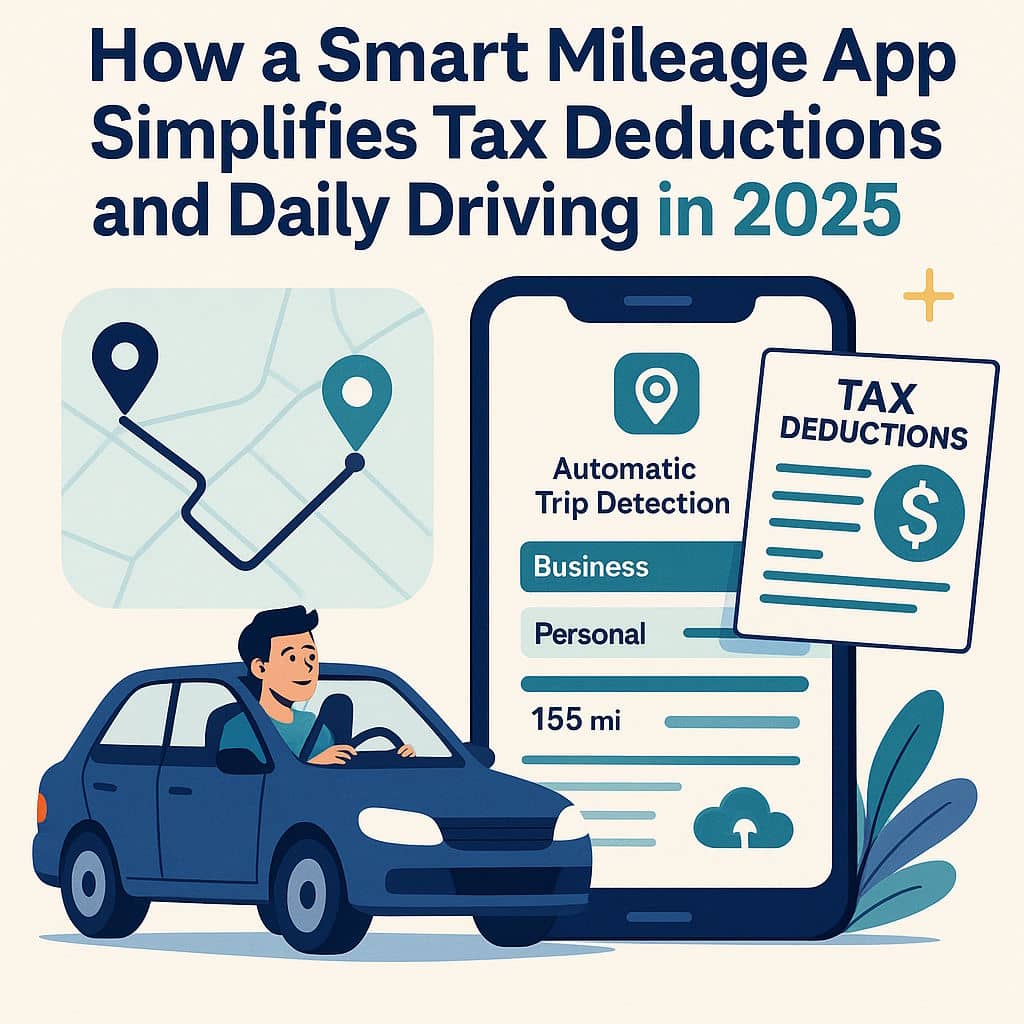
Managing mileage in 2025 has never been more important for freelancers, gig drivers, and business professionals. A modern mileage tracker app helps automate trip logging, increase tax deductions, and reduce time spent on manual tracking. With rising operating costs and stricter tax rules, accurate mileage tracking is now essential.
Why 2025 Demands Smarter Mileage Tracking
Tax regulations continue to tighten, and digital documentation has become the new standard. Many companies no longer accept handwritten logs due to inconsistencies, missing details, or errors. With tax agencies requiring precise, timestamped records, a mileage tracker app provides the reliability needed for compliant filings.
Why It Matters More This Year
- Stricter IRS mileage documentation requirements
- Increased gig economy driving
- Higher fuel and vehicle maintenance costs
- Employer demand for digital mileage logs
- Greater deduction opportunities for independent workers
What a Smart Mileage Tracker App Actually Does
A mileage tracker app automatically detects and records every trip using GPS. It categorizes drives as business or personal, stores data securely, and prepares ready-to-export reports. This eliminates the need for manual notes, spreadsheets, or guesswork.
Key Features You Can Expect
- Automatic trip detection
- GPS route mapping
- Swipe-to-classify trips
- Cloud-backed data storage
- Downloadable reports
- Business vs. personal trip separation
How Mileage Tracker Apps Increase Tax Deductions
Mileage deductions can significantly reduce taxable income for contractors, freelancers, employees, and gig drivers. However, deductions only apply when mileage is accurately documented. A mileage tracker app ensures every qualifying mile is counted.
How IRS Documentation Works
To qualify for a tax deduction, the IRS requires:
- Date of trip
- Starting location and destination
- Total miles driven
- Business purpose
- A consistent, accurate log
A mileage tracker app automatically stores all elements with GPS accuracy, making records audit-proof.
Saving Time With Automated Tracking
Manual tracking requires constant attention, repeated entries, and monthly calculations. Mileage tracker apps remove all of this by automatically detecting trips the moment a vehicle starts moving.
Benefits of Automation
- No forgotten trips
- No manual entry
- No handwritten errors
- Faster year-end tax preparation
- Real-time mileage overview
Who Benefits Most From Mileage Tracker Apps?
Any profession that involves driving for work can benefit from automated mileage tracking. For some jobs, the impact is enormous due to high annual mileage totals.
Common Professions Using Mileage Trackers
- Delivery drivers
- Rideshare drivers
- Freelancers and consultants
- Real estate agents
- Field technicians
- Sales representatives
- Medical and home-care professionals
- Small business owners managing several vehicles
Comparing Mileage Tracker Apps vs. Manual Logs
Manual logs create inconsistency, missing information, and lost deduction opportunities. A mileage tracker app solves these issues with automated, objective data.
Comparison Table
|
Feature |
Manual Logs |
Mileage Tracker App |
|
Accuracy |
Low |
High (GPS) |
|
Time required |
High |
Low |
|
Risk of errors |
High |
Very low |
|
IRS compliance |
Weak |
Strong |
|
Data storage |
Can be lost |
Cloud-backed |
|
Yearly savings |
Often reduced |
Maximized |
Daily Driving Becomes More Organized
Mileage tracker apps don’t only help with taxes; they also help drivers understand patterns, identify cost-saving opportunities, and manage vehicle use better.
Insights You Gain From Tracking
- Weekly and monthly business miles
- Total driving hours
- Personal vs. business distribution
- Estimated deduction value
- Route efficiency data
These insights are especially valuable for freelancers, delivery drivers, and people with dynamic schedules.
Features to Look For in a Smart Mileage Tracker App
Choosing the right mileage tracker impacts how easily drivers can manage taxes and business travel.
Critical Tracking Features
- Reliable automatic trip detection
- Accurate GPS routing
- Quick swipe classification
- Duplicate trip prevention
- Low battery usage
Reporting and Tax Tools
- IRS-ready reports
- Monthly summaries
- Yearly mileage archives
- CSV and PDF export options
- Expense-tracking integrations
User-Friendly Design
- Clean dashboard
- Fast trip review
- Easy access across devices
- Clear classification categories
How Mileage Tracker Apps Improve Business Reimbursements
Mileage reimbursements are only accurate when logs are accurate. A tracker ensures employees are reimbursed fairly, and employers maintain clean documentation.
Benefits for Employees
- Full compensation for miles driven
- No disputes over mileage estimates
- Seamless reporting at month-end
Benefits for Employers
- Standardized documentation
- Reduced risk of fraudulent mileage claims
- Consistent reimbursement records
Mileage Tracking for Gig Workers in 2025
Gig drivers see the highest financial benefits because they drive significantly more miles per year than the average worker.
Why Gig Drivers Depend on Mileage Trackers
- Constant short-distance trips
- Daily route changes
- Mixed personal and business use
- High yearly mileage
- Need for real-time profitability insights
A mileage tracker app gives gig workers a precise overview of daily net earnings after vehicle expenses.
Financial Impact of Using a Mileage Tracker App
Even small daily mileage amounts add up to major yearly savings.
Example Annual Savings Table
|
Weekly Miles |
Annual Miles |
Approx. Deduction Value |
|
60 miles |
3,120 miles |
Good yearly deduction |
|
150 miles |
7,800 miles |
High savings potential |
|
250 miles |
13,000 miles |
Very strong savings |
|
300+ miles |
15,600+ miles |
Maximum deduction opportunity |
|
Because the IRS rate is applied per mile, accurate tracking directly influences savings. |
Reducing Stress During Tax Season
One of the biggest advantages of mileage tracker apps is the removal of tax-time stress. Drivers no longer search for missing logs or try to recreate miles from memory.
How Apps Simplify Taxes
- Organized digital logs
- Clean, categorized records
- Export-ready reports
- No manual calculations
- Easy sharing with accountants
Choosing the Best App for Your Needs
The ideal mileage tracker depends on driving habits, profession, and documentation requirements. The best app should simplify, not complicate, daily work routines.
Factors to Evaluate
- Weekly driving volume
- Type of business travel
- Employer requirements
- Need for expense-tracking features
- Budget or subscription preferences
Final Thoughts
Mileage tracking is one of the simplest and most effective ways to reduce taxes and manage driving-related expenses in 2025. A mileage tracker app automates the entire process, from trip detection to preparing audit-ready reports. Whether someone is a freelancer, gig driver, or business professional, smart mileage tracking leads to better organization, increased savings, and greater financial clarity throughout the year.

