

Rewriting sentences is an essential skill for students, writers, and professionals. It enhances clarity, prevents plagiarism, and strengthens the overall quality of writing. Many beginners replace words without understanding the context properly, which leads to confusion. Developing effective rewriting techniques saves time and improves communication accuracy consistently.
This article provides 10 professional hacks for rewriting sentences effortlessly. These hacks focus on sentence structure, word choice, and clarity to create polished writing. We will also discuss common pitfalls to avoid when rewriting. Following these steps makes your content more readable and professional.
Easy-to-Follow Tips for Rewriting
1. Understand the Core Idea
Before rewriting, identify the sentence’s core idea clearly and accurately. Understanding the main point ensures that meaning is preserved during the rewriting process. Analyze whether the sentence is informative, persuasive, or descriptive in purpose. This awareness helps in transforming sentences without losing their essence.
Summarize the idea in your own words before changing the wording. Highlight key points to stay focused on the message. This prevents unnecessary distortions or awkward phrasing. When the core idea is clear, your rewritten sentences remain precise and natural.
2. Use an Authentic Tool
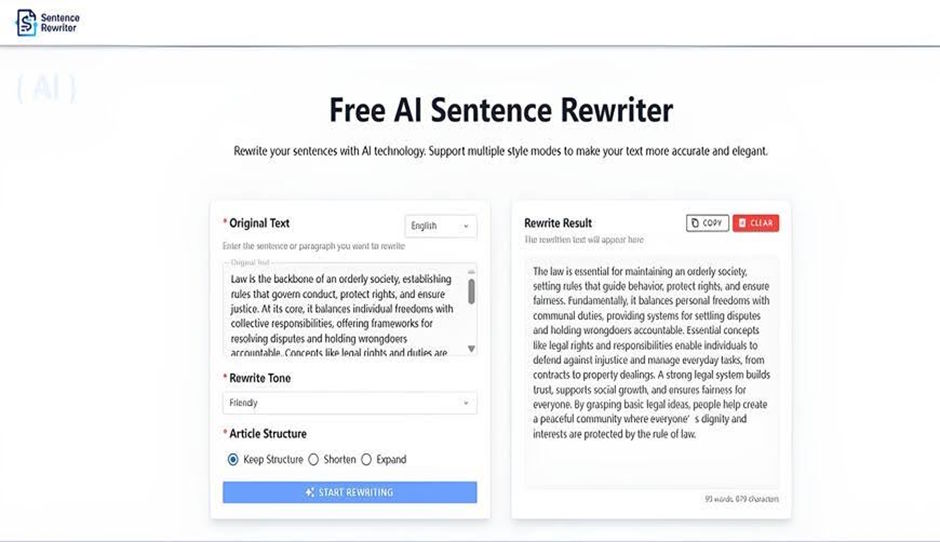
Sentence Rewriter is a highly effective tool that saves time and generates multiple sentence variations instantly. It produces grammatically correct alternatives, making complex sentences easy to rephrase. This tool ensures clarity while maintaining creativity and style. Choosing Sentence Rewriter guarantees accurate and efficient rewriting every time.
Always review suggestions to tailor them to your context and tone. The tool enhances your writing, supporting your natural style rather than replacing it. Exploring its options inspires new phrasing ideas effortlessly. For anyone seeking precise and professional rewriting, it is a reliable choice.
3. Use an AI humanizer
Stealth writer can also be used to rewrite sentences. It is an AI humanizer that converts the provided text into another word undetectable for AI. It is basically designed to bypass AI text detection but it can also be used for rewriting professionally. In its output you can get upto 10 rewriting drafts. So it is easy to select the sentences as you will have plenty of options. All the rewritten sentences are AI free, so your text will be considered more authentic and professional.
4. Use Synonyms Smartly
Synonyms can make your sentences sound fresh, but using them carelessly can alter meaning or create awkward phrasing. Here’s how to use synonyms effectively:
- Quick Find & Replace: Highlight repetitive words and look for suitable synonyms, but ensure they match the context.
- Choose Synonyms Wisely: Pick words that maintain tone, style, and meaning. “Happy” and “content,” for example, convey slightly different feelings.
- Stay Context-Aware: Some words may have multiple meanings, so confirm that the replacement fits the sentence.
- Make It Sound Real: Avoid overcomplicating sentences with rare or formal synonyms that may confuse readers.
Using synonyms smartly keeps your sentences engaging while preserving clarity and precision.
5. Change Sentence Structure
Altering sentence structure enhances variety and readability significantly. Switch from active to passive voice or rearrange clauses to emphasize different points. This approach prevents monotonous sentence patterns that bore the reader. Sentence restructuring allows you to highlight key ideas effectively.
Experiment with inverted phrases, questions, or exclamatory forms. Rearranging elements strategically improves emphasis and flow. Maintain the original meaning while modifying style naturally. Structured sentences contribute to a more dynamic and polished writing style.
6. Break Long Sentences
Long sentences often confuse readers and reduce clarity considerably. Breaking them into smaller, manageable segments improves readability. Each segment should communicate a single, clear idea independently. Shorter sentences make content more digestible and easier to follow.
Analyze sentences with multiple clauses or ideas and divide them logically. Ensure each new sentence flows naturally into the next. This technique improves comprehension and highlights key points effectively. Breaking sentences also enhances pacing for smoother reading.
7. Combine Simple Sentences
Combining short, related sentences can improve coherence and rhythm. Simple sentences often feel choppy when placed consecutively. Joining them creates smoother transitions and avoids abrupt breaks in writing. It also allows for more nuanced expression of connected ideas.
For example, “She loves painting. She spends hours in her studio” can be combined. The revised sentence reads: “She loves painting and spends hours in her studio.” This method balances sentence length while maintaining clarity and natural flow.
8. Trip Out the Fluff
Eliminating unnecessary words, or “fluff,” make your sentences concise and professional. Here are key strategies:
- Trim Excess Adverbs: Words like “very,” “really,” or “extremely” often add little value and can be removed.
- Don’t Repeat Terms: Avoid repeating the same idea in multiple words; one clear expression is enough.
- Let AI Cut Fluff: Many writing tools can identify filler words, helping streamline your sentences.
Trimming fluff strengthens your writing, makes it more precise, and ensures your message is communicated efficiently.
9. Add Sensory Language
Incorporating sensory details makes sentences vivid and engaging. Words that appeal to sight, sound, touch, taste, or smell enhance reader experience. Sensory language transforms ordinary descriptions into memorable imagery. This technique captures attention and communicates ideas more effectively.
For example, “The cake was good” becomes “The cake smelled of rich chocolate and tasted delightfully sweet.” Sensory elements immerse the reader in the scene. Adding these details elevates sentence quality and creates stronger connections with the audience.
10. Read Aloud for Flow
Reading sentences aloud is a simple way to check rhythm and clarity. Hearing your words helps identify awkward phrasing, repetition, or unclear ideas. It also ensures that transitions between sentences sound natural. Reading aloud improves overall flow and reader engagement significantly.
Pause and adjust sentences that feel clunky or unnatural. This technique is particularly useful for spoken content like presentations. Sentences rewritten this way are easier to understand and more enjoyable to read. Reading aloud ensures polished, professional writing consistently.
Practice Regularly
Rewriting sentences is a skill that improves with consistent practice. Dedicate time each day to rewriting paragraphs from articles, books, or personal content. Experiment with sentence structures, word choice, and clarity improvements. Regular practice develops intuition for effective phrasing and style.
Over time, rewriting becomes second nature and more efficient. Practicing consistently strengthens understanding of grammar, tone, and readability. This habit enhances writing across all formats and purposes. Mastery comes from repetition and deliberate refinement of skills.
Leverage AI Tools for Efficiency
Modern content creation often involves more than just writing; it includes supporting visuals, charts, or illustrations. AI tools simplify these tasks, allowing writers to focus on content quality. AIVector is one such tool that converts PNG images to SVG instantly, helping creators prepare visuals efficiently. This reduces manual work while maintaining professional results.
Integrating AI tools into your workflow improves productivity and minimizes repetitive tasks. Just as a sentence rewriter improves text editing, AI Vector streamlines visual preparation quickly and accurately. Using AI allows more time to focus on creativity and refining content. Efficient workflows ensure higher-quality results consistently.
4 Pitfalls to Avoid in Rewriting
While rewriting sentences, there are common mistakes that can undermine your efforts:
- Don’t Limit Your View: Avoid changing only words; consider sentence structure, flow, and tone.
- Stop Over-Editing: Excessive rewriting can obscure the original meaning or make sentences sound unnatural.
- Don’t Lose the Message: Always preserve the core idea; clarity is more important than novelty.
- Don’t Use Stiff Phrases: Forced or overly formal phrases make sentences feel robotic. Keep language natural and reader-friendly.
Being mindful of these pitfalls ensures that your rewritten content is both polished and effective.
Closing Remarks
Rewriting sentences effectively combines creativity, clarity, and technical knowledge. Using these 10 professional hacks improves readability, style, and precision in your writing. Understanding the core idea, leveraging tools, adjusting structure, and trimming fluff all contribute to polished content.
Consistent practice and attention to pitfalls make rewriting effortless over time. By applying these methods, writers can produce engaging, professional, and accurate sentences. Mastering sentence rewriting is a valuable skill for students, writers, and content creators alike.

