

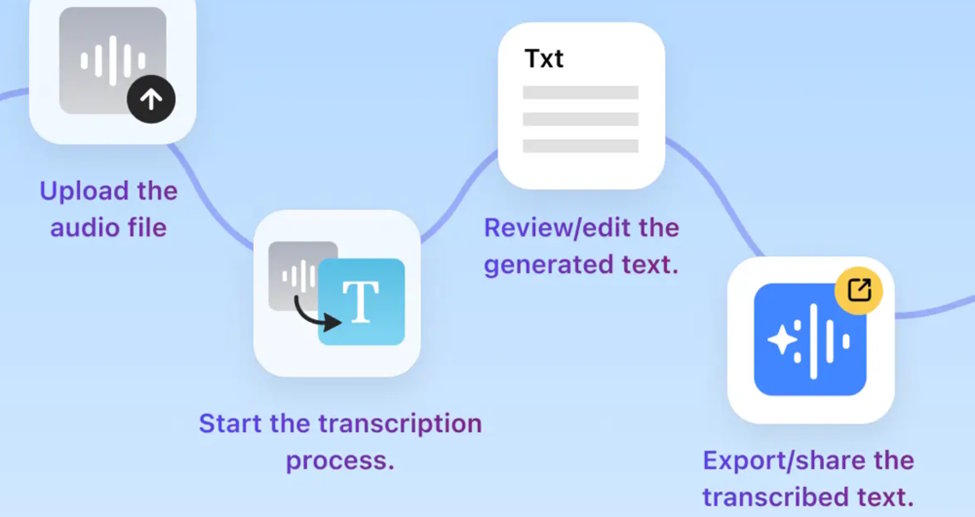
Audio has become a central part of how people communicate, learn, and create content. From business meetings and online lectures to podcasts and interviews, spoken information is captured every day. However, working directly with audio files is not always practical. This is why modern transcription tools are gaining popularity, as they help convert audio to text and turn recordings into usable written content.
As digital workflows evolve, the need to manage audio efficiently has increased. Transcription tools provide a simple way to organize information, improve accessibility, and save valuable time.
Why Audio Files Need a Text Based Alternative
Audio recordings are convenient to create, but they can be difficult to review later. Listening to long recordings just to locate one important detail often slows productivity. Text offers a faster and more flexible way to work with information.
Once audio is converted into text, users can scan content quickly, search for keywords, and highlight important sections. Written content can also be edited, shared, and stored more easily than audio files. This makes transcription a valuable step for anyone who regularly works with recorded material.
The Evolution of Transcription Technology
Not long ago, transcription was a manual process that required patience and accuracy. People had to listen carefully, pause frequently and type every word. This method was sluggish and frequently resulted in errors.
Today, AI-driven tools have changed the way transcription works. Modern systems understand natural speech, recognize accents, and process recordings efficiently. With just a few clicks, users can upload files and receive accurate transcripts in minutes. This has made it much easier to convert MP3 to text without advanced skills or additional effort.
Practical Advantages of Converting Audio into Text
Transcription offers several clear benefits that improve how people work with spoken content:
- Saves time by eliminating the need to replay recordings repeatedly
• Makes content searchable, allowing users to quickly find specific topics
• Improves organization, as text files are easier to store and manage
• Supports accessibility for people who prefer reading or have hearing difficulties
• Simplifies content reuse, making it easier to integrate transcripts into reports, presentations, or articles.
These advantages make transcription tools useful for both personal tasks and professional workflows.
What to Look for in a Reliable Transcription Tool
Choosing the right transcription tool involves more than just speed. Accuracy plays a major role, as clean transcripts reduce the need for manual corrections. A good tool should also support common audio formats and handle different speaking styles.
Features such as speaker identification improve clarity in conversations involving multiple participants. Flexible export options allow users to download transcripts in formats that match their workflow. Security and privacy are also essential, especially when working with sensitive business or personal recordings.
Industries That Benefit from Audio to Text Conversion
Transcription tools are used across many fields. Businesses rely on them to document meetings, training sessions, and client calls. Written records improve communication and ensure that important decisions are documented.
In education, transcripts help students review lectures and support better learning outcomes. Journalists and researchers use transcription to analyze interviews efficiently. Content creators transform podcasts and voice recordings into blogs, articles, and social media content.
In each case, the ability to convert audio to text improves clarity and long-term usability.
Managing MP3 Files More Effectively
MP3 files are one of the most common formats for audio recordings. They are widely used for podcasts, interviews, and voice notes. While MP3 files are easy to store, extracting information from them can be difficult without transcripts.
Transcription tools allow users to convert MP3 to text quickly, turning recordings into readable documents. This makes it easier to review content, extract key points, and reuse information across different platforms. Written transcripts transform simple recordings into valuable resources.
Why Businesses Are Embracing Transcription Tools
Modern businesses generate a large amount of spoken content. Meetings, brainstorming sessions, and internal discussions often contain insights that need to be preserved. Transcription tools help ensure that these insights are captured accurately and consistently.
By automating transcription, teams reduce manual workload and improve efficiency. Employees can focus on strategic tasks instead of taking notes. Over time, this leads to better documentation, smoother collaboration, and improved decision-making.
Supporting Content Creation and Growth
For creators and marketers, transcription opens new opportunities. Audio recordings can be repurposed into written content, expanding reach and visibility. A single podcast episode can become multiple blog posts, summaries, or social media updates.
Text-based content also improves search performance and helps audiences engage in different ways. Transcription plays an important role in building scalable and consistent content strategies.
The Future of Audio Transcription
As AI technology continues to advance, transcription tools will become even more accurate and intelligent. Improvements in context recognition and noise handling will enhance transcription quality. Real-time transcription and deeper integrations with productivity tools are also expected.
The growing demand to convert audio to text reflects a shift toward smarter and more efficient information management.
Conclusion
Audio recordings hold valuable information, but their true value is realized when they are transformed into text. The best tools to convert audio to text and convert MP3 to text efficiently help users save time, improve accessibility, and work more effectively with their content.
From business documentation and education to content creation and research, transcription tools have become an essential part of modern workflows. By choosing reliable solutions, individuals and organizations can turn everyday recordings into meaningful, long-term resources.

