

Most videos start the same way: with a folder full of b-roll, talking-head clips, screen recordings, and half-formed ideas. What separates forgettable content from memorable content isn't the footage itself. It's the personality that emerges during editing: tone, timing, restraint, humor-the subtle decisions that feel human.
This is where AI is quietly changing the rules. Tools like Pippit are no longer just about speeding things up. With the rise of video agent, creators are beginning to teach AI how they think, how they joke, when they pause, and when they let a moment breathe. Editing is no longer just assembly. It is an interpretation.
This simple shift carries a lot of weight: instead of 'edit faster', AI is being asked to edit like them.
Editing as a personality engine, not a production step
Every brand already has a voice. Some of them are sharp and playful, some are calm and instructional; some rely on awkward silences, dry humor, or intentional minimalism. Traditional editing tools treated these traits as afterthoughts-something you layered on manually once the "real work" was done.
AI completely changes that sequence.
When editing becomes guided by patterns instead of presets, tone moves to the front of the process. The way clips get cut, the length of pauses, the use of zooms or stillness, and even what doesn't get included- all that means a sort of fingerprint for your editing.
That's why two creators can use the same footage and come up with radically different results. One video feels chaotic and high-energy. Another feels deliberate and confident. The difference is not from skill alone. It is in the intention.
Humour lives in timing, not in effects
Comedy in video editing has very little to do with filters or soundboards. It lives in restraint. A beat held half a second longer than expected. A cut that arrives late instead of early. A reaction shot that lingers just enough to feel uncomfortable.
Yet this is the subtlety of meaning that AI, trained merely on templates of sentence forms, misses. AI trained on examples picks it up.
It is a creative decision to know when not to edit
When creators start feeding past edits, preferred pacing, and tonal preferences into an editing workflow, the result feels less automated and more instinctive. Jokes land without explanation, punchlines don't need emphasis, and silences are a method rather than a mistake.
That's where AI stops being just software and turns into a junior editor that actually gets your sense of humor.
One of the most underappreciated editing skills is knowing when to leave something alone. Often, the best way to suck authenticity out of a video is to over-edit it. Constant cuts, heavy transitions, and overused effects scream insecurity, not professionalism.
Editing with intent prioritizes signal over noise
AI that knows restraint can learn patterns such as when creators consistently avoid cutting during emotional moments, or how often they allow raw clips to play uninterrupted. These decisions are invisible to viewers, but deeply felt.
This is how editing develops personality: through the incision of parts, but not through additions.
The difference between fast editing and meaningful editing
Speed does not, in and of itself, result in better content. It is often even the cause of duplication when it is done haphazardly. The strength of AI is not in its being fast at editing, but in its learning what it prefers.
A free AI video editor assembly has its uses, and it is when the creators choose how this efficiency is experienced that personality is introduced.
Should the transitions be invisible and expressive? Should the captions be playful and authoritative? Should the edit be chasing attention and inviting focus? These are editorial decisions rather than technical ones.
Instead, when AI editing is done through experience, it will act as a partner, rather than a substitute.
How Pippit makes raw video into branded video
However, before the AI begins to edit with personality, it requires a process that is conducive to experimentation. It is at the point where Pippit integrates well into the system, not to replace creativity but to enhance it.
Here's how authors translate intention into product through the Pippit's editing flow:
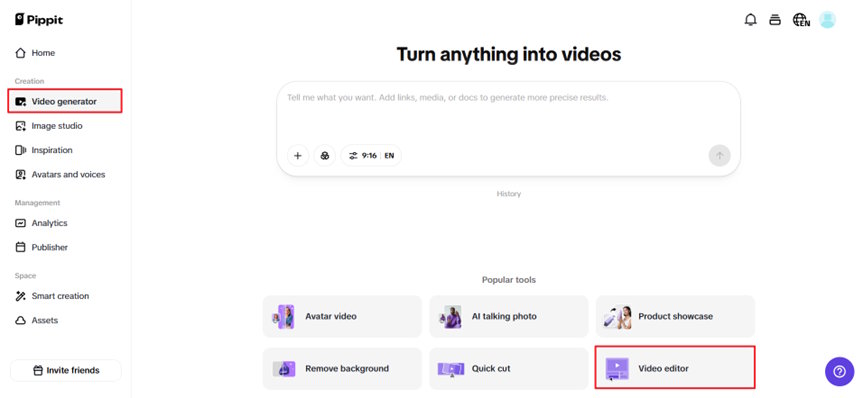
Step 1: Upload your footage
Start in the Video generator area of Pippit, adding your raw footage through Add media. This is where, no matter if it is b-roll, interviews, or screen recordings, you are working in a manner that easily allows you to have your media in one place without having to deal with technicalities. There is no editing being done here. This is where you are preparing to make a decision.
Step 2: Edit your video with AI features
With the footage ready, Pippit's AI-powered video editor is able to generate an initial edit by analyzing the structure and pacing of the visuals. The initial edit will take care of the timing and transitions as well as optimize the visuals to create a great foundation for editing. With a foundation ready, it is possible to work towards a creative approach that could include slower pacing or perhaps a split-screen design.
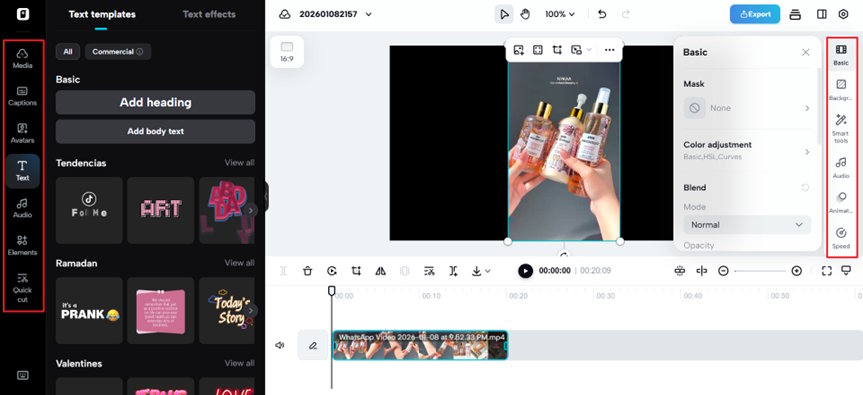
Step 3: Customize, export, and share
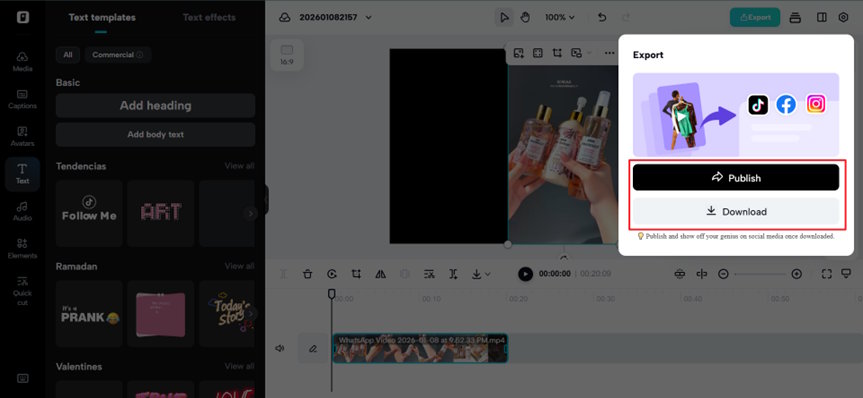
This is where intention becomes visible. Now is the time to adjust text placement, fine-tune scripts, and pull back on what feels too much. Smaller decisions at this stage will have a bigger impact than bigger ones. If the edit is something you would do yourself, export the edit and share it on all platforms with the confidence that the video now sounds, moves, and feels like you.
Visual consistency in a product builds trust faster than polish
Viewers will recognize familiarity before they will recognize quality. A visual style will make viewers feel comfortable, no matter what the production values are. Color, framing, background, and pacing are indicators of a brand long before a logo is seen.
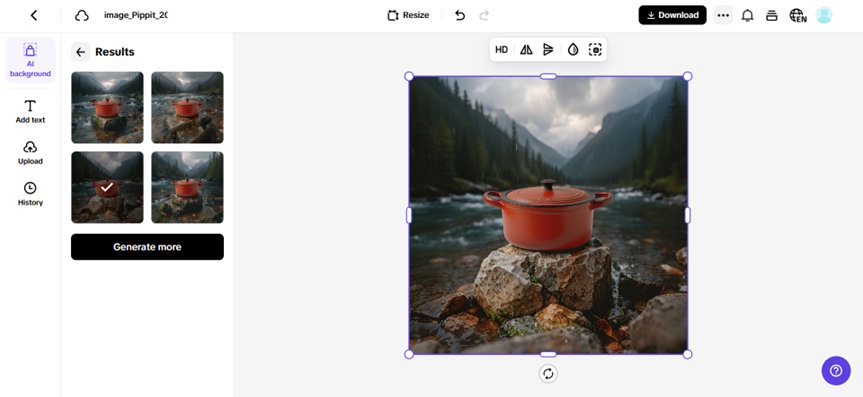
This is where the power of Pippit's AI background generator comes in; AI helps to facilitate the expression of personality instead of upstaging it. This way, backgrounds are no longer distractions and become context. Whether minimal, textured, and stylized, backgrounds become part of the rhythm of storytelling.
Because AI recognizes the image contexts to which a brand tone corresponds, each edit builds the brand identity rather than starting from scratch.
Teaching AI your instincts is the new creative edge
The future of editing: it has nothing to do with taking humans out of the process. It's taking the friction out of expression. As AI learns to understand how you think and not just what you click, editing becomes less technical and more like a conversation.
Those content creators who use AI as an imaginative assistant, and not as a shortcut, absolutely shine. Their videos seem deliberate. Their pace seems confident and deliberate. Their humor appears effortless.
The real voice of the brand emerges between the edits
A brand voice is not something that exists through slogans and colors. Its presence exists between words, within spaces that are allowed to be filled with pauses and through trusting that sometimes less is more.
With Pippit, creators aren't choosing between speed and soul anymore. They're teaching AI how to carry experience forward, one edit at a time.
If you're ready to stop editing like everyone else and start editing like yourself, let Pippit learn your voice and help you amplify it.

