

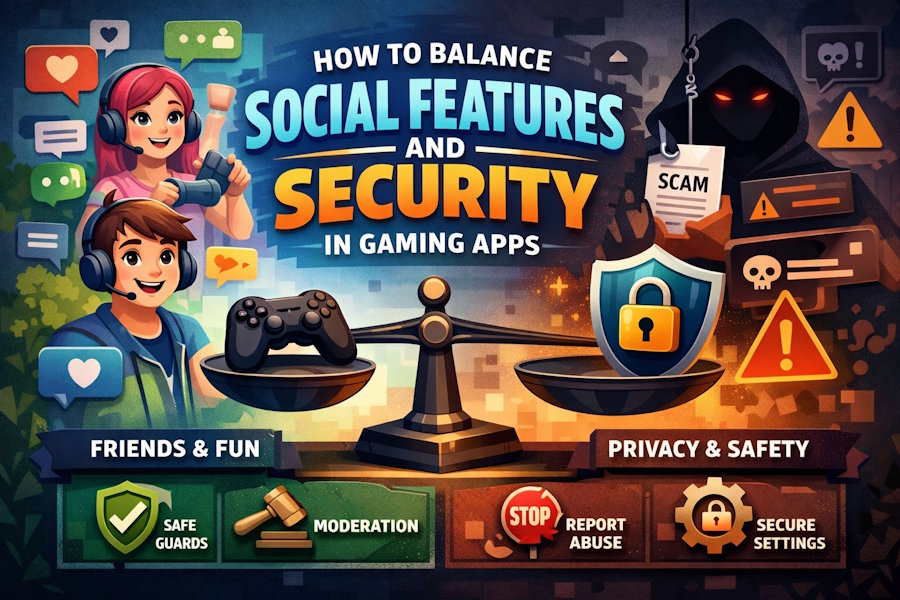
Think about your favorite game. What makes it fun? The characters, the loot? As important as those are, you know that’s not the whole reason why the game is so fun. What really makes these games what they are is the social features.
Finding a game you love is great, but playing that game with a friend? That takes it to a whole new level.
Social features have become the heart of modern gaming, and players absolutely love them. But as it is with everything, there are two sides to this. Yes, it’s fun to play with friends and be a part of the community, but it can also be risky. Every single chat window you open, and every friend request you accept, is a potential open door. Harassment, scams, data leaks, and even sexual abuse are all possible in these kinds of social spaces.
Naturally, this means that the developers have to figure out some way to make the game secure without removing the social features.
So, how’s that done?
Where Social Features Get Risky
Having a blast with your friends online doesn’t really seem like something that could get seriously problematic, but you have to realize that social features are not just another tool.
These are actual environments, and they can change how people act. In any space where people interact (especially being hidden behind avatars and screen names), those rules of polite society that they stick to in the real world sometimes disappear.
You’ve got the thrill of competition, and you’re 100% anonymous, which means it’s easy to forget where the line is. Keep in mind that this isn’t an excuse by any means, but it is the reason for many kinds of inappropriate behavior.
As far as the consequences go, they vary. It might be that you just annoy someone or get into an argument. However, they can also be extreme and, if you think that’s an overstatement, let’s just remember the Roblox sexual abuse lawsuits and how they are still a massive ongoing issue! Pretty serious, isn’t it?
So what should we do about this? You can’t simply remove those features because that would destroy the very thing that makes games engaging.
The real problem lies in design.
How to Keep the Games Fun While Making Them Safer
Players are aware of the risks, and so are developers. So, how do we build social spaces that are safe but that don’t kill the fun?
Let’s see.
Add Friction Where It Helps
Friction doesn’t always have to be bad; it can actually prevent a lot of harm if you know how to use it strategically. In short, this means that you could slow down actions people tend to abuse, like limiting how many DMs a new player can send or not giving them immediate access to open voice chat.
None of this will hurt the actual play, but there’s a chance that it will stop bad actors from making their move(s).
Add Layers to Social Access
New players shouldn’t have everything right away.
Social features can be like the levels you can unlock, so you start with nothing more than basic pings and team emotes. Then, after they’ve spent some time playing the game without causing issues, they can get access to text chat.
Voice and private chats should really be reserved only for the players who have confirmed their accounts and built good reputations.
Make Moderation Visible
In order to take moderation seriously, players have to see it in action and, more importantly, they have to see that bad behavior has consequences. It’s essential to make reporting easy and clear, but another essential thing is feedback.
In practice, this would mean that, when a player reports something, you let them know the report was received and explain what you’ll do to handle it.
If they see a toxic player suffer consequences, it will make the community standards much stronger.
Use Smart Defaults
Most people don’t bother to change their default settings, which is why it’s important that developers make the safest path the easiest one. Chat filters should be set to ‘Friendly’ by default, and voice chats should be ‘Friends Only’ from the start. Privacy settings should be designed to automatically protect younger players.
The result of this would be that the vast majority of players were protected from the start, and the ones who are more experienced could always tweak the settings further.
Conclusion
Normal people don’t log into games hoping to cause trouble, but then again, it’s not like it’s all normal people you see on there. The uncomfortable truth is that there’s absolutely no way to stop all the bad stuff from happening, so what’s the real goal here?
It’s simple. You want to build a place where the good stuff is so easy that nothing bad can take root.

