

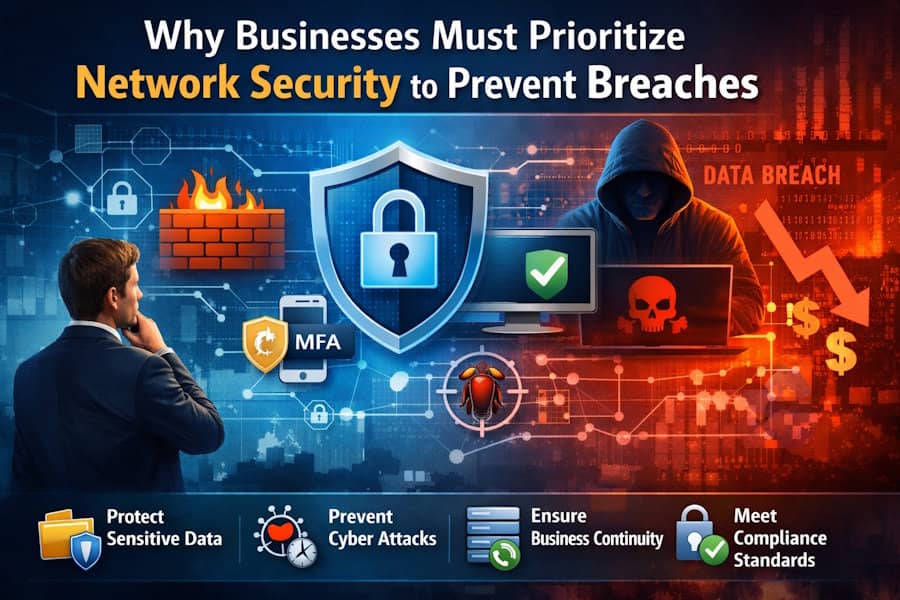
Cyber threats are rising fast, putting businesses at risk of serious harm. A single data breach can lead to financial loss, damaged trust, and leaked sensitive information. This blog will show you why network security matters and how to protect your business from cyber attacks.
Don’t wait for a problem; keep reading to stay ahead of the game!
Key Takeaways
- Data breaches cost an average of $4.88 million and can force 60% of small businesses to shut down within six months.
- Tools like encryption, firewalls, and antivirus software protect customer data and reduce risks from phishing or ransomware attacks.
- Human errors cause 82% of breaches; employee training on cybersecurity reduces these mistakes significantly.
- Strong network security prevents downtime, ensures smooth operations, and builds trust with customers.
- Meeting compliance standards like GDPR or PCI DSS avoids fines while keeping sensitive information safe.
Key Reasons to Prioritize Network Security
Hackers are getting smarter, and they crave your sensitive information. Losing customer trust or facing legal trouble can sink a business faster than you think.
Protecting sensitive data
Sensitive data like customer information, financial records, and trade secrets must stay secure. Cyber criminals target businesses to steal this valuable content. Losing such information can damage reputation and lead to huge expenses.
Encryption scrambles data, making it unreadable without a key. Multi-factor authentication (MFA) adds another layer of protection by requiring extra verification steps. Strict access controls prevent unauthorized users from viewing sensitive files.
Data Loss Prevention (DLP) systems detect leaks before they happen, safeguarding your databases against phishing scams or malicious software attacks.
Preventing financial losses
Cyberattacks can drain a business’s wallet faster than you think. The average cost of a data breach hits $4.88 million, including recovery expenses and legal fees. Small businesses take the hardest hit; 60% shut down within six months after an attack.
Ransomware attacks are another financial black hole. Hackers lock your systems and demand payment to release them. Without strong security measures like firewalls or antivirus software, these scenarios escalate quickly.
Regular updates, multi-factor authentication, and risk management tools reduce costs tied to downtime, IT support, or compliance failures. Spending on network security is not just protection; it saves money in the long run.
Maintaining reputation and customer trust
Security breaches crush trust fast. In 2013, Target faced a breach that exposed 40 million card accounts. The fallout hit their reputation hard and caused major financial losses. Customers felt betrayed, while investors lost confidence.
Strong cybersecurity shows customers you value their privacy. It protects sensitive data like credit cards or personal details from threat actors and phishing attacks. This builds loyalty over time, giving businesses an edge in competitive markets.
Meeting compliance requirements like GDPR also keeps fines at bay and protects your name. Next comes ensuring uninterrupted business operations to stay ahead in the game!
Ensuring business continuity
Cybersecurity breaches can halt business operations in their tracks. Regular data backups and disaster recovery plans keep things moving during an attack. Managed Service Providers (MSPs) offer 24/7 monitoring and quick backup restoration to reduce downtime.
Remote work adds more risks with mobile devices accessing sensitive information. Strong network security, like firewalls and multi-factor authentication, blocks cybercriminals from causing disruptions.
Cloud services also help by allowing safe access to company data wherever needed, ensuring smooth operations even in a crisis.
Meeting regulatory compliance
Failing to follow compliance requirements can bring fines, lawsuits, and damaged reputations. Laws like PCI DSS and SOX demand strict protection for sensitive information. Businesses in healthcare, finance, and other sectors face stricter rules to keep customer data safe.
Using tools like firewalls, encryption, and antivirus software helps meet these legal standards. Security updates protect systems from threats that could lead to breaches or penalties.
Strong cyber hygiene shows commitment to privacy while building trust with customers. Proactively securing networks also reduces risks tied to phishing emails or malicious websites.
Strategies to Strengthen Network Security
Strong network security starts with smart steps to protect your systems. Simple actions, like blocking fake websites or using encrypted tools, can stop cyber threats cold.
Implementing robust encryption and firewalls
Encryption scrambles data, making it unreadable to cybercriminals. This protects sensitive information like customer data and intellectual property from falling into the wrong hands.
A Virtual Private Network (VPN) also helps secure remote work by encrypting internet connections. Banks use encryption daily to shield millions of online transactions.
Firewalls act as gatekeepers for your network. They block viruses, trojans, spyware, and other threats trying to infiltrate your system through external networks or fake websites. Managed security services often include advanced firewalls with intrusion detection systems (IDS).
These tools monitor traffic for fishy behavior, preventing breaches before they cause chaos.
Regularly updating software and systems
Firewalls and encryption guard the entry. Yet, outdated systems act like unlocked back doors for cyber risks. Hackers exploit vulnerabilities in old software quickly. Software updates and patches close these gaps before attackers strike.
Skipping updates invites worms, viruses, and costly data breaches. Regularly updating antivirus software boosts data protection against new threats. Managed Service Providers (MSPs) can automate updates for better risk management too.
Proactively keeping systems current slashes breach chances by a wide margin over time.
Conducting employee cybersecurity training
Training employees on cybersecurity stops most cyber attacks. Human errors cause 82% of breaches, so teaching staff is key. Workers often fall for phishing emails or social engineering tricks.
Training helps them spot these traps and act smarter.
Investing in employee training programs can help cultivate essential cybersecurity skills within your organization.
Regular sessions teach strong passwords and safe web browser habits. Employees learn to avoid clicking unknown links or sharing sensitive information carelessly. Smart policies reduce insider threats by promoting careful data handling.
This boosts compliance with rules and protects customer trust.
Proper training works best when paired with updated firewalls and software tools, which leads to the next step in network defense strategies.
Benefits of Strong Network Security
Strong network security keeps hackers at bay and protects your business. It helps you stay on top, even when cyber threats try to pull the rug out from under you.
Reduced risk of cyberattacks
Cyberattacks like malware, phishing, and ransomware hit businesses hard. Small and medium businesses face a 350% higher risk of phishing attacks than larger companies. Network security tools such as firewall software, antivirus programs, and intrusion detection systems block these threats.
Proactive threat detection identifies weak spots before hackers can strike.
Zero Trust Architecture limits access by verifying users and devices constantly. This stops unauthorized entry into networks or theft of sensitive information. Regular audits cut exposure to data breaches further.
By reducing risks from cyber attacks, businesses stay efficient and resilient in daily operations.
Enhanced business resilience and operational efficiency
Strong network security keeps businesses running smoothly. It reduces downtime by stopping cyber attacks before they cause harm. Companies with security measures like antivirus software and data backup recover faster from issues.
This means less time fixing problems and more time focusing on growth.
Cloud computing boosts efficiency, too. It allows employees to access files safely, even during remote work. Managed Service Providers offer tools like 24/7 system monitoring to spot risks early.
These strategies cut costs and prevent disruptions, making operations more reliable every day.
Conclusion
Protecting your network is not just smart, it’s necessary. Cyber threats are rising fast and can hurt businesses in many ways. From data breaches to losing customer trust, the risks are too high to ignore.
By focusing on strong security tools like firewalls and training employees, companies can stay one step ahead of hackers. Secure networks mean safer data, smoother operations, and happier customers!

