

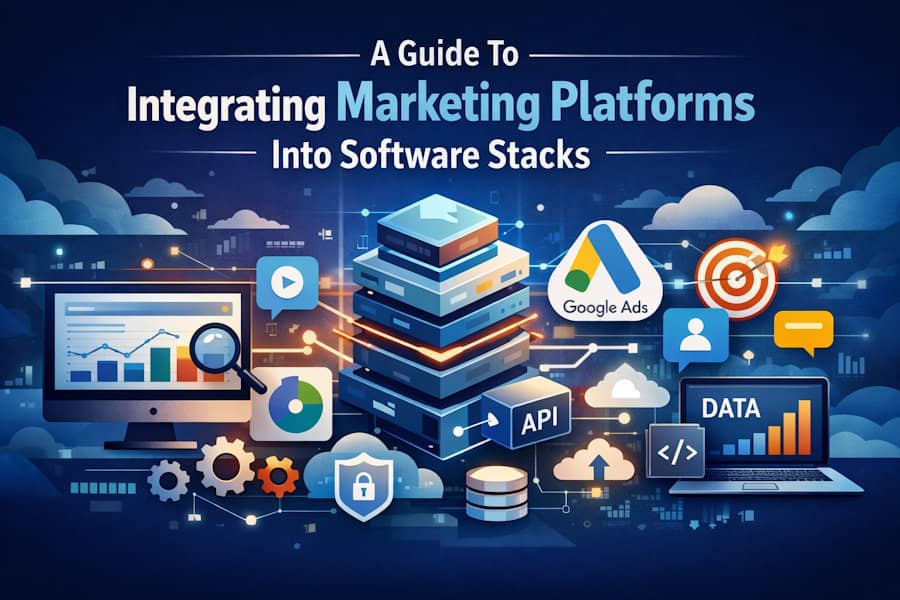
These days, every business needs a solid software stack it can rely on. Software can be used in all areas of the business, but it is not always obvious how to build a stack that will simplify daily operations and support growth. Modern software stacks do not operate in isolation and can connect with external platforms that can help in many ways. Marketing platforms are a great example of this as they can support growth, analytics, and user acquisition. Keep reading to discover why marketing platforms matter, common integration challenges, advice on integrating Google Ads, and other key considerations.
Why Marketing Platforms Are Important
Marketing platforms are hugely valuable for developers as systems that can create valuable data to improve processes and decision-making. Marketing platforms can provide information on user behavior, conversion rates, customer acquisition sources, and much more. This data can then be used to improve onboarding flows, craft better product descriptions, and help marketing teams better understand how users find and interact with a website/app. This is why it is wise to identify useful marketing platforms that can optimize marketing campaigns and enhance online visibility.
Common Integration Obstacles
While third-party marketing platforms can offer many benefits, there can be challenges when it comes to integration. Authentication, API rate limits, and data consistency can be common obstacles that developers need to navigate. It is helpful to determine what these challenges are so that a plan can be taken to overcome them.
Working With Google Ads
Google Ads is one of the most widely used platforms that engineers handle when supporting marketing initiatives. Google Ads can enable conversion tracking, data integration, and tag implementation. To ensure accurate tracking, it is wise for developers to partner with a specialist Google Ads agency. Agencies can optimize campaign setup with best practices, which can reduce common issues like incomplete data. An experienced Google Ads agency can develop a data-driven strategy that is aligned with your business goals, which will involve using competitor analysis, keyword research, audience targeting, budget planning, and much more.
Key Considerations
There are also a handful of considerations when it comes to integrating marketing platforms with internal systems. Most notably, you must make sure that tracking is compliant with data protection regulations and internal policies. Cybersecurity is another important consideration, which means API keys and access tokens must be handled securely to prevent unauthorized access and data leakage.
Integrating marketing platforms into a software stack is smart and can offer many benefits. In addition to optimizing marketing campaigns and improving online visibility (which is key to success in the modern era), marketing platforms can provide valuable data that supports product/service developments and overall business strategy. For developers, there are a number of challenges and key considerations when integrating marketing platforms into a software stack. It is important to anticipate these challenges and obstacles to ensure cleaner architecture, resilience, and enhanced data quality. This often requires a collaboration between developers, platform specialists, and product teams.

