

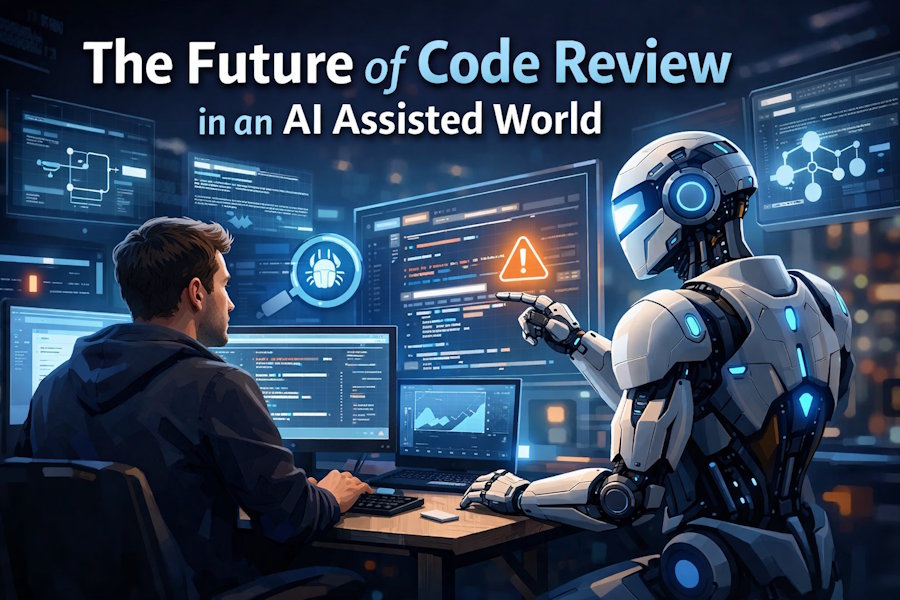
Code review has always been part of good software development.
It helps catch bugs, improve readability, and share knowledge across teams. But as software systems grow larger and teams move faster, traditional code review methods are starting to show their limits.
Developers are under pressure to ship quickly. Reviewers are stretched thin. Important details slip through simply because there is too much to look at.
This is where AI assisted code review is beginning to change the landscape.
Why Traditional Code Review Is Struggling
Manual code review relies heavily on human attention.
Reviewers scan changes, leave comments, and approve work based on experience and time available. When deadlines are tight, reviews become shallow.
This is not because developers do not care. It is because scale has outgrown the process.
The Cost of Missed Issues
When issues slip through review, they show up later.
Bugs appear in testing or production. Debugging takes longer. Context is lost. Fixes become more expensive.
The cost is not just time. It affects trust, morale, and delivery confidence.
What AI Brings to Code Review
AI assisted code review does not read code the same way humans do.
Instead of focusing only on syntax or style, AI looks at patterns. It compares changes against history. It notices unusual behavior or risky changes that humans might overlook.
This adds a new layer of insight to the review process.
From Reactive to Proactive Review
Traditional review is reactive.
Problems are found after code is written. AI shifts review earlier by flagging potential risks while changes are being made.
This allows developers to fix issues before they become bugs.
Supporting Reviewers Without Replacing Them
AI is not meant to replace human reviewers.
It supports them by reducing noise and highlighting what matters most. Reviewers can focus on design and logic instead of scanning for every possible issue.
This improves review quality without slowing teams down.
Consistency Across Teams and Codebases
Human review quality varies.
Different reviewers notice different things. AI brings consistency by applying the same analysis to every change.
This is especially useful for large or distributed teams.
Understanding Developer Activity Patterns
Code issues often relate to how work happens.
Late changes, rushed commits, or frequent rewrites can signal risk. AI tools that analyze activity patterns help teams understand where problems may arise.
This adds valuable context to code review.
Visibility Without Micromanagement
Teams need visibility, not surveillance.
Good AI tools provide insights without judging individuals. They show trends and risks at the team level.
This keeps trust intact while improving outcomes.
Why Monitoring Matters in Modern Teams
As teams grow remote, visibility becomes harder.
Managers cannot rely on informal check ins. Data becomes the main signal.
Using tools that monitor your devs helps teams understand workflow health and identify issues early without constant meetings or pressure.
Improving Feedback Loops
Fast feedback improves learning.
AI assisted review shortens the feedback cycle. Developers see issues sooner and understand why they matter.
This helps teams grow stronger over time.
Helping New Developers Learn Faster
New team members often struggle with context.
AI tools surface patterns and risks that experienced developers know instinctively. This guidance helps new developers avoid common mistakes.
Faster learning means fewer bugs.
Scaling Review for Growing Teams
As teams scale, review load increases.
AI allows review quality to scale without adding more reviewers. This keeps standards high even as output grows.
Scaling without burnout is critical.
Balancing Speed and Quality
Speed and quality often feel like trade offs.
AI assisted review reduces this tension. Teams move fast while maintaining stability.
This balance supports sustainable development.
Ethical Use of AI in Code Review
Ethics matter in developer tooling.
AI should support teams, not create fear. Transparency and clear intent are key.
Developers should understand what is being analyzed and why.
The Role of Trust
Trust is central to successful teams.
AI tools must be used openly. When teams trust the intent, they trust the insights.
Hidden monitoring damages culture.
Learning From Review Data Over Time
AI systems improve with use.
As teams fix issues, models learn what works and what fails. This creates a cycle of improvement.
Review becomes smarter with experience.
The Future Is Collaborative
The future of code review is not human versus machine.
It is collaboration. Humans bring judgment and creativity. AI brings scale and pattern recognition.
Together, they create stronger systems.
Preparing Teams for Change
Adopting AI assisted review requires change.
Teams need training and clear communication. When done well, adoption improves morale and outcomes.
Change works best when people feel supported.
What Comes Next
AI will continue to evolve.
Future tools will offer deeper insights, better predictions, and clearer explanations. Code review will become more proactive and less stressful.
Teams will spend less time debugging and more time building.
Final Thoughts
The future of code review in an AI assisted world is about smarter work.
AI helps teams catch issues earlier, understand risk better, and improve consistency across codebases. It supports developers without replacing them.
When used responsibly, AI assisted code review reduces friction, protects quality, and builds trust.
That future is already taking shape.

