

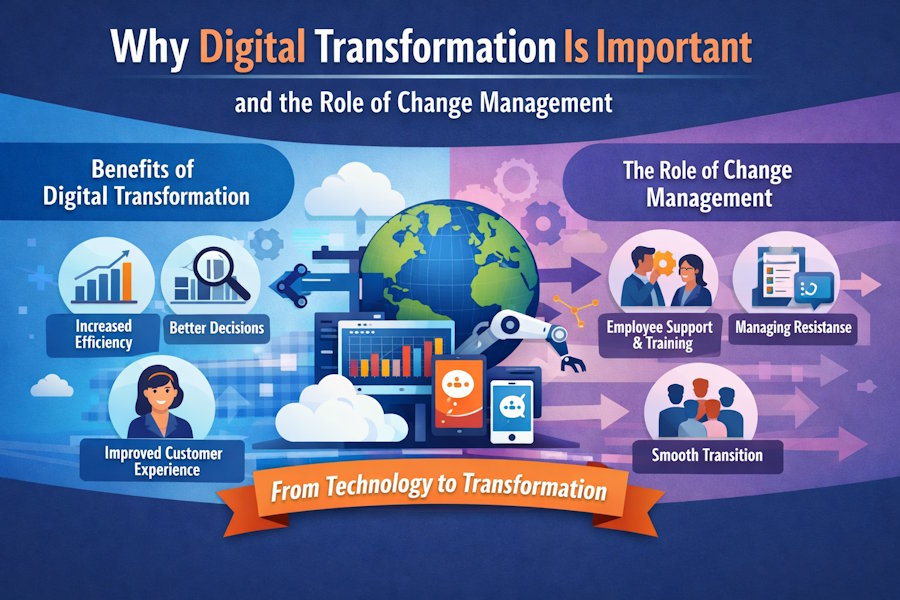
Organizations need to adapt quickly to stay competitive and meet customer expectations. This is why digital transformation is important for businesses of all sizes. Digital transformation is not just about using new technology; it is about reshaping the way a company operates and delivers value. Successful transformation depends on people as much as technology, which makes change management in digital transformation essential. It ensures that employees are ready and able to adopt new processes and tools without disrupting daily operations.
What Is Digital Transformation?
Digital transformation means using digital tools and technologies to improve business processes, culture, and customer experience. It is not limited to installing software. It involves rethinking traditional methods and finding smarter ways to operate. From cloud computing and data analytics to workflow automation, digital transformation helps companies modernize and grow.
Why Digital Transformation Is Important
Digital transformation brings many benefits that support business growth. One key reason why digital transformation is important is efficiency. Automating repetitive tasks and integrating systems reduces errors and saves time. Employees can then focus on more meaningful work rather than routine activities.
Another advantage is better decision-making. Digital tools collect and analyze data in real time, helping leaders make informed decisions quickly. Digital transformation also improves customer experience. Today’s customers expect fast, personalized, and seamless services. Businesses that use digital tools like mobile apps, self-service portals, or chatbots can meet these expectations and build stronger relationships.
Digital transformation also makes businesses more flexible. Companies can adapt quickly to market changes or economic uncertainty. They can scale operations, launch new services faster, and respond to challenges more effectively.
The Role of Change Management in Digital Transformation
While digital transformation brings many advantages, it also requires change. Employees must learn new skills, follow new processes, and adjust to new roles. This is why change management in digital transformation is critical.
Change management helps individuals and teams move from the current way of working to the new one. It focuses on the human side of change. Employees need to understand why changes are happening, what the benefits are, and how it affects their daily work.
Even the best technology will fail if employees do not use it effectively. Change management reduces resistance by involving employees early, addressing concerns, and providing the necessary support. Clear communication is essential. Leaders should share the vision, explain their decisions, and highlight successes throughout the transformation process.
Training is another key element. Employees need guidance and hands-on practice to gain confidence with new systems and processes. Engaging key stakeholders and leaders helps motivate teams and encourage adoption. Feedback mechanisms, such as surveys or meetings, allow leaders to monitor progress and address issues promptly.
Benefits of Combining Digital Transformation with Change Management
When digital transformation is combined with strong change management, businesses achieve better results. Adoption rates improve because employees feel supported and prepared. Resistance and stress decrease, creating a positive work environment. Teams collaborate more effectively toward shared goals, fostering a culture of innovation.
Organizations also strengthen leadership capabilities. Leaders gain skills in communication, empathy, and strategic thinking, which benefit the company long after the transformation is complete.
Conclusion
Digital transformation is crucial for businesses seeking to grow, innovate, and remain competitive. It improves efficiency, customer experience, and decision-making. Technology alone is not enough; employees must be ready and engaged. Strong change management ensures that the human side of transformation is addressed, leading to smoother adoption and long-lasting success.

