

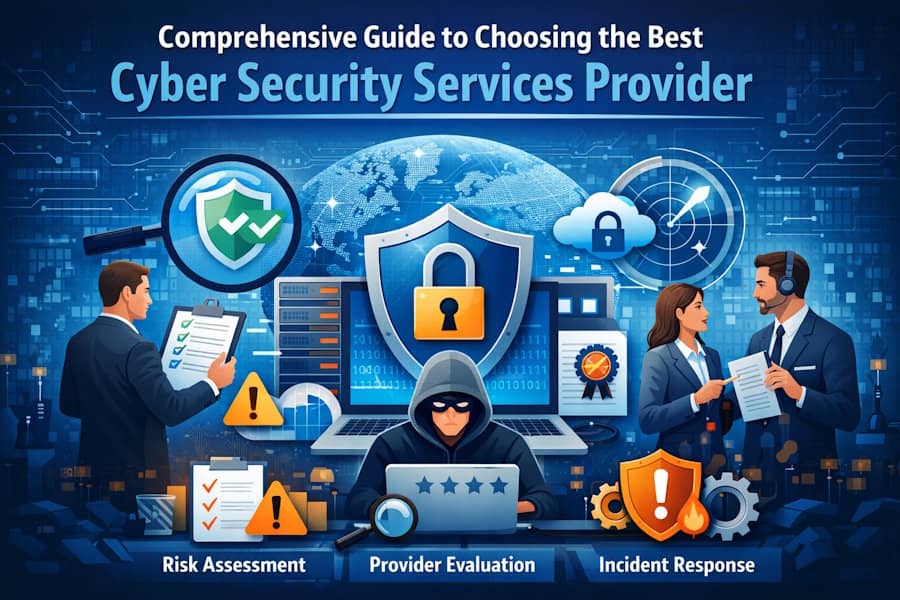
Stress levels often run high in organizations where data security isn’t given the attention it deserves. Decision-makers shuffle through countless service brochures and web pages, hoping to land on the perfect solution that keeps intruders out and integrity intact. This guide lays out a clear path to help you navigate that crowded market and find a provider that aligns with your needs.
Cybersecurity has evolved into a fundamental element of successful business operations. Picking the right cybersecurity services provider (CSP) can mean the difference between seamless growth and high-stakes data compromises. This guide is designed to give you a structured approach so you can hone in on the services and expertise that genuinely protect what you value most.
Assessing Your Cybersecurity Business Needs
- Identifying Specific Requirements
Every organization has its own unique data footprint, risk tolerance, and regulatory demands. Conducting a thorough risk assessment helps you shine a light on existing vulnerabilities and shape the defensive posture you’ll need. Industries governed by strict compliance rules might dictate particular methods of protection, so it’s essential to clarify exactly which regulations apply.
Budget also factors into these decisions, but it’s wise to start by mapping out the sensitivity of your data. Once those details are set, you can look for solutions that focus on the areas where you’re most at risk.
- Defining Service Scope
Not every CSP is built alike, and the scope of services they offer can vary widely. Some providers specialize in managed services, others focus on penetration testing, while many offer a range of solutions that tackle everything from firewalls to real-time threat detection.
Matching the service scope with your organizational needs ensures you’re only paying for relevant functions. If you require incident response, data encryption, or advanced threat analytics, spell that out from the start, so potential providers can confirm they have those capabilities.
- Setting Budget Constraints
Securing your digital assets typically requires significant investment, yet it’s still more cost-effective than dealing with the fallout of a breach. The total cost of ownership can include licensing fees, staffing costs, and incident response retainers, so go beyond the sticker price when you consider your budget.
Look for providers who can clearly break down pricing for each component. You’ll get a better sense of whether your finances can accommodate their offerings, or if you should prioritize specific protective measures first.
Evaluating Potential Cyber Security Providers
- Checking Certifications and Credentials
A professional cybersecurity protection company will often showcase recognized certifications that prove a certain level of skill and credibility. Providers with teams holding credentials from groups like ISC² typically demonstrate a deeper understanding of security frameworks.
If the provider’s staff also has experience with your technology stack, that’s a bonus since it can speed up threat detection and resolution. While certifications aren’t the only factor worth considering, they provide a solid starting point for gauging a firm’s technical competencies.
- Reviewing Track Record and Reputation
CSPs sometimes offer case studies and client testimonials to illustrate past triumphs and challenges. Reading these can clarify how a provider handles real-world issues, rather than just theoretical scenarios. Independent review platforms may also shed light on customer satisfaction, helping you spot common themes around response times, billing transparency, or expertise.
Keep an eye out for red flags like unresolved complaints or vague performance metrics. A reliable partner will have a documented history of delivering tangible security improvements and quick turnarounds.
- Inquiring About Experience in Your Industry
Industry-specific knowledge helps cybersecurity professionals anticipate the unique threats, and compliance hurdles you might face. If your organization operates in finance, healthcare, or e-commerce, make sure the provider knows the ins and outs of relevant rules and data standards.
You can ask how they previously handled similar threats for clients in your field, as well as the mitigation strategies they refined along the way. A provider with direct experience tackling your sector’s typical challenges can be a game-changer.
Understanding Their Core Service Offerings
- Comprehensive Security Solutions
Modern cyberattacks often emerge from multiple angles, so you’ll want a holistic service that tackles everything from network monitoring to endpoint security. A unified approach ensures no critical area is left under-protected. Services like vulnerability assessments, firewall management, and endpoint protection offer foundational defense across your entire environment.
This emphasis on broad coverage can spare you from stitching together mismatched tools from different vendors. Instead, you get cohesive protection that scales as new devices, applications, or processes appear.
- Specialized Services
Certain providers excel in areas like penetration testing or security audits, diving deeper to uncover hidden gaps in your network. If you’ve already got some security infrastructure in place, specialized offerings can reveal where improvements or policy enhancements might be needed.
Tailored solutions also let you adapt your defenses to specific risks or business models. Targeted support often includes advanced training modules or in-depth forensics, giving you a sharper lens to spot suspicious activities.
- Scalability and Flexibility
Organizational changes often bring new compliance demands and new threats, so check whether the CSP can adapt as you evolve. This might mean offering tiered services, flexible pricing, or the ability to integrate with existing software.
Scalable solutions keep you from outgrowing a provider’s expertise too quickly. That flexibility becomes even more crucial if your business branches into global operations or merges with other companies. The right provider will be ready to accommodate expansions and shifting needs.
What are Their Incident Response Capabilities?
- Understanding Incident Response Plans (IRP)
An incident response plan (IRP) is like a roadmap for dealing with breaches, outlining who takes charge, how alerts are managed, and the exact sequence of steps for containment. A CSP should be equipped to support or even develop an IRP that fits your workflows.
The speed and precision of the response often determine how much damage an incident causes. Prioritize providers who can quickly mobilize skilled responders and isolate threats before they spread across the entire organization.
- Post-Incident Analysis and Reporting
Responding to an incident is critical, but thorough post-incident analysis helps you learn from security slip-ups. CSPs provide detailed reports on how the breach happened, what data was compromised, and how to prevent repeat occurrences bring real value to the table.
Take note of how transparent the provider is about their processes and findings. Clear communication fosters trust and helps your leadership team refine policies that strengthen your perimeter moving forward.
- Testing Incident Response Effectiveness
Regularly simulating cyberattacks offers a realistic view of how quickly and effectively your chosen provider can react. These mock exercises, often called tabletop simulations, provide a safe environment to test protocols and collaboration between different departments.
A provider that encourages frequent drills proves their commitment to constant refinement. Real-world scenarios evolve quickly, and practicing under-controlled conditions ensures no one is caught off-guard when an actual threat emerges.
How Structured Are Their Service Level Agreements (SLAs)?
- Defining Expectations Through SLAs
Service Level Agreements are your formal guarantee that certain performance metrics will be upheld. They normally detail response times, resolution times, and up-time guarantees, ensuring both parties know what to expect. Pinning these down gives you leverage if services fall short.
When you review SLAs, look for precise language rather than ambiguous promises. You want exact commitments, so you can confidently measure the provider’s results against your agreed benchmarks.
- Understanding Support Availability
Security concerns don’t adhere to business hours, so aim for support that’s reachable around the clock. Providers often have hotlines or dedicated portals that let you raise tickets at any time, but it’s wise to confirm how quickly they address those alerts.
Also note if they offer multilingual support or have geographically diverse teams. This can matter if you operate in multiple regions and need assistance in different time zones.
- Transparency in Pricing Structures
Unclear pricing can lead to unplanned costs, especially if services like emergency incident support fall outside standard offerings. Insist on straightforward details about fees for additional services, software licenses, or on-demand consultations.
Some providers roll everything into one package, while others charge per service unit. Weigh these options carefully to avoid sticker shock when you realize your contract only includes limited coverage.
Building a Long-Term Partnership With Your CSP
- Evaluating Cultural Fit and Communication Style
A dynamic CSP relationship involves more than a contract. It helps if the teams on both sides value open dialogue and proactive problem-solving. You’ll likely work closely with them in high-pressure situations, so making sure everyone can communicate effectively goes a long way.
Observe how they respond to your concerns or inquiries during initial discussions. If they come across as dismissive or opaque, that might not bode well for future collaboration.
- Commitment to Continuous Improvement
Threats constantly mutate, and so should your defenses. A good CSP invests in ongoing training, technology upgrades, and staff development, ensuring they stay ready to face the newest challenges.
Providers who stay current with threat intelligence updates can alert you before vulnerabilities become a crisis. If they’re deeply engaged with the broader cybersecurity community, it signals a dedication to learning and innovating alongside industry trends.
- Empowering Your Team Through Knowledge Sharing
Lasting security relies on employees who grasp the importance of proactive defenses. Look for providers that support training and workshops to strengthen your staff’s understanding of threat recognition and safe practices.
This knowledge transfer should include practical guidelines for daily operations. By fostering a sense of collective responsibility for cybersecurity, you build a front line of defense within your own organization, amplifying the CSP’s protective measures.
Future-proofing Your Cyber Security Strategy
Choosing the right cybersecurity services provider may feel like a high-stakes decision but knowing what to look for makes all the difference. By beginning with a solid understanding of your needs and narrowing down possible providers based on their offerings, credentials, and incident response capabilities, you set the stage for a safer future.
Be sure to evaluate cultural fit and long-term partnership potential. A provider that consistently adapts and brings fresh insights to your security strategy can elevate your entire organization’s resiliency. With a thoughtful selection process and a willingness to collaborate, you’ll be well on your way to crafting a robust shield for your most precious digital assets.
You can start by looking at partners like Devsinc that have a proven track record of delivering professional IT projects across the globe to over 200+ organizations.

