

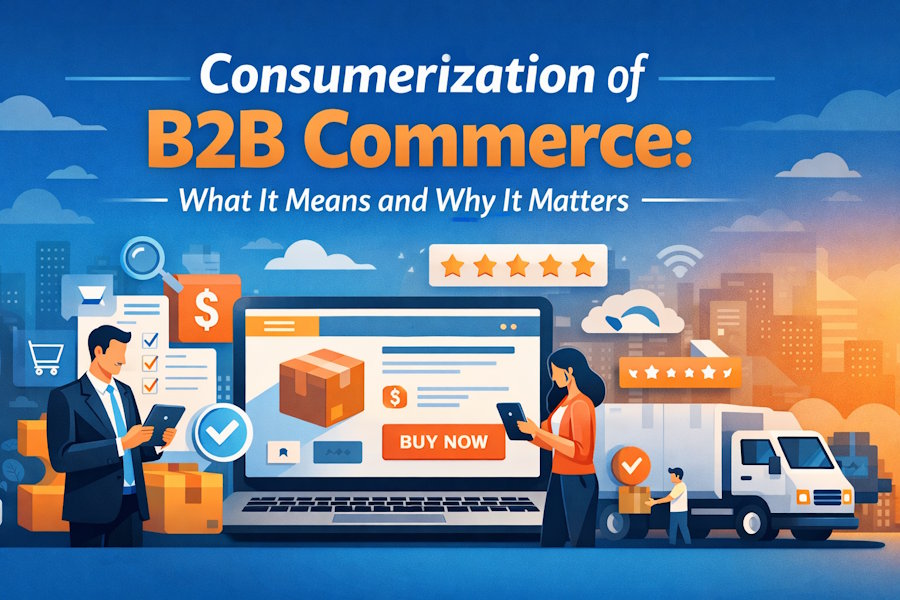
B2B buying does not work the same way it was supposed to work earlier. Today, business buyers expect the buying process to be simple and fast. Buyers want to find information easily, compare options without effort, and place an order without any delays.
This change is called the consumerization of B2B commerce. It means that B2B buyers now expect an experience similar to consumer shopping. Which include clear pricing, easy navigation, and even quick access to the product; all these are their basic expectations.
These expectations come from everyday buying habits. People are now more used to purchasing the product online by following the minimal steps. The same mindset now applies when a business person buys for their organization.
For B2B companies, this shift is important. For developing a strong market platform, strong eCommerce development services are required, as the buying experience influences trust and purchase decisions. Businesses that make buying easier are now more likely to keep the buyers engaged and move them forward.
This article explains what the consumerization of B2B commerce means, why it is happening, and how it is changing buyer expectations. It also outlines the key elements of consumer-focused B2B commerce and what businesses can do to respond to these changes.
What Is the Consumerization of B2B Commerce?
The consumerization of B2B commerce refers to how the consumer buying experience now influences how businesses purchase products and look for services. B2B buyers now expect the buying processes to feel clear, quick, and easy, allowing them to meet their personal needs.
In Simpler terms
Consumerization of B2B commerce means:
- Business buyers want to research the product on their own.
- They expect to have clear pricing and product details upfront.
- They value digital experiences that save time.
- They prefer fewer steps to complete a purchase.
Instead of relying only on the sales conversations, buyers want control over how and when they move forward.
A practical example
Consider a procurement manager buying software for their team. Earlier, this process involved multiple emails, demos, and approval calls. Today, the same buyer may expect to:
- Visit a website.
- Compare plans and features.
- See pricing clearly.
- Start a purchase or request access without delay.
This shift reflects how consumer-style buying behaviors are shaping the B2B commerce.
Understanding this concept helps businesses design a buying experience that matches real buyers behavior. When B2B commerce feels familiar and easy, buyers are more confident and more likely to continue the journey.
Why B2B Commerce Is Becoming More Consumer-Like
B2B commerce is changing because the ways buyers behave have changed. Business buyers now expect buying processes to match how they already shop in their daily lives.
Here are the two factors that explain this shift clearly:
Changing Buyer Expectations in Modern B2B
Many B2B buyers work in digital-first environments. They are used to get information more quickly and to complete tasks online without delays.
As a result, buyers now expect:
- Easy access to product details and pricing.
- Simple steps to place or repeat orders.
- Buying processes that save time and effort.
When all of these expectations are not being met, then the buyers delay their decision to make the purchase and look for various alternatives.
Influence of Consumer Shopping Experiences
Consumer shopping has set a clear standard for how buying should feel. People are familiar with browsing products, comparing options, and having a smooth purchase process without any assistance.
These habits now influence B2B decisions through:
- Familiar navigation and search patterns.
- Clear product information and comparisons.
- Confidence to move forward without sales involvement.
B2B commerce is becoming more consumer-like because buyers expect the same level of convenience and clarity they already trust in consumer shopping experiences.
How Buyer Expectations Have Shifted in B2B Commerce
B2B buyers no longer depend entirely on sales teams to guide them through every step of the purchase journey. Their expectations are now shaped by how they prefer to research, compare, and buy—often through digital-first experiences. These evolving expectations are redefining how the B2B commerce experience must be designed, and platforms like Microsoft Dynamics 365 Commerce enable businesses to deliver personalized, self-service, and omnichannel buying experiences that modern B2B customers expect.
These are some of the processes that explain how buyer expectations have shifted:
Self-Service and Speed Over Manual Processes
Buyers now want the ability to complete tasks on their own. This includes researching products, checking availability, and placing orders without waiting for approvals or callbacks.
Common expectations include:
- Access to information at any time.
- Faster order placement and reordering.
- Fewer manual steps in the buying process.
When self-service options are limited, buyers often feel frustrated and disengaged.
Ease of Use and Transparency
B2B buyers expect the digital platform to be easy to understand. They want to know what they are buying with all the clear details and how much it will cost them before giving the commitment for any further steps of purchase.
This includes:
- Clear pricing or pricing ranges.
- Straightforward product descriptions.
- Simple navigation across pages.
Transparency builds confidence and helps buyers move forward.
Personalized Buying Experiences
Buyers now expect experiences that reflect their needs and preferences more clearly. This does not mean the website should include complex customization, but it should maintain relevance.
Personalization in B2B commerce often shows up as:
- Product recommendations based on past activity.
- Role-based views for different users.
- Content that matches the buyer at each stage of purchase.
These shifts show that B2B buyers value clarity, control, and relevance more than anything.
Key Elements of Consumerized B2B Commerce
The consumerization of B2B commerce is more than just following the buying trend. It reflects a shift in how businesses are delivering value through an effective digital platform. To meet the modern buyer's expectations, B2B platforms must incorporate several key elements that make the process of purchasing smooth, transparent, and more personalized.
Here are some of the key elements:
1. User-friendly Digital Experiences
A simple and intuitive interface is critical. Buyers expect to find information quickly and complete the actions without having any confusion.
Best practices include:
- Clear navigation with minimal clicks.
- Intuitive search and filtering options.
- Straightforward checkout or request processes.
When interfaces are easy to use, buyers feel confident and in control.
2. Mobile-first and Omnichannel Access
B2B buyers increasingly work across devices. Accessing a platform on a laptop, tablet, or smartphone should feel seamless.
Key considerations:
- Mobile-optimized product pages and order forms.
- Consistent experience across websites, apps, and the marketplace.
- Easy access to support or guidance from any channel.
Omnichannel consistency ensures buyers can engage on their preferred devices without any friction.
3. Transparent and Rich Product Information
Detailed and accurate information reduces uncertainty and speeds up the decision-making process.
Elements that matter:
- Clear specifications and pricing.
- High-quality images, videos, or demos.
- User reviews or case studies to support credibility.
Providing this information upfront reduces back-and-forth with sales teams and improves trust.
4. Personalization Without Complexity
Modern buyers expect relevant experiences tailored to their needs, but B2B personalization does not need to be overly complex.
Practical approaches:
- Role-based dashboards or product suggestions.
- Recommendations based on past purchases.
- Relevant content for each stage of the buyer journey.
Personalization helps buyers feel understood and makes the process more efficient.
Impact of Consumerization on B2B Businesses
The consumerization of B2B commerce not only changes how buyers are going to purchase, but also changes how businesses sell, market, and support their customers. Teams must rethink their roles and processes to match the way buyers now prefer to engage.
Sales Teams Shifting Towards Advisory Roles
In the past, the sales team controlled most of the buying journey. Buyers relied on them for information, pricing, and next steps. Today, most of the research happens before the first conversation appears.
This shift changes the roles of sales teams:
- Less time spent sharing basic product details.
- More focus on solving specific business problems.
- More consultative and value-based conversations.
Sales professionals now act as guides rather than gatekeepers.
Marketing Owning More of the Buyer Journey
As buyers research independently, marketing becomes responsible for shaping early experience. The website, product pages, and content often create the first impression.
Marketing teams now need to:
- Provide clear and helpful product information.
- Create content that answers common buyer questions.
- Support buyers at each stage with relevant resources.
Strong digital experience helps to build trust before the sales get involved.
Operations Adapting for Speed and Efficiency
Consumer-style buying also increases pressure on internal operations. Faster orders and self-service models require a system that can keep up.
This often leads to:
- Streamlined order management.
- Quicker fulfillment processes.
- Better coordination between teams.
When operations are slow or disconnected, the overall buying experience suffers.
How Businesses Can Respond to Consumerization Trends
Understanding the consumerization of B2B commerce is just the first step. The real-value comes when these insights are turned into practical improvements. Businesses that act early can reduce friction, shorten buying cycles, and create better customer experiences.
If the goal is not to redesign everything at once, then focus on changes that often deliver faster results.
Evaluate The Current Buying Journey
Start by reviewing how buyers interact with your business today. Look at each step from product discovery to order completion.
Ask simple questions such as:
- Is pricing easy to find and understand?
- Can buyers place an order without unnecessary approvals?
- Are there steps that slow down the process?
Identifying the friction points will help the team to maintain focus on what truly needs to be improved.
Simplify the Digital Experience
Complex systems often create confusion. Buyers prefer clarity over too many features.
Focus on:
- Clear navigation and clear page structure.
- Fewer steps to complete common actions.
- Straightforward forms and checkout processes.
Think of it like you are clearing the traffic from a busy road. When obstacles are removed, everything moves faster.
Offer Self-Service Where Possible
Many buyers prefer solving basic needs on their own. Providing self-service tools saves time for both buyers and internal teams.
This can include:
- Account dashboards
- Order tracking and history
- Easy reordering options
- Help center or knowledge bases
Self-service gives buyers more control and reduces the dependency on support teams.
Use Data to Make Experiences Relevant
Personalization does not have to be complex. Even a small adjustment can make the experience feel more relevant.
Simple examples include:
- Showing frequently purchased products first.
- Recommending related items.
- Sharing content based on past purchases.
Relevant experience helps buyers make faster and more confident decisions.
Final Thoughts on the Consumerization of B2B Commerce
The consumerization of B2B commerce is already influencing how businesses buy and sell. Buyers are now expecting simple steps, clear information, and faster transactions. When the process feels smooth, the trust automatically increases, and decisions happen more quickly.
For B2B companies, the focus should be on removing the friction and improving the digital experiences. Small improvements in usability, transparency, and self-service can make noticeable differences.
Adapting to these changes often requires the right mix of strategy and technology. Many businesses work with an experienced software development company in the USA that understands how to build a user-friendly commerce platform and streamlines the workflow with a scalable digital experience.
Aligning your commerce experience with modern buyer expectations helps create stronger engagement and steady business growth.

