

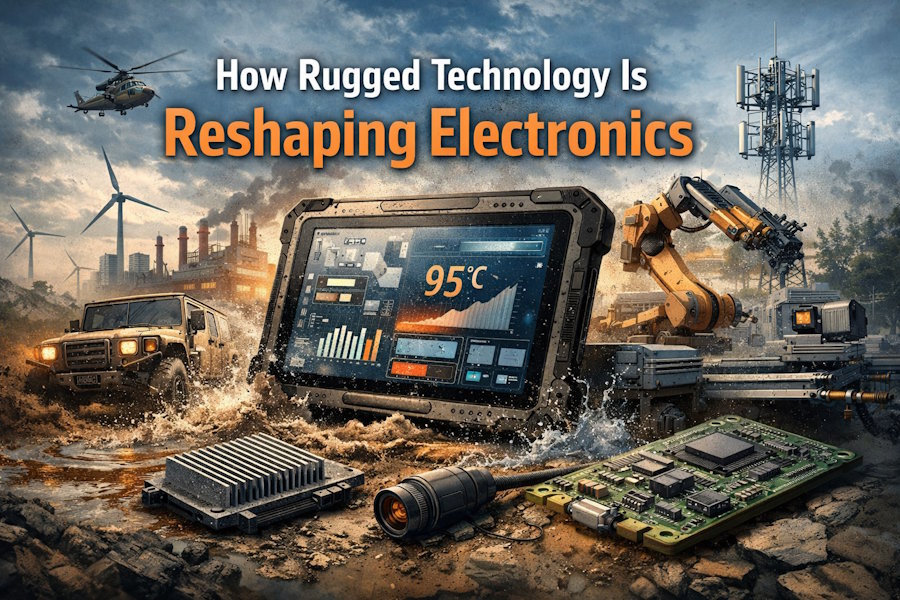
Electronics are no longer confined to clean offices or controlled laboratories. Modern systems operate in heat, vibration, moisture, dust, and constant motion. This shift has driven the rise of rugged technology—electronics engineered to survive where standard consumer devices fail. Ruggedization is no longer niche. It is shaping the future of how electronic systems are designed, deployed, and maintained.
Why Standard Electronics Are No Longer Enough
Consumer electronics are optimized for cost, weight, and aesthetics. They are not designed for sustained exposure to shock, temperature extremes, or environmental contaminants. As industries digitize field operations, failure rates rise when consumer-grade hardware is used outside its intended conditions.
Rugged technology addresses this gap. It prioritizes reliability, uptime, and long service life over minimal thickness or short replacement cycles. This tradeoff is critical in environments where downtime is costly or dangerous.
Core Principles of Rugged Design
Rugged electronics are built around defensive engineering. Components are selected and assembled to withstand stress without degradation.
Key design principles include:
- Reinforced enclosures to absorb shock and vibration
- Sealed housings to prevent dust and moisture ingress
- Extended temperature operating ranges
- Secure mounting and strain relief for connectors
- Long-life components rated for continuous use
Each feature reduces failure modes that commonly disable conventional devices.
Displays as the Primary Interface
Displays are often the weakest point in electronic systems. They face impact, glare, temperature fluctuation, and constant use. Rugged displays are engineered to remain readable and functional under these conditions.
Technologies such as bonded glass, anti-reflective coatings, and high-brightness backlighting improve visibility in direct sunlight. Touch systems are tuned to work with gloves or moisture.
Industrial systems increasingly rely on solutions like a rugged display to maintain human-machine interaction in vehicles, factories, and outdoor installations. Interface reliability directly affects safety and productivity.
Expanding Use Cases Across Industries
Rugged electronics are no longer limited to military or heavy industry. Adoption is expanding as digital tools move closer to real-world operations.
Common applications include:
- Fleet vehicles and transportation hubs
- Manufacturing and automation systems
- Energy and utilities infrastructure
- Agriculture and environmental monitoring
- Public safety and emergency response
In each case, rugged technology enables continuous data flow where failure was previously accepted as inevitable.
Thermal Management and Power Stability
Heat is a leading cause of electronic failure. Rugged systems address this through thermal design rather than passive tolerance.
Heat sinks, conduction cooling, and controlled airflow manage temperature without relying on fragile fans. Power regulation circuits protect against voltage spikes and brownouts common in mobile or industrial environments.
Stable power and thermal control extend component life and reduce maintenance cycles.
Lifecycle Economics and Total Cost of Ownership
Rugged electronics often cost more upfront. The economic advantage appears over time.
Consumer devices are replaced frequently. Rugged systems are deployed for years. Reduced downtime, fewer repairs, and longer support windows lower total cost of ownership.
For organizations operating at scale, reliability is cheaper than replacement.
Software and Hardware Co-Design
Ruggedization extends beyond physical hardware. Software must be optimized for long uptime and limited maintenance access.
Embedded operating systems, controlled update cycles, and diagnostic logging support remote monitoring and troubleshooting. Hardware and software are designed together to minimize points of failure.
This co-design approach distinguishes rugged technology from hardened consumer devices.
Enabling Edge Computing and Autonomy
As processing moves closer to the source of data, electronics must function at the edge. Sensors, controllers, and displays operate in environments with no climate control or human oversight.
Rugged systems enable edge computing by providing reliable platforms for continuous operation. This supports automation, real-time analytics, and autonomous decision-making in the field.
Without rugged hardware, edge strategies collapse under environmental stress.
Design Tradeoffs and Future Direction
Rugged technology accepts tradeoffs. Devices may be heavier. Aesthetics are secondary. Upgrade cycles are slower.
However, advances in materials and manufacturing are narrowing these gaps. Lighter composites, improved sealing methods, and modular design are improving performance without sacrificing durability.
Future rugged electronics will integrate more processing power, better interfaces, and longer lifespans while maintaining environmental resilience.
A Structural Shift in Electronics Design
Rugged technology represents a shift in priorities. Reliability over novelty. Longevity over disposability.
As electronics continue to move into unpredictable environments, rugged design principles will influence mainstream development. The future of electronics is not just smarter. It is tougher.
And in many industries, toughness is the defining feature of progress.

