

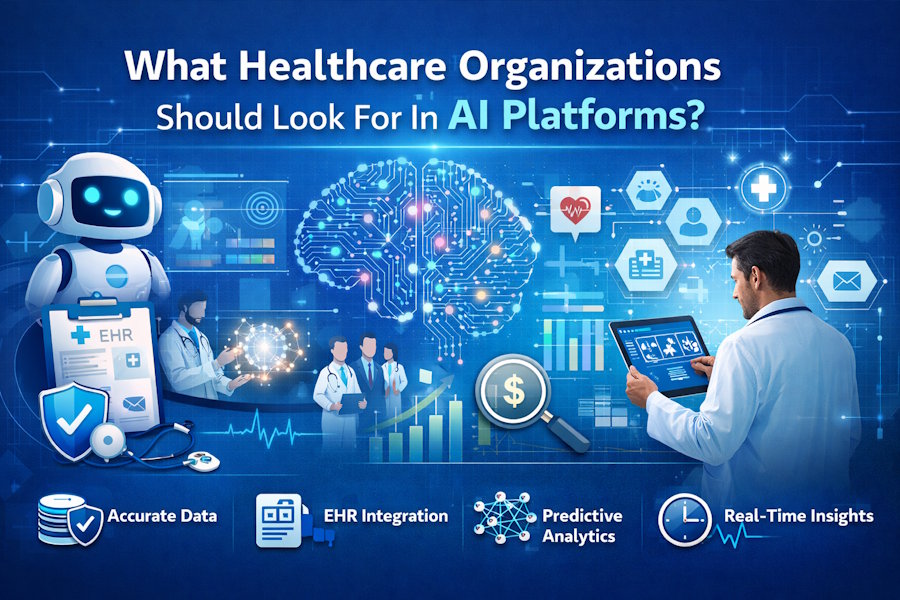
The choice of an AI platform defines the difference between healthcare institutions successfully operating and spending resources on unproductive systems. Healthcare AI Solutions are increasingly used to support patient care management, cost prediction, and clinical workflows. The challenge is not finding AI tools, but selecting platforms that deliver measurable clinical and operational outcomes.
Healthcare executives are inundated with dozens of vendors who offer artificial intelligence to transform their companies. Many AI platforms underperform due to incomplete training data, limited integration, or poor alignment with clinical workflows. Companies require platforms that have been trained on a comprehensive dataset, which has been structured to integrate with EHRs, and supports care teams without introducing complexity.
Data Accuracy Drives Reliable AI Outcomes
The effectiveness of a healthcare AI platform largely depends on the quality of the data used to train and operate it. Inaccurate or incomplete data leads to unreliable predictions, inefficient resource use, and poor patient outcomes, which reduces trust in AI systems.
This information comes from sources like patient records, treatment plans, insurance data, and test results. By analyzing this data, healthcare data analysts like me can find patterns that help doctors, nurses, and hospital managers make better decisions. This kind of data analysis can also support institutions such as Adventist hospitals by improving patient care, streamlining hospital operations, and helping healthcare teams make more informed decisions.
An early consideration for organizations should be whether the platform has been trained on proven, comprehensive healthcare data over multiple years. Platforms built on long-term clinical, claims, and social determinants data tend to produce more consistent and reliable insights.
What Accurate Data Enables
- Early identification of high-risk, high-cost patients before complications develop
- Precise cost predictions that support budget planning and resource allocation
- Reduced hospital readmissions through evidence-based discharge recommendations
- Improved population health management with complete patient profiles
These platforms provide a more complete view of patient risk, utilization patterns, and care gaps. This enables care teams to make informed decisions based on actual evidence and not partial information.
Custom Solutions vs. Generic Platforms
Generic AI platforms often require healthcare organizations to adjust their workflows to fit the software. Custom solutions integrate with the current methods of work used by care teams, saving time on training and enhancing the acceptance rates of both teams and departments.
Customization Areas That Matter
- Care Management: Population-specific workflows, such as diabetes, heart failure, and COPD patients, are in need of special intervention guidelines.
- Risk Adjustment: Models aligned with Medicare Advantage requirements, accurate HCC coding, and RAF score optimization to support appropriate reimbursement.
- Quality Reporting: Setups of HEDIS measures, Stars ratings, and MIPS reporting that align with the organizational perspective of quality.
- Provider Engagement: Point-of-care systems with integrated tools that do not require a switch to another application are already utilized by the clinicians.
Integration Capabilities Healthcare Systems Need
AI systems should be able to interface with the existing systems without interfering with their functionality. The most effective Healthcare AI Solutions become a part of EHRs, claims documentation, and clinical documentation tools that the staff work with daily.
Essential Integration Points
Organizations should verify integration with enterprise EHR systems, claims and billing platforms, laboratory data, pharmacy systems, and social determinants of health sources. Output channels should have care management platforms, provider dashboards, patient portals, and quality reporting systems.
Seamless integration means clinicians access AI insights within their normal workflow. A cardiologist reviewing patient charts sees cost predictions and discharge recommendations without switching applications. This embedded approach drives adoption rather than creating another ignored tool.
Real-Time Intelligence for Proactive Care
Organizations do not prevent problems with the help of static reports. The platforms that convert data into ongoing context-rich intelligence allow proactive care management that can improve outcomes at a lower cost.
How Real-Time AI Works
AI engines that process clinical and claims data can help identify emerging risks earlier, allowing care teams to intervene sooner. A digital health platform monitoring hospitalized patients flags individuals at high risk for inappropriate discharge disposition. Care coordinators receive automated alerts along with clear guidance on post-acute care placement based on patient needs and available resources.
This is a proactive method that saves money on post-acute care, aids in the prevention of hospital readmissions and emergency visits, and lowers the expenses and enhances patient outcomes.
Essential AI Tools Working Together
Effective platforms offer multiple AI solutions sharing data across departments. Integrated capabilities are advantageous to organizations as opposed to isolated point solutions that need individual implementations.
- Query and Analytics: NLP tools allow non-technical employees to interactively query data with plain English queries and view population health data immediately without having to code.
- Predictive Modeling: Clinical domain knowledge with machine learning identifies high-risk patients, allowing interventions to occur before complications develop and costs escalate.
- Clinical Documentation: The unstructured notes are translated into structured data by means of NLP, which facilitates care coordination much faster and enhances the quality of documentation.
- Discharge Planning: ML-based frameworks analyze clinical and social factors to recommend appropriate post-acute care settings, reducing avoidable utilization and costs.
Bottom Line
Choosing the right AI platform requires careful evaluation of data accuracy, integration depth, transparency, and workflow alignment—especially when implementing tools that must adhere to the strict regulatory and clinical standards of a medical directorship. Organizations that focus on these aspects are more likely to select AI platforms that improve care delivery and cost management.
Persivia offers AI-powered healthcare platforms that are supported by 15 years of data experience. They offer a real-time intelligence hub that operates on an AI engine and is used to predict costs, design discharge plans, document, and improve population health. Persivia empowers these abilities to care processes to aid payers, providers, ACOs, and health systems to achieve improved results at reduced expenses.

