

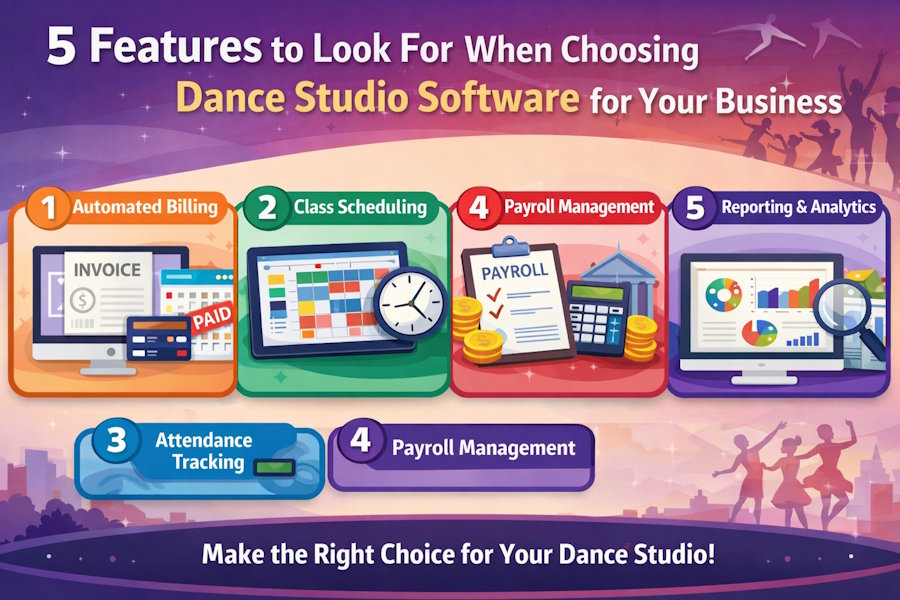
Running a dance studio is demanding. As an owner, you manage enrollment, payments, class schedules, and daily administration. When these responsibilities pile up, it becomes difficult to focus on growth, student retention, and program development. It is easy to suffer burnout due to the daily administrative work.
This is where dance studio scheduling software can make a difference. The right platform can centralize enrollment, automate the billing process, monitor attendance, and reduce manual errors. Through automation of routine work, the studio owners can also save time, enhance accuracy in their operations, and ensure a more convenient experience for students and parents. Instead of handling paperwork and constant follow-ups, you can focus on expanding classes, improving instruction quality, and strengthening your brand.
Identify your studio’s needs
Before choosing a system, evaluate your studio’s specific requirements. Start by identifying the tasks that consume most of your time, such as scheduling, billing, registration, or communication. Consider whether you only need support for daily administrative functions or if you also require features like marketing tools, attendance tracking, performance reporting, and data analytics.
Why is managing a dance studio so hard?
Managing a studio can feel like a full-time desk job when you rely on manual processes. Studio owners face multiple challenges. Some students pay on time, while others delay payments. Students switch classes, and parents may request discounts. Handling these changes manually can quickly become overwhelming. Instead of constantly chasing payments and updating records, a centralized system can streamline operations. Platforms like Wellyx aim to help studio owners manage billing, enrollments, and class changes more efficiently, reducing administrative pressure and allowing more focus on studio development.
Features for a dance studio
Managing your business finances manually is not only hectic but also prone to mistakes and errors. So, get rid of these issues; they have some premium opportunities for dance studio owners. Let’s discuss them.
Automated invoices and billing
Dance studio software saves you time and automates invoicing and billing processes. It also lets you prepare invoices in such a way that members can understand what they are being charged. Recurring billing is another interesting option of the dance studio finance management software. Reputable systems use secure payment processor integrations to handle payment data. Once payment details are securely processed, the system can automate recurring membership billing.
Recurring billing also lightens your load of manual work and enhances the satisfaction of students, as you should not bother them with paying the bills on their behalf. Moreover, automated billing increases the cash flow, cost reduction, growth, and general progress.
Payroll management
Recurring billing is another interesting option of the dance studio finance management software. The optimal dance studio software saves the payment gateway data in its database. After the information is stored, the system automates the membership cycle and imposes the payment on time. Moreover, automated billing increases the cash flow, cost reduction, growth, and general progress.
If you work with multiple instructors, payroll management becomes essential. Good dance studio software should help you:
- Track instructors' hours.
- Maintain payment records.
- Generate payroll summaries.
- Calculate commission or class-based payments.
Inventory management
Your inventory management is smart with the help of dance studio software. Through inventory and supply control, you can monitor your inventory on an intuitive level. Studio software can help track stock levels and identify products that need restocking. Sales reports can help forecast demand and prevent overstocking or shortages. Therefore, it keeps your stock streamlined.
The inventory management will not only keep track of your stock level, but it will also keep track of the number of sales. It gives you real-time information about the marketing activities and the level of sales you make over a given period of time. Moreover, it also offers vendor management, which enables you to build and authorize purchases in a flash.
Membership management
The membership management feature will allow you to design tailored membership packages for your dance students without any problem.
Moreover, it also gives you the chance to keep track of the membership of your students so that you have an easy flow of cash and punctual payment. In addition to this, the dance studio accounting software has an auto reminder, which notifies the dance students to pay their dues within the stipulated time.
Reporting and tracking
Analytical tracking and reporting are necessary to monitor the overall performance of your dance studio finances. Dance studio software allows you to check real-time information. Having access to real-time information, you are able to assess the weaknesses and gaps in your business. The software that has extensive reporting will provide detailed information about the activities of the members, the productivity of the staff, the number of leads and sales, and the overall development of the dance studio. Access to real-time data helps you make timely, informed decisions and address potential issues early.
Final thoughts
Managing your dance studio is not an easy task. When you continue to do enrollments and payments manually, you are overworking yourself. A dance studio software can streamline operations and reduce administrative pressure. And in case you are in need of the complete dance school software, then Wellyx is the right choice. It takes care of all the issues about your dance studio, such as operations, marketing, communications, and sales, among others.

