

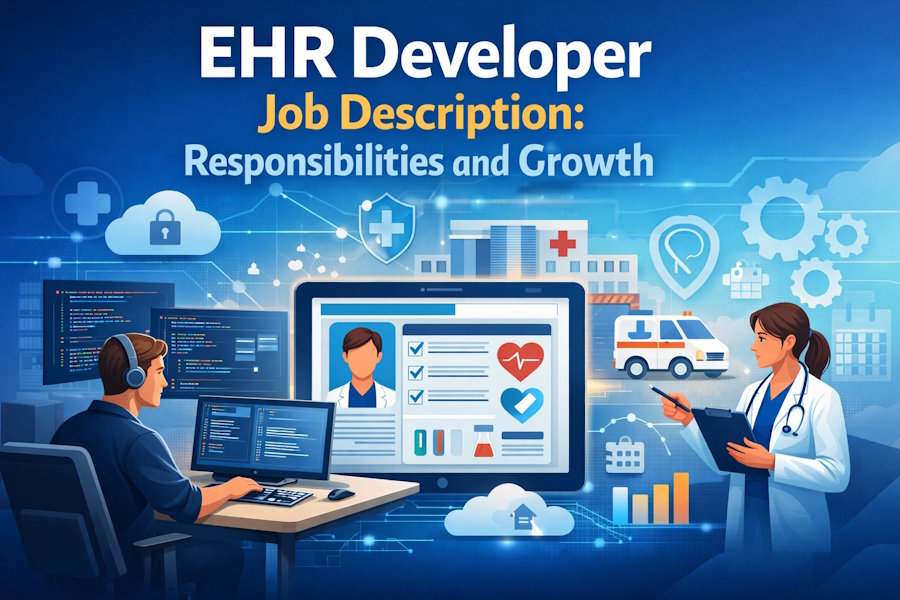
What an ehr developer is
An EHR developer is a software developer who builds electronic health record systems These systems store patient health information in digital form instead of paper files An EHR developer creates programs that help hospitals clinics and doctors manage medical records safely and simply The main goal is to make sure patient data is easy to read easy to update and strongly protected from misuse
In the past many hospitals used paper files Doctors had to search through folders to find patient history This took time and sometimes caused mistakes Today EHR developers build digital systems that keep everything in one secure place This makes healthcare work faster and better
What an ehr developer does
An EHR developer writes code to create health record systems They build features that allow doctors to enter patient symptoms diagnoses and treatment plans Nurses can update patient progress Lab workers can upload blood test results and scan reports All this data is saved inside the system in an organized way
An EHR developer also designs how the system looks and feels They make sure the screens are clear and simple Medical staff are often busy so the system must be easy to use The developer creates search tools so doctors can quickly find patient history They also build alerts that warn staff about allergies or critical conditions
Another important task is system integration Hospitals use many different systems such as billing pharmacy and appointment scheduling The EHR developer connects these systems so they can share information safely This helps the hospital work as one complete unit
Why ehr systems are important
EHR systems are very important in modern healthcare They help doctors see a full patient history in seconds This includes past illnesses medicines allergies and test results With full information doctors can make safer decisions
EHR systems reduce medical errors When information is written on paper it can be lost or hard to read Digital records are clearer and easier to track EHR systems also improve teamwork When different doctors treat the same patient they can see the same updated data
Privacy is another reason why EHR systems matter Patient health data is very sensitive A strong EHR system protects this information using security methods Without proper systems hospitals may face data loss privacy breaches and legal problems
How much it costs to build an ehr system
The cost to build an EHR system depends on many factors A small clinic may need a basic system with limited features This costs less because it requires fewer developers and less time A large hospital needs advanced features high level security and support for many users This increases the cost
Cost depends on design development security testing and training Strong security tools are required to protect patient data which adds to the expense Integration with laboratory systems pharmacy systems and billing systems also increases cost
Long term maintenance is another major cost After the system is launched it still needs updates Security must be checked regularly New features may be added Health regulations may change so the system must follow new rules All these factors affect the total cost over time
Required skills for an ehr developer
An EHR developer needs strong programming skills They must know how to build software that handles large amounts of data Database knowledge is very important because patient information must be stored safely and correctly
Security knowledge is essential EHR developers must understand how to protect data from hackers and misuse They must follow healthcare laws and privacy standards Understanding how hospitals work is also helpful because the system must match real medical workflows
Communication skills are important Developers work with doctors nurses managers and technical teams They must listen carefully and understand medical needs Problem solving skills are required because healthcare systems can be complex Attention to detail is very important since small mistakes can lead to serious issues
Tools testing and maintenance
EHR developers use programming languages and development platforms to build the system They use database tools to manage patient records securely They may also use cloud technology to store data safely and allow access from different locations
Testing is a critical step Every feature must be checked carefully Developers test data entry search functions and security systems They make sure the system works smoothly even when many users are online at the same time
Maintenance continues after the system is launched Developers fix bugs improve performance and update security features Healthcare rules may change so updates are needed to stay compliant Regular backups are also necessary to prevent data loss
Career path challenges and future
The career of an EHR developer can be stable and meaningful Healthcare technology is always needed so skilled developers have strong demand They can grow into senior developer roles system architect roles or technical leadership positions
However there are challenges The responsibility is high because patient safety depends on accurate systems Developers must follow strict healthcare laws and privacy regulations This requires careful work and continuous learning Technology changes quickly so developers must update their skills regularly
In the future EHR systems may use advanced data tools and intelligent systems to help doctors predict health risks and improve treatment plans Developers who learn about new technologies and data systems will have better career opportunities The role of an EHR developer will continue to grow as healthcare becomes more digital and connected

