

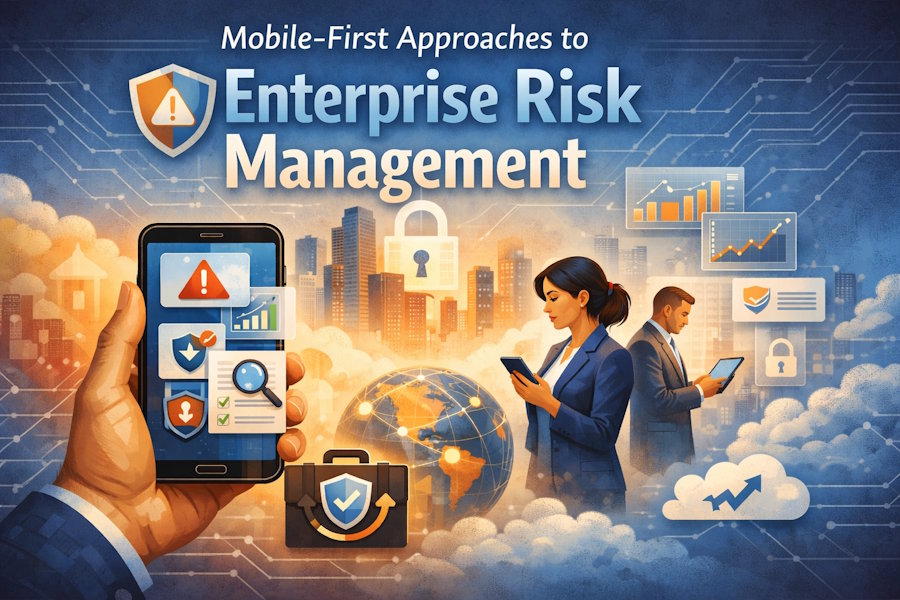
Smartphones have revolutionized the way people communicate, bank, and travel. However, in the context of corporate risk management, many organizations still seem to be stuck in the era of desktop computers and static spreadsheets. This dichotomy has created a chasm in intelligence. Today's enterprise is a 24/7 entity, with operations that can be located in different time zones across the world. This has necessitated a corresponding shift in the way organizations approach their risk management strategies.
Leaving the Desktop Computer Behind
Legacy risk management systems were built with a different world in mind. They were designed with the assumption that risk management professionals were sitting in a cubicle, entering data into a system that was centrally located, Monday through Friday, from 9 to 5. That world has changed dramatically. Today, workforces are remote, hybrid, or distributed. Risks manifest themselves on the factory floor, at a remote construction site, while on a business trip.
By embracing mobile, organizations acknowledge that a risk event will not wait for the risk management professional to return to the office, plug in their laptop, and connect to a VPN. It focuses on the user experience, which is the device that every worker carries with them at all times. By leaving the desktop computer behind, organizations free their risk management professionals from the burden of reporting, which makes the entire system more continuous, more integrated, more a part of the way organizations operate on a day-to-day basis.
The Power of Real-Time Data
The biggest benefit of mobile is the power of real-time data. No longer will a risk event require a risk management professional to write notes, take photos with a camera, and then spend hours typing it all up on a computer.
With mobile-first platforms, an employee can take a picture, geo-tag their location, and create a detailed report with the click of a button whenever they detect a hazard. This not only turns all employees into active participants in their risk environment, it also increases the quantity and quality of data collection in the field, giving leaders a precise, real-time view of their risk landscape.
Faster Decisions with Instant Alerts
Speed is essential in addressing risks that have the potential to threaten an organization. With a traditional, desk-bound approach, an employee's risk assessment report or notification could languish in their email inbox, unseen, until it is too late to act on it. Risk assessment apps, on the other hand, can send notifications to ensure that leaders are immediately aware of issues that require their attention.
If a safety regulation is updated, a cyber threat is detected, or severe weather is forecast to impact a node in the supply chain, leaders can react to it immediately with risk assessment mobile apps in their pockets. This eliminates the delay between something going wrong in the environment and the organization's response to it.
Securing the Mobile Environment
While it is true that moving corporate risk data to mobile devices introduces new risks, it is not advisable to ignore this new risk landscape altogether.
Modern mobile enterprise solutions place the same emphasis on security as usability. Features like biometric authentication, remote wipe, and containerization help keep corporate data separate from personal data on the same device. By using strong mobile device management protocols, organizations can ensure that the benefits of mobility are not compromised in terms of data privacy.
The Future of Risk Technology
The future of risk technology seems to be becoming more untethered. We can expect to see further integration with augmented reality technology to support safety inspections. We can also expect to see further integration with AI technology to provide predictive alerts via wearable technology. The first step to achieving a better risk management framework is to understand that it needs to be mobile!

