

Introduction to Predictive Analytics in Healthcare
The healthcare industry is constantly evolving, with new treatments, technologies, and data-driven approaches emerging every day. In recent years, there has been a growing trend towards using predictive analytics in healthcare to improve decision-making and patient outcomes. This approach involves analyzing large sets of data to identify patterns and predict future events or trends.
Understanding the Role of Data in Healthcare
Data plays a crucial role in healthcare as it provides valuable insights into patient health, treatment effectiveness, and resource allocation. With the advancement of technology, electronic health records (EHRs) have become widely adopted by healthcare providers, resulting in a vast amount of data being generated on a daily basis. However, this data is often underutilized due to its sheer volume and complexity.
This is where predictive analytics comes into play. By leveraging advanced statistical techniques and machine learning algorithms, predictive analytics can sift through massive amounts of data to uncover hidden patterns and relationships that would be impossible for humans to detect. This allows for more accurate predictions about individual patients' health risks and potential outcomes.
Benefits of Using Predictive Analytics in Healthcare
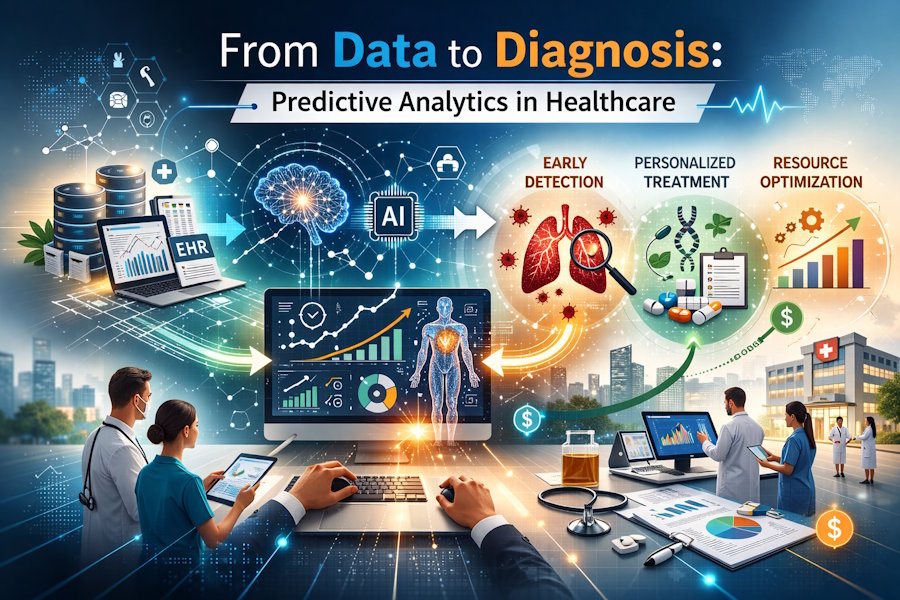
- Early Disease Detection: One of the most significant benefits of using predictive analytics in healthcare is early disease detection. By analyzing historical patient data along with current symptoms and risk factors, predictive models can accurately identify individuals who are at high risk for developing certain diseases or conditions before they even exhibit symptoms. This provides an opportunity for early intervention and prevention strategies to be implemented—an approach heavily championed by any modern preventive longevity and health optimisation clinic—potentially saving lives and extending healthspans.
- Personalized Treatment Plans: The use of predictive analytics also enables personalized treatment plans tailored specifically to each patient's unique needs based on their medical history and predicted outcomes. This approach ensures that patients receive the most effective treatments while minimizing unnecessary procedures or medications.
- Improved Resource Allocation: Predictive analytics can also help healthcare organizations better allocate resources such as staff members, equipment, and supplies by predicting future demand based on patient data. This can lead to more efficient and cost-effective operations, ultimately benefiting both patients and healthcare providers. Beyond clinical costs, predictive data also strengthens the revenue side. Cleaner documentation and accurate patient risk profiles directly support more efficient healthcare accounts receivable management services, reducing claim backlogs and accelerating reimbursements.
- Reduced Healthcare Costs: By identifying high-risk patients and implementing preventative measures, predictive analytics can help reduce healthcare costs in the long run. It can also assist in avoiding unnecessary hospital readmissions and emergency room visits by providing insights into which patients are likely to experience complications or require additional care.
Challenges and Limitations of Using Predictive Analytics in Healthcare
Predictive analytics has emerged as a powerful tool in healthcare, helping providers to anticipate and prevent potential health issues for patients. By analyzing vast amounts of data, predictive analytics can identify patterns and make predictions about future outcomes, leading to more accurate diagnoses and personalized treatment plans. However, like any technology, there are challenges and limitations that must be considered when implementing predictive analytics in healthcare settings.
- Quality and Quantity of Data Available for Analysis: One major challenge is the quality and quantity of data available for analysis. Predictive models rely on large sets of data to make accurate predictions, but predictive analytics in healthcare data is often fragmented across various systems such as electronic health records (EHRs), claims data, lab results, and patient-reported information.
- Accuracy and Completeness of Data: Additionally, the accuracy and completeness of this data can vary greatly between different sources. This poses a significant challenge for providers who must ensure that their predictive models are trained on high-quality data to avoid inaccurate or biased predictions.
- Technology Integration Issues: Another limitation is the potential for technology integration issues. The implementation of predictive analytics requires a sophisticated technological infrastructure capable of handling complex algorithms and large datasets. It also requires skilled IT professionals who can manage and maintain these systems. Many healthcare organizations may struggle with limited resources or outdated technology systems, making it difficult to fully leverage the power of predictive analytics.
Best Practices for Implementing Predictive Analytics in Healthcare Settings
To overcome these challenges and limitations, there are best practices that healthcare organizations can follow when implementing predictive analytics. These include having a clear understanding of the data sources and ensuring data quality, involving clinicians in the development and validation of predictive models, and establishing robust governance processes to ensure ethical use of patient data.
While predictive analytics has great potential for improving healthcare outcomes, it is not without its challenges and limitations. Healthcare organizations must carefully consider these factors before implementing this technology to ensure successful integration into their workflows. By following best practices and addressing ethical concerns surrounding patient privacy, providers can effectively leverage the power of predictive analytics to provide better care for their patients.
Ethical Concerns Surrounding the Use of Patient Data for Predictive Analytics
The success of predictive analytics depends heavily on human input. While advanced algorithms can analyze vast amounts of data at incredible speeds, they still require human expertise to interpret the results accurately. Healthcare professionals must understand how to use these tools effectively and be able to critically evaluate their recommendations before making treatment decisions.
- Patient Privacy and Security: In addition to technical challenges, there are ethical concerns surrounding the use of patient data for predictive analytics. As healthcare becomes increasingly digitalized, there is growing concern about patient privacy and security. Healthcare providers must ensure that they comply with all relevant privacy laws when collecting or sharing patient information for analytical purposes.
- Transparency: Furthermore, there are concerns about transparency in the use of algorithms for decision-making in healthcare settings. With predictive analytics, healthcare professionals must be able to understand and explain how predictions are made. This requires a level of transparency in the algorithms used, which can be challenging when dealing with complex mathematical models.
Conclusion
Predictive analytics is revolutionizing the healthcare industry by harnessing the power of data to improve patient outcomes, resource allocation, and overall efficiency. As technology continues to advance and more data becomes available, the potential for predictive analytics in healthcare will only continue to grow. By understanding its role in healthcare and the benefits it offers, we can pave the way towards a future where data-driven decisions optimize patient care.

