

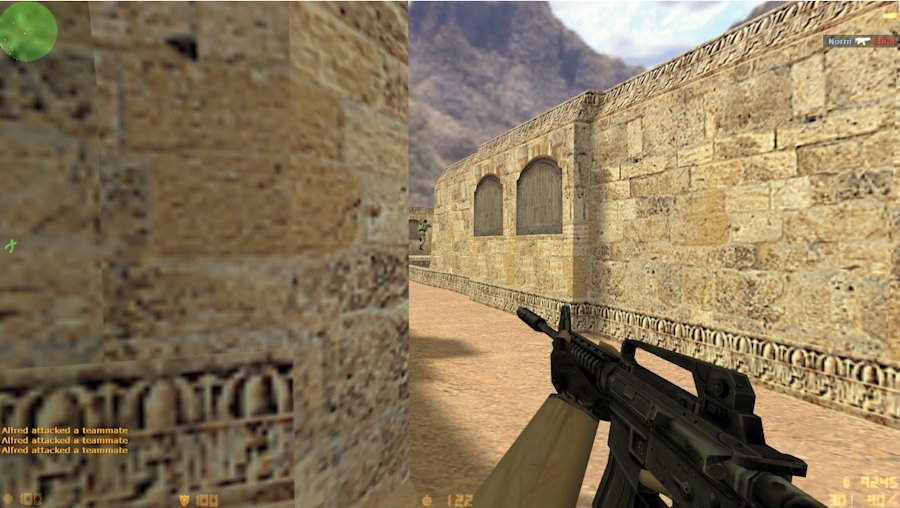
Remember that heart-pounding moment when you pulled off a perfect clutch on de_dust2, holding long with an AK, spraying down three rushing terrorists while your team screamed in voice chat? Or the sheer frustration of missing a wallbang by millimeters because your aim drifted? Every single pixel of that chaos - the crisp movement, the satisfying hitreg, the addictive rush - runs on the legendary GoldSrc engine in CS 1.6. You might scroll through modern shooters with fancy ray tracing and think they've left the old stuff behind, but boot up CS 1.6 today and you'll feel why this engine from the late 90s still hooks millions. It's raw, it's unforgiving, and it's pure skill distilled into code.
What exactly is goldsrc and where did it come from?
Let's rewind. In the mid-90s, id Software dropped Quake - a multiplayer monster that redefined fast-paced FPS action. Its engine was open, fast, and built for deathmatch glory. Valve saw potential and licensed it. They didn't just tweak a few lines; they rewrote massive portions in C++ (with some leftover C code hanging around). They added skeletal animations so player models moved smoothly instead of glitching like vertex puppets. They built entirely new AI systems for single-player experiences like Half-Life. They overhauled lighting to support colored, dynamic effects instead of Quake's flat monotone glow.
By the time Counter-Strike modded into existence in 1999, GoldSrc was already evolving. Valve pushed updates through the early 2000s, especially that game-changing 2001 netcode overhaul. Originally similar to QuakeWorld's basic system, it got prediction, lag compensation, and client-side interpolation - magic that let high-ping warriors compete without feeling like they were playing in molasses. CS 1.6, released in 2003, locked in those improvements. The result? A lightweight beast that runs buttery smooth on hardware that belongs in a museum.
You fire it up now, even on a low-end laptop, and it hits hundreds of frames per second. No bloated shaders, no mandatory SSDs - just efficient code doing exactly what it needs to do.
Core technical features that power your rounds
GoldSrc keeps things simple yet powerful. Here's the breakdown of what makes CS 1.6 feel so responsive and alive:
- physics system - Air acceleration is king. Strafe timing lets you build insane momentum mid-jump. No auto-assist; it's all manual sync between mouse and keys. That freedom creates bhop gods who glide across maps like they own gravity.
- networking stack - The 2001 update introduced client-side prediction (your movement feels instant) and server-side lag compensation (the server rewinds time briefly to check if your shot would have hit where you aimed). Peeker's advantage exists, but it's fairer than in pure client-authoritative engines. Even at 100-150 ping, shots register cleanly - no "I shot first but nothing happened" excuses as often.
- rendering pipeline - Supports software mode for ancient PCs or OpenGL for better visuals. Colored lighting, alpha-tested textures for glass and grates, dynamic water ripples, and transparent smokes that actually obscure vision without killing performance. Low-poly everything keeps draw calls minimal - expect 300-1000 FPS on modern rigs if uncapped (though capping at 100-333 avoids physics quirks).
- moddability - PAK archives store assets, WAD files handle textures, and the Hammer Editor (formerly Worldcraft) lets anyone build maps. AMX Mod X plugins turned public servers into zombie modes, surf arenas, or custom gametypes. The engine exposes enough hooks that communities still release fresh content decades later.
These aren't fancy modern tricks; they're battle-tested foundations that reward precision over polish.
Deep dive into mechanics goldsrc enables in cs 1.6
You don't just play CS 1.6 - you master its quirks. GoldSrc's design choices create the meta everyone obsesses over:
- bunnyhopping perfected - Momentum conservation is strict. Perfect strafe + mouse sync chains jumps indefinitely. Speedrunners and kz mappers push limits, chaining air strafes for map skips or rotations that catch rotations off guard. One mistimed jump, and you're back to walking speed - brutal but fair.
- wall penetration system - Bullets lose damage based on material and distance traveled through objects. AWP punches through multiple thin walls with lethal force; pistols barely scratch thick concrete. That famous mid-doors wallbang on Dust2? Engine math decides if it connects. Pros memorize penetration values per gun and map spot.
- recoil patterns - Every weapon has a fixed, learnable spray. AK-47 climbs left then right in a chaotic but predictable dance. M4A1 sprays tighter. Master control, and you land headshots at 30 meters full auto. No random bloom forgiveness - miss the pattern, miss the kill.
- grenade physics - Bounces feel weighty and consistent. HE damage drops with distance and obstacles; flashes blind based on line-of-sight and bounce angles. Flash through door cracks or over boxes becomes art. Smoke lingers long enough to force rotates or buys time for plants.
- hitbox precision - Player hitboxes are tight, especially crouched. Head hitbox sits high on standing models but shrinks when ducking. That split-second peek decision matters because the engine doesn't forgive sloppy aim.
Combine these, and you get moments of pure adrenaline: a 1v4 clutch with a timed smoke pop, bhop flank, and perfect spray transfer. GoldSrc doesn't hold your hand - it hands you the tools and says "prove yourself."
Why goldsrc still feels superior in many ways
Modern engines pile on features: physically based rendering, volumetric fog, destructible environments. But GoldSrc strips everything to essentials. Single-threaded focus means ultra-low input lag - your crosshair follows your mouse with zero delay. Multi-core? Not really needed when the game sips CPU. High FPS caps can glitch movement physics (hence the classic 100 FPS cap recommendation), but uncapped feels lightning-fast.
Netcode just works. No endless tickrate arguments; 64-tick public servers feel snappy because prediction and compensation handle variance gracefully. Maps stay small and tactical - no mile-long sightlines bloated with clutter. Balance comes from tight design, not patches every week.
It's lightweight too. Grab cs 1.6 free versions, install, and you're fragging in minutes. No 100 GB downloads, no mandatory updates breaking configs.
The real limitations (and why they kinda work in its favor)
Nothing's perfect. GoldSrc caps entities (edicts) around 1200-2048 depending on setup - too many props, projectiles, or players, and "no free edicts" crashes appear. Max models sit at 512, sounds at similar counts. No native multi-threading, so very high FPS warps air acceleration slightly. Graphics scream 1998: low-res textures, basic shadows, no anti-aliasing by default.
But these constraints force creativity. Mappers optimize ruthlessly. Servers run stable without monster hardware. Communities patch limits via custom builds or Xash3D forks. The "flaws" keep the game focused: tight bomb sites, no overpowered gimmicks, pure gunplay.
That endless nostalgia pull
Think back: stacking on Mirage, prefiring banana, dropping an eco round with a lucky HE bounce. Or the rage of a kemping AWPer denying your rush. GoldSrc captured lightning in a bottle - chaotic yet balanced, skill-based yet approachable. Pros still warm up mechanics here because the raw feel translates. Communities thrive with fresh maps, plugins, and tournaments.
The engine ages like fine wine. It runs everywhere, mods forever, and delivers that same electric buzz you chased as a kid.
Dust off that old config, hunt down counter strike 1.6 no steam for the classic unfiltered experience, tweak your crosshair, and jump into a server tonight. Strafe those long jumps, nail that next wallbang, land the ace, and feel why GoldSrc isn't just surviving - it's still dominating hearts. Your next legendary round is waiting. Get in the game.

