

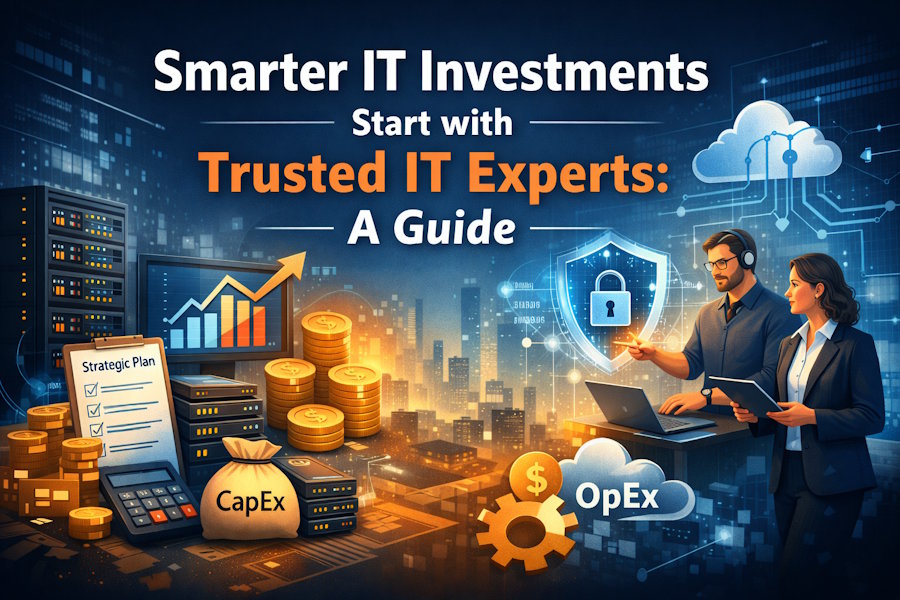
Technology plays a larger role in business success than ever before. Yet for many organizations, IT spending still feels unpredictable. One quarter the systems run smoothly, and the next quarter an unexpected server issue, hardware failure, or security concern suddenly appears and disrupts the budget.
This often happens when technology decisions are made reactively instead of strategically. Businesses wait until something breaks before taking action, which creates surprise costs and operational slowdowns. A more effective approach is to treat technology as a planned investment rather than an emergency expense. When organizations work with trusted IT experts, they gain the guidance needed to build a stable technology strategy that supports growth instead of constantly reacting to problems.
Key Takeaways
- Reactive management is expensive: Waiting for problems to occur creates hidden costs through downtime and lost productivity.
- Technology as a Service creates stability: Subscription-based models help businesses shift from unpredictable capital spending to consistent operational costs.
- Strategy matters as much as support: Experienced professionals focus on aligning technology decisions with long-term business goals.
- Outsourcing can improve ROI: Partnering with specialists often costs less than building a large in-house IT department.
The Hidden Price Tag of Reactive IT Management
Some of the most damaging costs in business are the ones that are difficult to measure. When technology is managed only after something fails, organizations often enter a cycle of emergency spending. A broken server, a slow network, or a corrupted file system suddenly requires immediate attention, usually at the worst possible time.
The cost of the repair itself is only part of the problem. Operational interruptions can affect productivity across the entire company. Employees may be unable to access files, communicate with customers, or complete essential tasks. Even short outages can delay projects and create frustration among staff and clients.
Downtime can also have a significant financial impact. Industry research shows that system outages can cost companies thousands of dollars per minute depending on the size of the organization and the services affected.
Without proper planning, these losses remain hidden in everyday operations. They appear as missed deadlines, overtime work to catch up on tasks, or rushed technology purchases that were never part of the original budget.
A reactive approach often means businesses pay more while receiving less reliability.
From Expenses to Investments: The CapEx vs. OpEx Shift
Many organizations are beginning to rethink how they fund their technology infrastructure. Traditionally, companies relied on a Capital Expenditure model, which meant purchasing equipment outright.
Under this model, a company might spend a large amount of money on servers, networking hardware, and workstations. These assets begin to lose value immediately and eventually require replacement. After several years, the organization faces another large purchase cycle.
An alternative approach is the Operational Expenditure model, often referred to as Technology as a Service.
Comparing the Financial Models
|
Feature |
Capital Expenditure (CapEx) |
Operational Expenditure (OpEx / TaaS) |
|
Payment Structure |
Large upfront investments |
Predictable monthly costs |
|
Asset Value |
Equipment depreciates over time |
Value delivered through services |
|
Flexibility |
Limited ability to scale quickly |
Technology can expand as needs grow |
|
Maintenance |
Internal team responsible |
Maintenance included in service |
This service-based approach spreads technology costs across predictable monthly payments. It also allows businesses to stay current with modern systems without needing to make major capital purchases every few years.
The result is improved financial stability and better long-term planning.
What Distinguishes Trusted IT Experts from Standard Vendors?
Not every IT provider offers the same level of value. Some vendors focus only on technical tasks such as repairing hardware, resetting passwords, or installing software updates. While these services are necessary, they rarely address the larger technology strategy of a business.
Experienced IT professionals take a different approach. Instead of simply fixing individual problems, they look at the bigger picture. They evaluate how technology supports the organization's operations, customer experience, and future growth.
This strategic perspective helps businesses make smarter decisions about infrastructure, cybersecurity, and cloud services. Planning ahead allows companies to scale their systems smoothly as they expand.
Strong IT partnerships also involve proactive communication. A reliable technology partner anticipates challenges before they affect daily operations. Rather than waiting for a problem to occur, they monitor systems, recommend improvements, and ensure the business is prepared for upcoming demands.
This proactive approach transforms IT from a support function into a strategic business asset.
The ROI of Expertise: Why Outsourcing Makes Financial Sense
Many business leaders assume outsourcing IT services will increase their expenses. In reality, the opposite is often true. Building an internal IT department requires significant investment in salaries, benefits, training, and specialized tools. For many organizations, especially those trying to balance daily support needs with long-term planning, working with managed IT services for businesses in Racine can provide access to broader technical expertise, proactive monitoring, service desk support, cybersecurity oversight, and infrastructure guidance without the overhead of staffing every specialty internally.
Even with a skilled internal employee, one person cannot realistically cover every area of technology. Cybersecurity, cloud infrastructure, user support, compliance, and long-term planning all require different skill sets.
Outsourcing allows organizations to access a broader team of specialists without carrying the full cost of hiring them individually. Research on managed IT services suggests that outsourcing technology management can significantly reduce operational costs while improving efficiency and service availability.
Businesses gain access to experienced professionals, advanced monitoring tools, and proven processes that would be difficult to maintain internally. This expanded capability often results in faster problem resolution and improved system reliability.
Risk Mitigation: Expert Planning Protects Your Bottom Line
Cybersecurity has become one of the most important considerations in modern IT strategy. Data breaches and ransomware incidents can disrupt operations and damage customer trust.
Strong security requires more than antivirus software or occasional updates. It involves continuous monitoring, layered protection, and careful planning. Organizations need to identify vulnerabilities before attackers find them.
Security professionals use tools that analyze network traffic, detect suspicious activity, and respond quickly when potential threats appear. Early detection often prevents small issues from turning into major incidents.
Equally important is having a tested recovery plan. Backups must be verified regularly, and businesses should know exactly how they will restore operations if systems become compromised.
These safeguards protect not only data but also the financial stability and reputation of the organization.
Conclusion
Relying on outdated technology management practices can create unnecessary financial risk for businesses. Emergency repairs, unpredictable hardware failures, and security incidents make budgeting difficult and disrupt daily operations.
A smarter approach is to treat technology as a strategic investment. With the right planning and professional guidance, businesses can stabilize their IT budgets, reduce risk, and improve efficiency across the organization.
Partnering with experienced professionals allows companies to move beyond reactive problem solving. Instead, they gain a technology strategy that supports long-term growth and stability.
Organizations that make this shift often discover that IT is not simply a cost to manage. When implemented thoughtfully, it becomes a powerful driver of productivity, innovation, and competitive advantage.

