

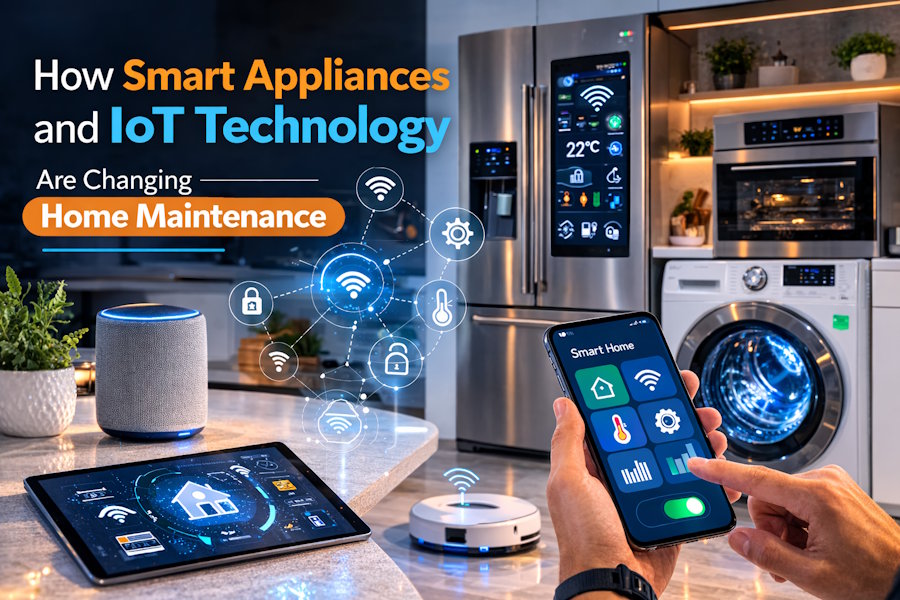
Modern homes are becoming increasingly connected thanks to the rise of smart appliances and Internet of Things (IoT) technology. Refrigerators can now monitor food freshness, washing machines can send alerts to smartphones, and ovens can be controlled remotely through mobile apps.
For developers, engineers, and tech enthusiasts, smart appliances represent a fascinating intersection between software development, embedded systems, and hardware integration.
However, even with advanced technology, appliances still require proper maintenance and occasional repair. Understanding how these systems work can help both developers and homeowners better manage connected devices.
This article explores the technology behind smart appliances, common technical issues that arise, and how software-driven diagnostics are transforming appliance maintenance.
Understanding the Technology Behind Smart Appliances
Smart appliances rely on a combination of embedded software, sensors, and connectivity modules.
Embedded Systems and Microcontrollers
At the core of every smart appliance is an embedded system. These systems typically include:
- Microcontrollers (MCUs) that process data from sensors
- Firmware that manages appliance operations
- Communication modules such as Wi-Fi or Bluetooth
Developers often program these devices using languages like:
- C / C++
- Embedded Python
- Rust (in modern firmware projects)
These systems allow appliances to collect data and respond intelligently to environmental changes.
IoT Connectivity
Connectivity is what transforms a regular appliance into a smart one. Many devices connect to cloud services through APIs that enable remote monitoring and control.
Common technologies used include:
- MQTT for lightweight device communication
- REST APIs for mobile and web integrations
- Edge computing for real-time processing
For example, a smart washing machine may send operational data to a cloud server, which analyzes performance and alerts the user if maintenance is required.
Software Diagnostics in Modern Appliances
One of the biggest advantages of smart appliances is the ability to run automated diagnostics.
Sensor-Based Monitoring
Modern appliances include sensors that track variables such as:
- Temperature
- Motor speed
- Water levels
- Energy consumption
These sensors feed data into onboard software that detects irregular patterns.
For example, if a refrigerator compressor begins drawing unusual amounts of power, the system can generate an error code before the failure becomes severe.
Predictive Maintenance
Predictive maintenance is a concept widely used in industrial systems and now increasingly present in consumer appliances.
Instead of waiting for a breakdown, software can analyze usage patterns and warn users in advance.
Benefits include:
- Reduced downtime
- Lower repair costs
- Extended appliance lifespan
Machine learning models are even being integrated into some systems to improve prediction accuracy over time.
Common Technical Issues with Smart Appliances
Even though smart appliances are technologically advanced, they are still susceptible to technical problems.
Firmware Bugs
Like any software-driven system, appliances can suffer from firmware bugs.
Symptoms might include:
- Device freezing
- Incorrect sensor readings
- Connectivity failures
Firmware updates are often required to resolve these issues.
Network Connectivity Problems
Many smart appliances depend heavily on stable internet connectivity.
Common issues include:
- Wi-Fi authentication errors
- Router incompatibility
- Cloud API downtime
Developers often mitigate these problems by implementing offline fallback modes so appliances continue functioning without internet access.
Sensor Failures
Sensors play a critical role in automation. If a sensor fails, the appliance may behave incorrectly.
Examples include:
- Dishwashers misjudging water levels
- Ovens overheating due to faulty temperature sensors
- Washing machines failing to detect load balance
Diagnosing these issues typically requires specialized testing tools.
The Role of Software in Appliance Troubleshooting
Modern repair technicians increasingly rely on software tools and digital diagnostics.
Diagnostic Interfaces
Some appliances include hidden service modes that allow technicians to run hardware tests.
These diagnostic interfaces can display:
- Error codes
- Sensor values
- Motor status
Technicians use these codes to determine which component is malfunctioning.
Remote Diagnostics
In certain cases, appliances can send diagnostic data directly to service providers.
This allows technicians to:
- Identify issues before visiting a home
- Bring the correct replacement parts
- Reduce repair time significantly
Some repair services also provide online troubleshooting guides and technical resources.
Why Professional Repair Still Matters
Despite advancements in automation and diagnostics, smart appliances remain complex systems that combine electronics, software, and mechanical components.
Attempting to repair these devices without the proper knowledge can lead to further damage or safety risks.
Professional technicians have access to:
- Specialized diagnostic equipment
- Manufacturer documentation
- Firmware update tools
For example, services like Excellence Appliance Repair provide support for diagnosing and fixing appliance issues using professional methods. Homeowners and developers researching appliance maintenance can find useful information and service insights at
excellenceappliancerepair.com.
Future Trends in Smart Appliance Technology
The next generation of appliances will likely include even more advanced technology.
AI Integration
Artificial intelligence is beginning to play a role in appliance optimization.
Possible applications include:
- Adaptive washing cycles based on fabric type
- Energy optimization using AI algorithms
- Predictive failure detection using deep learning
Edge Computing
Instead of sending all data to the cloud, edge computing allows appliances to process data locally.
This improves:
- Response time
- Privacy protection
- Reliability during internet outages
Open Developer Platforms
Some manufacturers are experimenting with developer SDKs that allow third-party developers to create custom automation scripts for appliances.
This could eventually lead to a home ecosystem similar to mobile app platforms.
Conclusion
Smart appliances are transforming how we interact with everyday household devices. By combining embedded systems, IoT connectivity, and intelligent software, modern appliances can monitor their own performance and alert users when maintenance is needed.
However, these technologies also introduce new challenges, from firmware bugs to connectivity issues. Understanding the software and hardware components involved can help developers, technicians, and homeowners troubleshoot problems more effectively.
As smart home technology continues to evolve, the integration of AI, edge computing, and advanced diagnostics will further improve appliance reliability and efficiency.
For anyone working with connected home devices, staying informed about these technologies is essential—not only for building better systems but also for maintaining the appliances that modern households depend on.

