

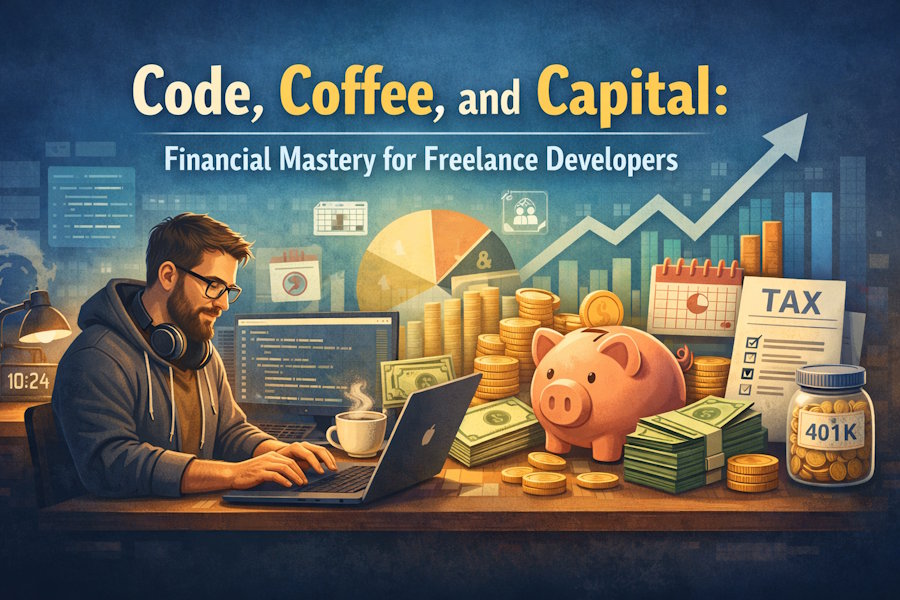
For a freelance software developer, the world is often defined by logic, syntax, and solving complex puzzles. You spend your days building elegant solutions for clients, but when it comes to the "back end" of your own business, things can get a little messy. It is easy to treat your finances like a secondary project that you will "refactor" later. However, without a solid financial framework, even the most talented coder can find themselves struggling to stay afloat. Managing your money is not just about paying the bills; it is about building the freedom to choose the projects you actually care about.
The Problem with Blurred Lines
When you first start freelancing, it is tempting to use your personal bank account for everything. After all, you are the business. But this creates a massive debugging nightmare when it comes to your finances. If you are paying for your server costs, your IDE subscriptions, and your morning latte from the same account, you lose the ability to see your actual profit.
The first step toward professional stability is creating a hard boundary. Opening a dedicated business account allows you to see exactly how much your "code for hire" business is generating. It makes it easier to track your overhead and ensures that you aren't accidentally spending your tax money on a new mechanical keyboard. Clear boundaries lead to clear data, and in development, we know that better data leads to better outcomes.
Navigating the Variable Income Stream
One of the biggest challenges for any freelancer is the "feast or famine" cycle. You might have a month where three projects wrap up at once, followed by six weeks of silence. If you manage your money based on your current bank balance, you are setting yourself up for stress.
A smarter approach is to pay yourself a fixed "salary" from your business account. By keeping a buffer in your business savings, you can smooth out the bumps. This allows you to stay focused on writing clean code rather than worrying about how you will pay rent during a slow month. Treat your business like a company that employs you, rather than just a revolving door for cash.
The Tax Man and the Technicality
For many developers, tax season feels like a poorly documented legacy system. It is confusing, high-stakes, and full of hidden requirements. Because you don't have an employer withholding taxes from your paycheck, the responsibility falls entirely on you. If you aren't setting aside a percentage of every invoice, you are going to face a very painful "runtime error" when the bill comes due.
Success in this area is all about early intervention. Instead of waiting until the last minute, you should be preparing for small business tax season throughout the entire year. This means logging your hardware purchases, your home office square footage, and even your professional development courses as they happen. When you stay on top of these details, you can take advantage of every deduction available to you, keeping more of your hard-earned money in your own pocket.
Investing in the Right Stack
Just as you carefully choose the languages and frameworks you work with, you should be intentional about your financial "stack." You need tools that automate the boring stuff so you can get back to building. Digital invoicing, automated expense tracking, and cloud-based accounting are essential.
The goal is to reduce the "manual overhead" of your business. If you have to spend five hours a week chasing invoices or sorting through digital receipts, that is five hours you aren't billing for. By using tools that integrate with your bank and your project management systems, you turn your bookkeeping into a background process that runs silently while you focus on the creative work.
Long-Term Version Control for Your Life
Finally, it is important to remember that you are your most valuable asset. Unlike a traditional job, there is no corporate 401k or pension plan waiting for you. You have to build your own safety net.
This means planning for retirement and health insurance from day one. It might feel like a distraction when you are just starting out, but it is the ultimate form of version control for your life. By automating your savings and staying disciplined with your records, you are ensuring that your freelance career is a sustainable, long-term success rather than a temporary gig.

