


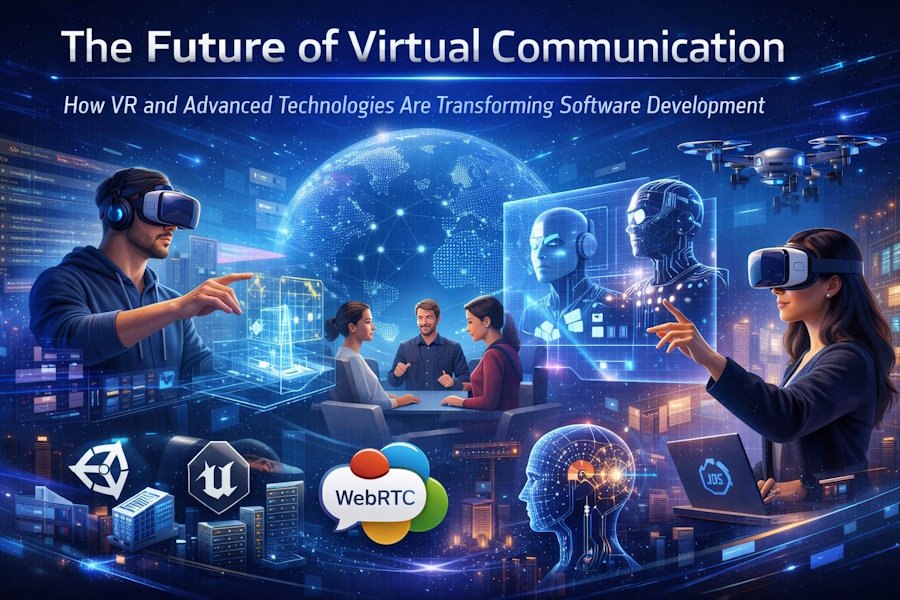
Technology is evolving at an unprecedented pace, continuously reshaping how people communicate, collaborate, and build digital solutions. One of the most exciting developments in recent years is the rise of virtual reality (VR) and immersive communication platforms. These innovations are not only changing social interaction but are also opening new opportunities for developers, businesses, and remote teams.
In this article, we’ll explore how VR-based platforms and emerging technologies are influencing modern software development and what developers need to know to stay ahead.
Understanding Virtual Collaboration Platforms
Virtual collaboration tools are no longer limited to simple video conferencing. Today, platforms like VR-based meeting environments allow teams to interact in immersive 3D spaces. These platforms simulate real-world environments where users can join meetings using avatars, share ideas, and collaborate in real time.
From a development perspective, such systems rely on:
- Real-time rendering engines
- Cloud-based synchronization
- Low-latency communication protocols
- 3D modeling and animation frameworks
Developers working on these systems often use technologies such as:
- Unity or Unreal Engine for 3D environments
- WebRTC for real-time communication
- Node.js and WebSockets for backend infrastructure
The Role of VR in Remote Work
Remote work has become a standard across the tech industry, and VR is enhancing this experience significantly. Instead of traditional video calls, teams can now interact in immersive environments that simulate physical offices.
Key benefits for developers and teams:
- Improved engagement in meetings
- Real-time collaboration on virtual whiteboards
- Better visualization of complex systems
- Reduced communication gaps in distributed teams
For developers building such platforms, challenges include:
- Optimizing performance for different devices
- Ensuring cross-platform compatibility
- Managing real-time data synchronization
Building VR Applications: Core Technologies
Creating VR applications requires a combination of software engineering skills and specialized tools. adult video chat with females Developers entering this field should focus on the following areas:
1. 3D Rendering and Game Engines
Engines like Unity and Unreal provide built-in tools for rendering, physics simulation, and user interaction.
2. Networking and Real-Time Communication
VR apps depend heavily on real-time interaction. Technologies like WebRTC and socket-based communication are essential for seamless user experiences.
3. User Interface Design in 3D
Designing interfaces in VR is different from traditional UI/UX. Developers must consider:
- Spatial interaction
- Gesture-based controls
- Voice commands
4. Hardware Integration
VR applications often need to integrate with hardware such as headsets, motion controllers, and sensors. This requires knowledge of SDKs provided by hardware manufacturers.
Challenges in VR Development
Despite its potential, VR development comes with several challenges:
High Hardware Requirements
Not all users have access to high-end VR devices. Developers must optimize applications for lower-end systems.
Performance Optimization
Maintaining high frame rates (usually 60 FPS or higher) is critical to avoid motion sickness and ensure smooth experiences.
User Accessibility
Designing intuitive interactions for all users remains a key challenge, especially for beginners unfamiliar with VR environments.
Beyond VR: Emerging Communication Technologies
While VR is gaining traction, other advanced technologies are also shaping the future of communication.
3D Projection and Real-Time Rendering
New systems are being developed that allow users to interact with lifelike 3D projections of other people. These systems combine:
- Multiple camera inputs
- Depth sensors
- AI-based rendering
For developers, this introduces new possibilities in:
- Computer vision
- Machine learning integration
- Real-time graphics processing
Artificial Intelligence in Communication
AI plays a crucial role in enhancing virtual communication platforms by enabling:
- Real-time language translation
- Voice recognition
- Smart avatars
- Behavioral predictions
Developers can integrate AI using frameworks such as:
- TensorFlow
- PyTorch
- OpenCV
Practical Use Cases for Developers
The impact of VR and advanced communication technologies extends across multiple domains:
1. Remote Development Teams
Developers can collaborate in virtual workspaces, improving productivity and team coordination.
2. Education and Training
Interactive VR environments allow developers to create training simulations for complex systems.
3. Product Design and Prototyping
Teams can visualize and modify designs in real-time using 3D environments.
4. Customer Support and Demos
Businesses can offer immersive product demonstrations to clients.
The Future of Virtual Communication in Development
As hardware becomes more affordable and technology continues to improve, VR and immersive communication tools will become more accessible. Developers who invest time in learning these technologies today will have a significant advantage in the future.
Key trends to watch:
- Web-based VR (WebXR)
- AI-powered avatars
- Cross-platform immersive applications
- Integration of AR (Augmented Reality) with VR
Conclusion
Virtual reality and advanced communication technologies are transforming the way developers build and interact with digital systems. While there are still challenges to overcome, the potential for innovation is enormous.
For developers, this is the perfect time to explore VR development, experiment with new tools, and prepare for a future where immersive communication becomes the standard.
Staying updated with these trends will not only enhance your skill set but also open doors to new opportunities in the rapidly evolving tech landscape.