

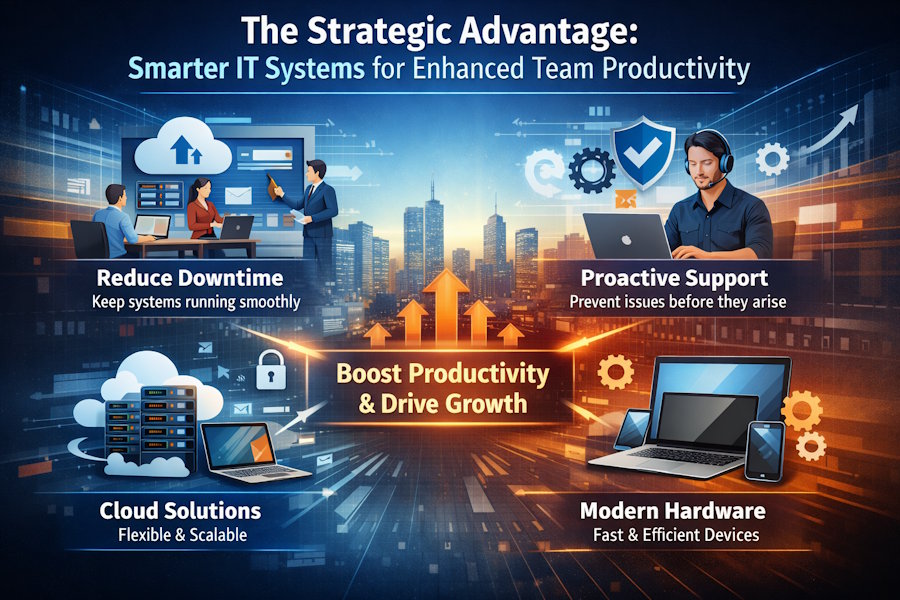
When your team is ready to move fast but your technology cannot keep up, productivity takes a hit almost immediately. Projects slow down, communication becomes inconsistent, and even simple tasks start taking longer than they should. For many businesses, these interruptions have quietly become part of the daily routine.
These recurring issues are not just minor inconveniences. They directly affect output, employee morale, and ultimately revenue. Research shows that companies with high-performing IT environments achieve up to 35% higher revenue growth and stronger profit margins.
Instead of constantly working around technical limitations, businesses need systems that support their pace. The real advantage comes from having technology that runs reliably in the background, allowing teams to stay focused and efficient without interruption.
Key Takeaways
- IT downtime and outdated systems create hidden costs that reduce productivity and profitability
- Preventative IT strategies help avoid disruptions before they affect employees
- Cloud-based environments and modern hardware models improve flexibility and scalability
- Direct access to experienced IT professionals keeps teams moving without delays
The Real Cost of IT Downtime and Outdated Systems
Outdated systems rarely fail all at once. Instead, they slow things down little by little. A lagging application here, a dropped connection there, and eventually your team is spending more time waiting than working.
When employees cannot access files, send updates, or complete tasks on time, productivity declines quickly. Over time, these small delays compound into missed deadlines and lost opportunities.
The financial impact is significant. Studies estimate that IT downtime can cost businesses thousands of dollars per minute. Even shorter interruptions can disrupt workflows enough to affect an entire day’s output.
More importantly, these issues create frustration. Employees expect their tools to work. When they do not, it affects morale and engagement just as much as performance.
Why Reactive IT Support Slows Teams Down
Many businesses still rely on a reactive approach to IT. Issues are addressed only after they become visible problems. While this might seem manageable at first, it creates a pattern where disruptions are inevitable.
Every time something breaks, work stops. Teams pause what they are doing, report the issue, and wait for a resolution. Even when problems are fixed quickly, the interruption has already impacted productivity.
This approach also makes planning difficult. Costs become unpredictable, and leadership teams are often forced to deal with urgent issues instead of focusing on long-term improvements.
A more effective strategy is to reduce the number of disruptions in the first place. Instead of reacting to failures, modern IT focuses on maintaining system performance and preventing issues before they affect users.
|
Operational Approach |
Reactive Support |
Preventative IT Strategy |
|
Primary Focus |
Fix issues after they occur |
Maintain systems to avoid disruptions |
|
Impact on Workflow |
Frequent interruptions |
Consistent productivity |
|
Cost Structure |
Unpredictable expenses |
Stable, planned investment |
|
Business Alignment |
Short-term fixes |
Long-term efficiency |
Shifting away from reactive support creates a more stable environment where teams can focus on their actual responsibilities instead of technical setbacks.
Core Elements of an Efficiency-Driven IT Infrastructure
Creating a productive work environment requires more than simply upgrading hardware. It involves building a system where technology actively supports how your team works every day.
Cloud Mobility and Flexible Access
Modern teams are no longer tied to a single location. Cloud-based systems allow employees to access their tools securely whether they are in the office, at home, or on the move.
This flexibility ensures that productivity does not depend on physical infrastructure. Work continues regardless of location, which is especially important for growing or hybrid teams.
Smarter Hardware Management
Outdated equipment is one of the most common productivity barriers. Slow devices increase task time and frustrate employees.
Modern approaches to hardware management allow businesses to keep systems updated without large upfront investments. Instead of holding onto aging equipment, companies can maintain consistent performance across their workforce.
Direct Access to Experienced IT Professionals
Even with strong systems in place, employees will occasionally need support. The speed and quality of that support can determine how quickly work resumes.
Many organizations improve response times by working with experienced providers like Eaton Computer, a managed IT services firm focused on proactive support, cloud solutions, and optimizing business technology performance for SMBs.
Having access to knowledgeable professionals who understand your environment reduces downtime and keeps teams moving without unnecessary delays.
Security as a Foundation for Reliability
Reliable systems are also secure systems. Cybersecurity issues are one of the leading causes of unexpected downtime.
Implementing strong security measures such as multi-factor authentication, endpoint protection, and regular monitoring helps prevent disruptions before they occur.
In addition, maintaining compliance with industry standards ensures that systems remain stable and trustworthy as the business grows.
Aligning IT Systems with Business Growth
Technology should support business goals, not slow them down. When systems are aligned with operational needs, teams can work more efficiently and deliver better results.
If internal tools are slow or unreliable, customers will eventually feel the impact. Delays in service, missed communication, and inconsistent performance can damage trust.
On the other hand, reliable systems allow employees to focus on delivering value. Projects move faster, communication improves, and overall service quality increases.
Strong IT infrastructure does more than improve internal workflows. It strengthens the entire customer experience and supports long-term growth.
Conclusion
Improving team productivity starts with building systems that support consistent performance. When technology works as expected, employees can stay focused and complete their work without unnecessary interruptions.
Moving away from reactive IT support toward a more preventative approach helps reduce downtime, stabilize costs, and improve overall efficiency.
By investing in reliable infrastructure, flexible access, and expert support, businesses create an environment where teams can operate at their full potential.
Taking the time to evaluate your current systems is a practical first step. With the right adjustments, your IT can shift from being a source of frustration to becoming a key driver of productivity and growth.

