

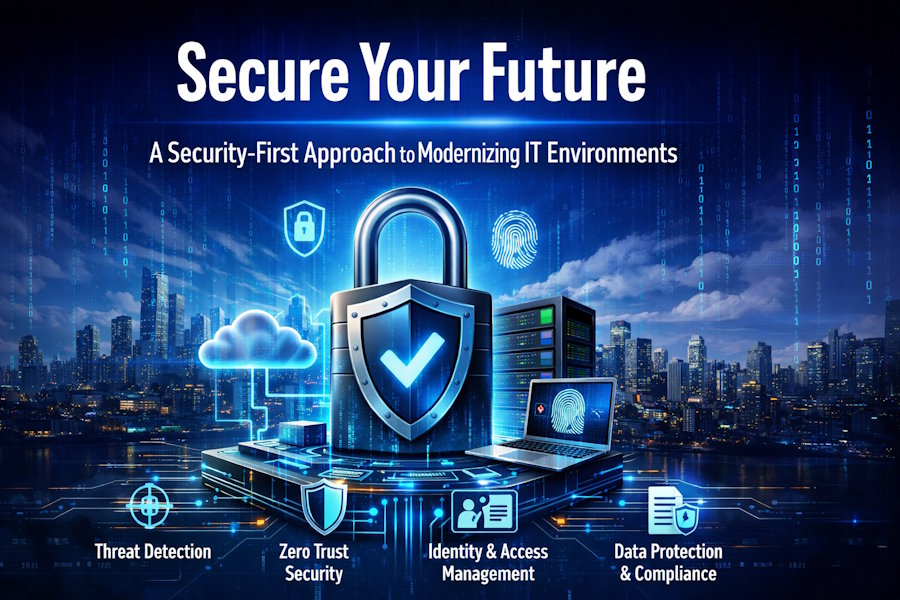
Modernizing your IT environment is no longer optional, but doing it the wrong way can expose your business to serious risks. Many companies rush into cloud adoption or system upgrades without fully considering how security fits into the bigger picture. The result is often unexpected vulnerabilities, operational disruptions, and costly setbacks that could have been avoided with better planning.
The financial impact of these gaps is significant. Recent industry reports show that the average cost of a data breach has climbed into the millions, making even a single incident a major business threat. This highlights a clear reality: upgrading your technology without prioritizing security can cost far more than the investment itself.
To move forward confidently, businesses need to treat cybersecurity as a core part of modernization, not an afterthought. Partnering with providers that offer outsourced managed services in Seattle can help organizations integrate protection, monitoring, and compliance into every stage of their IT transformation.
Key Takeaways
- A security-first approach ensures protection is built into IT systems from the start, not added later
- Modern environments require continuous monitoring and identity-based security models
- Early security integration improves long-term cost efficiency and operational stability
- Co-managed IT support helps bridge internal skill gaps without losing control
What a Security-First Approach Really Looks Like
A security-first strategy starts with intentional design. Instead of adding protections after systems are deployed, security is considered at every stage of planning and implementation. This approach helps prevent vulnerabilities before they become real problems.
In practice, this means aligning infrastructure decisions with risk management. Systems are built with access controls, monitoring, and data protection already in place. As a result, businesses avoid the common cycle of reacting to issues after damage has already occurred.
It also simplifies daily operations. When security is built into the environment, employees do not need to constantly work around restrictions or deal with unexpected disruptions. Everything runs more smoothly because the foundation is stable and secure.
Why Traditional Perimeter Security No Longer Works
The way businesses operate has changed dramatically. Data is no longer stored in a single office or accessed only from company devices. Employees work remotely, applications run in the cloud, and systems are connected across multiple platforms.
Because of this shift, traditional perimeter-based security is no longer enough. The old model assumed that anything inside the network could be trusted. Today, that assumption creates unnecessary risk.
Recent findings show that a significant portion of data breaches now involve information spread across multiple environments. When systems are distributed, attackers have more opportunities to find weak points.
A modern approach focuses on protecting access rather than location. Instead of relying on a fixed boundary, businesses need systems that verify users, monitor activity, and respond quickly to unusual behavior.
Core Components of a Secure Modern Infrastructure
Building a secure IT environment requires more than a single tool or solution. It involves combining several key elements that work together to protect data and maintain stability.
Continuous Monitoring and Threat Detection
Cyber threats do not follow business hours. Attacks can happen at any time, often when teams are offline. Continuous monitoring helps detect unusual activity early, reducing the risk of major disruptions.
This type of monitoring tracks system behavior, login attempts, and data movement in real time. When something seems out of place, it can be investigated and addressed immediately.
Reliable Backup and Recovery Systems
Even with strong defenses, no system is completely immune to failure. Hardware issues, human error, or advanced cyberattacks can still occur. That is why reliable backup systems are essential.
Modern backup strategies focus on speed and accessibility. Data is stored securely in multiple locations and can be restored quickly if needed. This minimizes downtime and ensures business continuity.
Identity and Access Management
Controlling who has access to your systems is one of the most effective ways to improve security. Identity and access management (IAM) Solution ensures that only authorized users can view or modify sensitive information.
This includes verifying user identities, limiting access based on roles, and monitoring account activity. By tightening access controls, businesses reduce the chances of internal errors and external breaches.
Zero Trust Framework
A Zero Trust approach assumes that no user or device should be automatically trusted. Every request must be verified before access is granted.
This method helps contain potential threats. If a single account is compromised, the attacker cannot easily move through the network. The issue stays isolated, which protects the rest of the system.
Maintaining Compliance During IT Modernization
For many organizations, compliance is just as important as security. Industries such as healthcare, finance, and legal services must follow strict regulations when handling sensitive data.
During IT modernization, maintaining compliance can become more complex. Data is moved, systems are updated, and new tools are introduced. Without proper oversight, it is easy to create gaps that lead to violations.
A structured, security-first approach helps prevent these issues. By mapping data flows and applying access controls from the beginning, businesses can maintain compliance throughout the transition.
Ongoing monitoring also plays a key role. Instead of preparing for audits once a year, systems can continuously track compliance status and flag potential issues before they escalate.
The Real ROI of Building Security Into Your Systems
Security is often seen as a cost, but in reality, it is a long-term investment. When done correctly, it reduces expenses by preventing disruptions, avoiding fines, and minimizing recovery efforts.
A secure system is also easier to scale. As your business grows, adding new users or tools becomes more straightforward because the infrastructure is already designed to handle change.
Operational efficiency improves as well. Employees spend less time dealing with technical issues and more time focusing on their actual work. This leads to better productivity and stronger overall performance.
In the long run, businesses that prioritize security early tend to spend less while achieving more stable and reliable operations.
Supporting Internal Teams with Co-Managed IT
Many internal IT teams are already stretched thin. They handle daily support requests, system maintenance, and user issues, leaving little time for strategic planning or advanced security management.
This is where co-managed IT support becomes valuable. Instead of replacing your internal team, it enhances their capabilities by providing additional expertise and resources.
External specialists can focus on areas like monitoring, threat detection, and infrastructure design. Meanwhile, your internal team continues managing day-to-day operations and supporting employees.
This balance allows businesses to strengthen their security posture without overloading their staff or significantly increasing costs.
Conclusion
Modernizing your IT environment is a necessary step for growth, but it must be done with care. Without a clear security strategy, even the most advanced systems can introduce new risks instead of solving old problems.
A security-first approach ensures that protection is built into every layer of your infrastructure. It helps prevent downtime, supports compliance, and creates a stable foundation for future expansion.
By planning ahead and working with the right partners, businesses can turn IT modernization into a smooth and secure process. Instead of reacting to issues, you gain the confidence to move forward, knowing your systems are built to support long-term success.

