

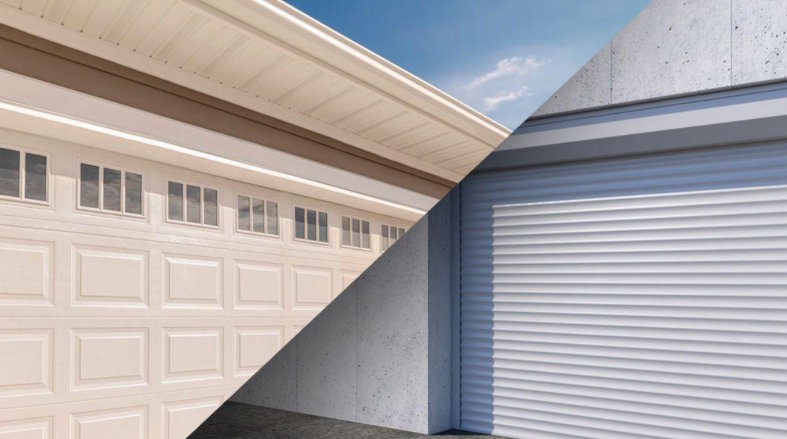
Garage doors are a very important part of a building because they offer security, convenience, and beauty. Although a visitor understands the residential garage door, commercial garage doors have another purpose and are made with different parts that are tailored to suit specific conditions. The knowledge of the differences between commercial and residential garage door parts is crucial to house owners, contractors, and maintenance personnel to find quality cog and wheel functioning, and they do not need to worry about their short life.
Purpose and Usage
The major distinction between commercial and residential garage doors is in their purpose and the number of uses. Residential door operators are usually at home and are operated a few times a day, to either open or close a house garage door. They also focus on beauty, silent performance, and security specifications that are family-friendly features. Commercial garage doors are, however, designed to survive much longer with their frequent opening and closing, which may include dozens of uses every day in warehouses, factories, and retail places. This augmented working pressure ensures more hard-wearing and durable pieces that can carry the huge weight.
Material and Construction
The doors of residential garages are usually made of lighter materials like aluminum, wood, or vinyl and provide a combination of durability and image. Such materials make it possible to have creative designs, insulation, and finishes that support the architecture of the home. However, commercial doors often employ heavy-gauge steel or sine fortified aluminum. These are the materials needed to offer the strength needed to secure precious equipment and inventory. In the construction of commercial doors, reinforced panels, steel struts, and industrial-grade fasteners are often used to accommodate a large number of uses and larger sizes of doors used in commerce.
Hinges and Rollers
The rollers and hinges of garage doors are important for easy performance. The door of a residential garage normally has light-duty hinges and nylon or steel rollers that are suitable for moderate use. These elements focus more on silent and easy motion and thus are usually designed to be used in houses with attached areas. Commercial garage doors cannot get by with lightweight hinges: hinges may be made of beige or thinner steel, and rollers must support heavier weights. Commercial roller bearings are often sealed, or ball bearings, made very heavy-duty or heavyweight to last a long time and have minimum maintenance requirements, as well as to make sure that the doors will work again and again without draining or setting.
Springs and Counterbalance Systems
Garage door springs offer the counter force needed to open and close doors in a safe manner. Billabong or lighter-weight door torsion or extension springs are commonly used on residential doors. These springs suit well in the case of the normal garage door panel, but might not last long in the case of heavy or frequent applications. The gates used by commercial garages use heavy-duty torsion springs or a special-purpose counterbalance mechanism to roll doors that are hundreds of pounds. The springs are bigger, stronger, and are frequently fitted in series in order to balance out the weight, so that the door can perform its functions safely during numerous time cycles over many years.
Tracks and Mounting Hardware
Garage door tracks, as well as mounting hardware, are much different between commercial and residential. Doors of the residential garages are typically served by standard vertical and horizontal tracks that are designed to fit the doors of medium size and weight. The brackets and fasteners are made smaller in size when loaded with less weight, and are not used very often. Commercially reinforced tracks are used on commercial garage doors, usually with non-standard angles or with high-lift styles, to accommodate doors of the largest size. Brackets, end bearing plates, and struts are designed to handle heavier panels, longer doors, and increased overall stress of operations. The installation of these components in a proper way is very important to avoid early wear and to maintain control over the work.
Cables and Drums
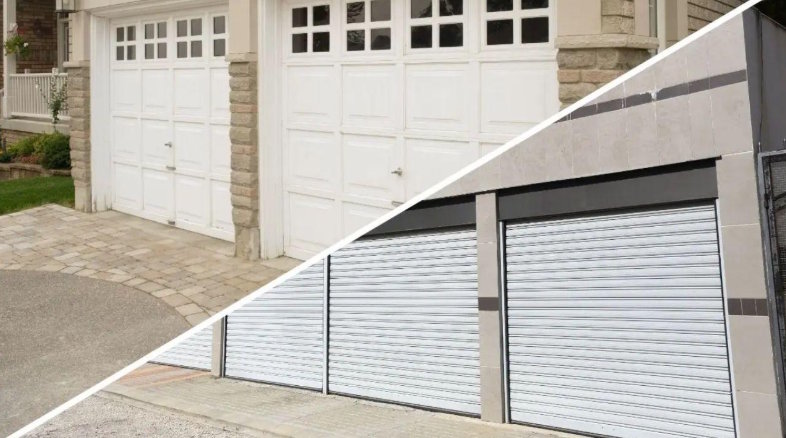
The tension in the springs needs to be transferred to open the door by the use of cables and drums. Typically, residential doors have standard steel cables that are mounted on comparatively small drums and that meet the weight of the door. Large doors, particularly the ones built on high-lift or super-sized systems, need heavy-duty cables and larger drums to withstand a higher level of tension and process more movements. Good materials and accurate engineering allow no fraying and snapping, and this is paramount in business, where fraying of doors can halve work or cause security risks.
Weather Seals and Accessories
Commercial and residential garage doors both use weather seals to shield interiors against drafts, dust, and water. Home defence and energy conservation in residential doors consist of bottom seals and side seals that are made of rubber or vinyl. The commercial doors need very strong sealing solutions, with or without the packaging of aluminum channels, reinforced bottom seals, and industrial-grade gaskets. Also, to increase the safety and durability during high usage, the commercial doors may be provided with accessories like operator reinforcement brackets, push-down bumper springs, or special flag brackets.
Maintenance Considerations
The level of maintenance needed on commercial and residential garage doors can be seen to have an impact on their usage patterns. Residential doors are less frequently used and are usually simply lubricated, and have the rollers, hinges, and springs checked periodically. The nature of commercial doors when it comes to increased operational demands requires frequent checkups, the professional lubrication of the heavy-duty rollers and bearings, and the periodic replacement of the components in high-wearing condition, including springs, cables, and rollers. This may cause failure to maintain the commercial doors, thus leading to usage costs or loss of life; therefore, durability and maintenance are the main factors to consider when choosing the parts.
Conclusion
To recap everything mentioned above, though there are some fundamental commonalities in terms of how commercial and residential garage doors operate, there are also substantial differences between the parts applied in the two applications regarding strength, durability, and design. The residential doors are oriented towards beauty, silent functionality, and medium durability, whereas commercial doors are designed to be used heavily, in larger sizes, and as dependable as possible. These differences are essential to the correct functionality, safety, and durability of the property and facilities owned by property owners and facility managers. Selection of correct components, use of hinges and rollers, or use of springs, tracks, and cables will not only enhance the performance but also reduce maintenance costs in the life of the door. Knowing about the specificity of commercial and residential systems requirements, the users will choose the most correct solution that will help to save their investment and guarantee appropriate and reliable work in any conditions.

