


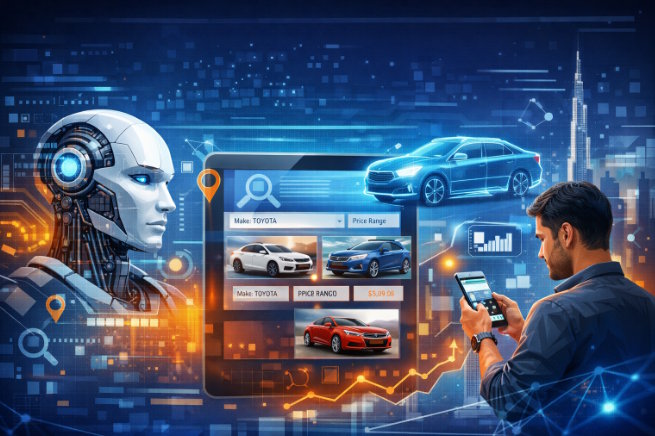
Artificial intelligence is rapidly transforming how users explore the used car market, bringing a level of precision and efficiency that was not possible just a few years ago. What once required hours of browsing listings, comparing prices, and contacting multiple sellers has now become a more refined and intelligent experience. Today’s buyers expect platforms to understand their needs instantly and present the most relevant options without unnecessary effort.
In highly active automotive markets like Dubai, where demand for resale vehicles continues to grow, platforms are increasingly leveraging AI to enhance user journeys. Whether someone is casually browsing or actively planning to purchase a used Toyota, AI systems now analyse behaviour, preferences, and intent to deliver highly targeted results. This shift is not just improving convenience but fundamentally changing how buyers make decisions.
The Evolution of Search in the Used Car Market
The traditional approach to searching for used cars relied heavily on manual filters and keyword-based queries. Users would specify parameters such as budget, car brand, and model year, then scroll through pages of listings to find suitable options. While effective to some extent, this process was time-consuming and often overwhelming.
AI introduces a more dynamic approach by understanding the context behind a search. Instead of relying solely on exact keywords, modern platforms interpret user intent. This means that even broad or conversational searches can yield highly relevant results. As a result, users spend less time refining their searches and more time evaluating suitable options.
Personalised Experiences That Adapt to User Behaviour
One of the most impactful aspects of AI in used car platforms is personalisation. Each interaction a user has with a platform contributes to a data profile that helps refine future results. This includes analysing browsing history, preferred price ranges, and interest in specific vehicle types.
For example, a user who consistently views SUVs will begin to see more SUV listings, along with similar models that match their preferences. Over time, the platform becomes more aligned with the user’s needs, creating a tailored experience that feels intuitive rather than generic. This level of personalisation is particularly valuable in diverse markets where buyer preferences can vary significantly.
Natural Language Search and Conversational Queries
Search behaviour has evolved beyond rigid keyword inputs. Users now expect to interact with platforms in a more natural way, using phrases that reflect real-life conversations. AI-powered search engines can interpret queries such as “best family car under budget in Dubai” and deliver relevant results without requiring precise keywords.
This capability is driven by natural language processing, which allows systems to understand context, synonyms, and user intent. As a result, users can explore options more freely, without needing to adapt their language to match the platform’s requirements. This shift is making the search process more accessible and user-friendly.
Smarter Pricing Insights and Market Transparency
Pricing is a critical factor in the used car market, and AI is playing a key role in improving transparency. By analysing large volumes of data, including historical sales, current listings, and market trends, AI can provide accurate pricing insights.
Users can now see whether a listing is competitively priced, overpriced, or a good deal based on market data. This reduces uncertainty and helps buyers make informed decisions. Instead of relying solely on intuition or limited comparisons, users have access to data-driven insights that enhance confidence.
Predictive Recommendations That Simplify Decision Making
AI does not just respond to user actions but anticipates them. Predictive recommendation systems analyse patterns across multiple users to suggest vehicles that align with specific needs. This includes identifying similar models, alternative options, and even vehicles that offer better value.
For instance, a user exploring compact sedans might be shown additional models within the same category, along with insights into fuel efficiency, maintenance costs, and resale value. These recommendations help users discover options they might not have considered, making the decision-making process more comprehensive.
The Role of Aggregator Platforms in AI Innovation
Aggregator platforms have become central to the adoption of AI in the used car market. By consolidating listings from multiple sellers, these platforms require advanced systems to organise and present data effectively. AI enables them to rank listings based on relevance, quality, and user preferences.
This ensures that users are not overwhelmed by the volume of available options. Instead, they are guided towards listings that are most likely to meet their needs. As these platforms continue to evolve, AI will play an even greater role in enhancing user experiences and improving efficiency.
Building Trust Through Data and Insights
Trust is a crucial factor in the used car market, where buyers often face uncertainty about vehicle condition and seller reliability. AI helps address this by analysing user reviews, seller ratings, and historical data to highlight trustworthy options.
In addition, AI can identify patterns that indicate potential issues, such as inconsistent pricing or suspicious listings. By filtering out unreliable options, platforms create a safer and more transparent environment for users. This not only builds confidence but also encourages more users to engage with online marketplaces.
Mobile Optimisation and Instant Results
With the majority of users accessing platforms through mobile devices, the demand for fast and seamless experiences has increased. AI plays a significant role in optimising search results for mobile users, ensuring that the most relevant listings are displayed quickly.
Features such as auto-suggestions, instant filtering, and personalised recommendations make it easier for users to navigate platforms on smaller screens. This aligns with the fast-paced lifestyle of urban markets, where users expect immediate results with minimal effort.
Connecting Search with Ownership Decisions
The impact of AI extends beyond the initial search process into broader ownership decisions. Users exploring used cars often consider factors such as long-term costs, resale value, and maintenance requirements. AI can provide insights that help users evaluate these aspects more effectively.
By analysing user behaviour and market trends, platforms can suggest vehicles that align with both short-term needs and long-term goals. This creates a more holistic approach to car buying, where users are not just selecting a vehicle but making an informed investment.
Bridging Buying and Selling in a Unified Experience
The integration of AI across buying and selling platforms is creating a more connected ecosystem. Users who are exploring used cars may also be interested in transitioning from their current vehicle. AI enables platforms to identify these opportunities and present relevant options at the right time.
For example, a user browsing listings might also receive insights into how to sell my car, along with estimated values and potential demand. This creates a seamless experience where users can manage both buying and selling within a single platform, reducing complexity and saving time.
The Future of AI in Used Car Search
As AI technology continues to advance, its role in the used car market will only grow. Future developments are likely to include even deeper levels of personalisation, more accurate predictive models, and enhanced user interfaces that make the search process even more intuitive.
In competitive markets like Dubai, where innovation drives user expectations, platforms that embrace AI will continue to lead the way. Buyers will benefit from smarter tools, greater transparency, and more efficient decision-making processes.
Ultimately, AI is not just changing how users search for used cars but redefining the entire experience. From discovery to decision-making, every stage of the journey is becoming more intelligent, connected, and user-focused.