

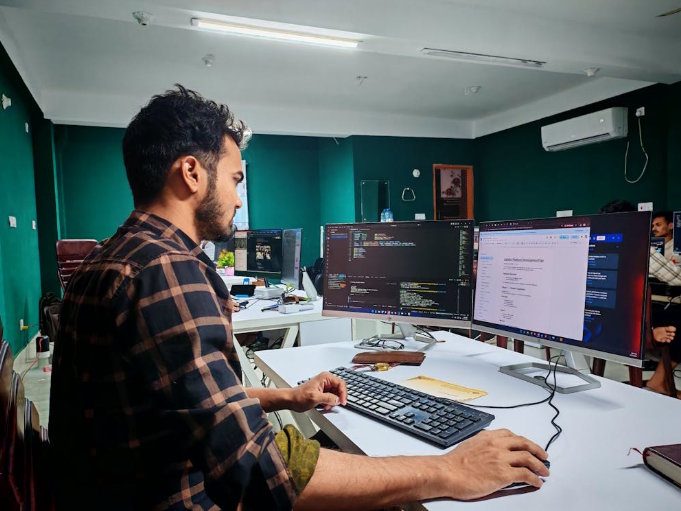
Things have changed. Like… a lot more than people sometimes admit.
There was a time (not even that long ago, honestly) when developers could just focus on building stuff. If it worked, cool. If it didn’t crash every five minutes, even better. Security? That was kind of pushed somewhere else. Maybe handled later. Maybe ignored a bit. It happens.
But now… yeah, that approach doesn’t really hold up anymore.
Modern software is exposed. Constantly. With applications constantly integrated into complex systems, reactive security is no longer enough. Organizations now rely on modern threat detection and response strategies to identify and neutralize vulnerabilities before they can be exploited in the wild.
It’s online, connected, integrated with ten other systems you didn’t even ask for. And because of that, security is no longer optional—it’s expected. It has to be part of the process.
Security Isn’t “Extra” Anymore
For a long time, security was treated like this final step. You build the app, then someone else comes in and checks for issues. Kind of like proofreading, but for vulnerabilities.
But that model? It’s been breaking down. Pretty badly, actually.
Because most security issues aren’t added at the end. They’re introduced early. During development. Tiny decisions. Small shortcuts. Things that feel harmless at the time.
And those things… they stack up.
So now, there’s this shift happening. Security is being pulled earlier into the process. Developers are expected to think about it from the start.
The Threat Landscape Is… Honestly Kinda Scary
Let’s not sugarcoat it too much. Threats are everywhere now.
Attackers aren’t just random people messing around anymore. A lot of them are organized. Skilled. Very patient too.
Applications are constantly being scanned, tested, poked at. Looking for weak spots.
That’s why understanding basic attack methods matters. Not in a super deep, academic way necessarily—but enough to recognize risks.
Things like SQL injection, cross-site scripting, broken authentication flows. These aren’t rare edge cases. They happen. A lot more than people think.
And while some developers pick up this knowledge on the job, others go deeper through formal education like a cyber security bachelor degree, which can help build a really solid foundation early on.
Developers Are the First Line of Defense
It used to be said that security teams handle security. Makes sense, right?
But that’s not really how it works anymore.
Developers are actually in a very important position. Code is where everything starts. If the code is secure, a lot of risks are reduced before they even have a chance to exist.
And if it’s not… well, then problems get introduced quietly.
Sometimes unnoticed.
Secure coding practices are being expected now. Not optional. Not “nice-to-have.” Expected.
Stuff like:
- Validating input properly
- Avoiding hardcoded secrets (this one still happens… weirdly often)
- Using trusted libraries
- Implementing authentication the right way
It might seem like extra work at first. But over time, it becomes part of the routine. Kind of like writing clean code.
The Cost of Mistakes Is Very Real
Security mistakes aren’t just bugs. They can turn into incidents. Big ones.
Data leaks. System breaches. User information getting exposed.
And when that happens, the impact is… pretty serious.
Companies lose money, obviously. But they also lose trust. And trust is really hard to rebuild once it’s broken.
Developers can feel that pressure too. No one wants to be responsible for introducing a vulnerability.
But the truth is, mistakes happen. Even to experienced people.
The difference is whether those mistakes are understood and prevented next time—or repeated again.
Tools Are Helpful… But Not Enough
There are so many tools now. Static analyzers, vulnerability scanners, dependency checkers. And yeah, they’re really useful.
But they’re not magic.
They don’t catch everything. And sometimes they miss context completely.
A tool might flag something that’s actually fine. Or ignore something that’s actually risky.
So if developers rely only on tools, without understanding what’s going on underneath… things can slip through.
And they do.
That’s why actual knowledge matters. Knowing why something is a risk, not just that a tool said it is.
DevSecOps (Yeah, Another Buzzword)
You’ve probably heard it—DevSecOps.
Sounds complicated. But it’s really just about bringing security into the development and operations workflow.
Instead of being this separate step at the end, security is integrated throughout the process.
Automated checks. Continuous monitoring. Faster feedback.
And developers? They’re right there in the middle of it.
Fixing issues early. Responding to alerts. Sometimes even helping with threat modeling (which can feel a bit intense at first, honestly).
But overall, it creates a more balanced approach.
Security Skills = Career Advantage
This part is interesting.
Developers who understand security tend to stand out. A lot.
Because not everyone takes the time to learn it properly. It’s often avoided, or postponed.
But companies? They really value it.
Being able to build something that works and is secure—that’s a big deal.
It shows awareness. Responsibility. A bit of foresight too.
And yeah, it can open doors. Better roles, more trust, sometimes even leadership opportunities.
Perfection Isn’t the Goal (Thankfully)
Let’s be real—nothing is ever 100% secure.
New vulnerabilities are discovered all the time. Systems evolve. Threats change.
So expecting perfection? Not realistic.
What matters more is awareness. And effort.
Reducing risks. Catching issues early. Responding quickly when something goes wrong.
That’s what makes the difference.
So yeah… cybersecurity isn’t optional anymore. Not really.
It’s part of being a developer now. Whether that was planned or not.
And sure, it can feel like a lot at times. Like you’re being asked to do more than before.
But at the same time… it makes the work more meaningful.
Because what’s being built isn’t just code. It’s something people rely on. Something they trust with their data, their time, sometimes even their safety.
And protecting that? It matters. A lot more than we sometimes realize.
And yeah, it takes time to get comfortable with it. It might feel confusing at first. Maybe even frustrating.
But sticking with it… it’s really worth it.
Even if it doesn’t feel like it right away.

