

Repetition has a way of making small tasks feel larger than they are. A single round of cleanup rarely seems like much on its own. But when the same action keeps returning in slightly different form, the task begins to grow beyond its actual size. It stops feeling like one job and starts feeling like a pattern that never quite ends.
That is why repetitive outdoor chores can become more frustrating than more difficult work. The issue is not always effort in the moment. Often, it is the sense of re-entry. The same check, the same adjustment, the same maintenance step showing up again before the last one feels fully finished.
In that sense, repetition does more than repeat tasks. It amplifies them. What makes these chores feel persistent is not only the work itself, but the loop that keeps recreating the need for it.
Why Small Outdoor Tasks Start Feeling Bigger Over Time
Not every household task creates the same kind of burden. Some jobs are large but occasional. Others are small but recurring. It is often the second category that ends up feeling more draining over time.
That is because repetition changes scale. A task that takes only a few minutes can begin to feel much larger when it keeps reappearing. The work does not stay contained within one moment. It spreads across the week through anticipation, follow-up, and the feeling that the task is never fully complete.
Repetition does not just repeat tasks. It amplifies them. It gives small chores a larger footprint than they would otherwise have. And in outdoor maintenance, where conditions keep shifting, that amplification can happen quickly.
The Maintenance Loop Behind Everyday Pool Chores
Many outdoor chores are not really single actions at all. They are loops. What looks like one maintenance task is often just one pass through a recurring pattern.
Typical Maintenance Loop
Clean
Check
Adjust
Repeat
That is the part people often feel without naming directly. The task is not the problem. The loop is. Cleaning once is manageable. But when cleaning leads to checking, checking leads to adjustment, and adjustment leads to another round of attention later, the real burden comes from the cycle rather than any one step.
This is why certain chores feel endless even when each individual action is small. They are not resolved so much as temporarily quieted. The loop remains in place, waiting to restart.
Manual Upkeep Rarely Stops the Cycle for Long
Manual upkeep usually works by responding after something becomes noticeable. A person sees debris, checks a condition, notices a change, and then acts. That approach can handle the task in the moment, but it rarely interrupts the larger cycle that caused the task to return.
Part of the reason is timing. Manual effort is almost always delayed relative to the conditions that created the need for it. It happens after something has drifted, accumulated, or become visible enough to demand attention. That means the person is reacting to the loop rather than getting ahead of it.
Consistency is another factor. Manual routines vary from day to day, and that variation makes loops harder to interrupt. A task done slightly later than ideal, or checked less often than needed, can keep the cycle going. Manual effort reacts to the loop. It rarely interrupts it.
When Repetition Starts Creating More Work Than the Task Itself
One of the more frustrating things about repetitive outdoor chores is that they tend to expand. The longer a cycle stays in place, the more it generates additional work around itself. One repeated check leads to another. One correction creates the need for follow-up. What began as a simple task becomes a pattern of recurring intervention.
This expansion is often subtle. It may not look dramatic from one day to the next. But over time, the structure of the work changes. More maintenance becomes centered on re-checking and re-correcting rather than on simply keeping the environment stable.
The longer the loop continues, the more work it creates. That is why repetitive chores often feel disproportionately demanding. Their burden grows not only through frequency, but through accumulation. Each cycle increases the chances of another cycle after it.
Smarter Pool Systems Change the Pattern, Not Just the Effort
Automation becomes meaningful when it changes the structure of the loop rather than simply helping with one pass through it. The difference is not only that a task can be done with less manual effort. It is that the repeated pattern itself begins to weaken.
This is where interest in automatic vacuum cleaner pool systems has grown, particularly in environments where repetitive cleaning cycles are most visible. The appeal of these systems is not only that they assist with cleaning. It is that they can shift maintenance from delayed reaction toward more continuous handling.
That structural change matters. A loop depends on interruption gaps, visible drift, and recurring re-entry from the user. When a system begins operating in a more continuous way, the cycle has less room to rebuild itself. In that sense, automation is valuable not because it speeds up the same loop, but because it changes the conditions that allow the loop to continue.
Why Smaller Pool Setups Make Repeated Chores Easier to Notice
Smaller outdoor systems often make repetitive cycles easier to notice. Changes appear faster, and the gap between “fine” and “needs attention” can seem shorter. What might feel gradual in a larger setup becomes immediately visible in a more compact one.
That is one reason loops often stand out more clearly in smaller pool environments. Debris, surface changes, and minor maintenance needs become noticeable quickly, which makes the repetition easier to feel as a pattern. The cycle does not hide itself for long.
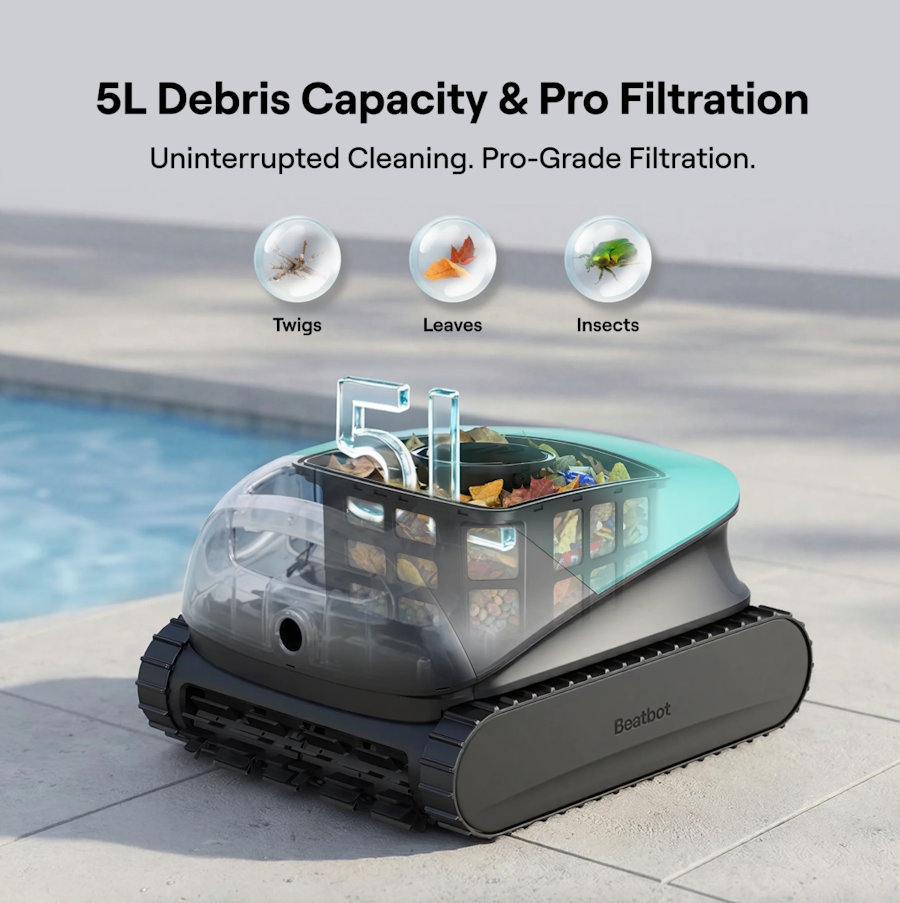
In smaller setups, products like the Beatbot Sora 10 above ground pool vacuum are often discussed in relation to reducing visible maintenance cycles. The larger point is not about the product alone, but about the type of environment where loops become easiest to see. Smaller systems reveal repetition faster, which also makes cycle disruption more noticeable when it happens.
From Repeating Cleanup to More Continuous Pool Care
The real shift introduced by automation is not simply faster task completion. It is a change in maintenance logic. Repetitive chores are built around isolated actions repeated over time. Automation begins replacing that structure with something more continuous.
That means the work is no longer organized around repeated manual re-entry. Instead of treating each new maintenance need as a separate event, the system handles the process in a more ongoing way. The task stops returning in the same visible form because it is no longer waiting to be addressed only after conditions worsen.
Automation does not speed up the loop. It replaces it. That is the deeper change. The goal is not just efficiency within the same cycle, but a different maintenance structure altogether.
What Changes Once the Maintenance Loop Starts to Fade
When the loop starts to weaken, several things change at once. There are fewer repeated checks. Fewer corrective interventions. Less escalation from minor drift into more noticeable maintenance needs. The system does not necessarily remove all work, but it reduces how often the same work needs to reappear.
That difference matters because it changes the maintenance pattern at its source. The user is no longer being pulled back into the same small sequence again and again. Instead of repeated reset moments, the environment moves toward greater continuity.
This is the real structural result of breaking a loop. Not simply less effort in one instance, but less recurrence overall. The change becomes visible not in one dramatic improvement, but in the absence of the same repeated demands.
Breaking the Cycle Matters More Than Saving a Few Minutes
It is easy to think of smart automation mainly in terms of effort reduction. But in repetitive outdoor chores, effort is only part of the issue. The deeper problem is that the same maintenance cycle keeps rebuilding itself.
That is why breaking loops matters more than reducing effort alone. A chore can become easier and still remain repetitive. But once the loop itself begins to weaken, the entire pattern changes. What disappears is not only labor in the moment, but the recurring need to start over.
The real gain is not doing less work, but avoiding the need to repeat it.

