

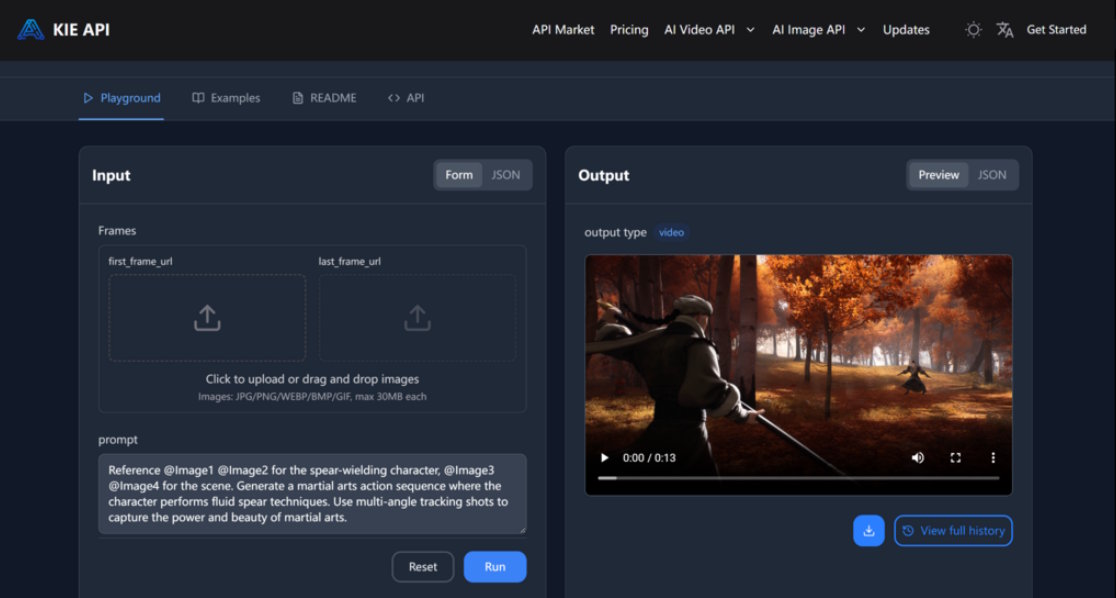
Interest in video generation APIs usually starts with output quality, but it rarely stays there. Developers and workflow teams quickly move on to harder questions: how easy is the API to access, what kinds of production tasks it actually supports, and whether it fits a real pipeline instead of looking impressive only in isolated demos.
That is why Seedance 2.0 API is drawing attention. It is not just another entry in a crowded video generation category. For teams evaluating new video infrastructure, the more interesting question is how Seedance 2.0 combines access, multimodal control, and workflow flexibility in a way that feels usable beyond a single experiment.
Seedance 2.0 API Is Getting Attention for More Than Video Generation Alone
A lot of APIs can generate output from prompts. What makes this one more interesting is the combination of access discussions and production-oriented use cases happening around it. Developers are looking at how to integrate it, creators are looking at how quickly they can test ideas, and content teams are looking at whether it supports repeatable output rather than one-off results.
That mix matters. A video API becomes more relevant when it can move from technical curiosity into actual workflow planning.
Interest Starts With Access and Output Quality
People often first hear about Seedance 2.0 because of output quality and visual ambition. Very quickly, though, the conversation expands into access routes, job handling, and whether it can support more than simple prompt-to-video use.
Workflow Relevance Matters More Than Raw Hype
A strong feature list creates attention, but workflow fit determines whether teams keep testing. For most technical readers, that is where the real evaluation begins.
How to Access Seedance 2.0 API Today
Access is one of the first practical differences teams notice. Some users prefer native or official-style ecosystem routes because they want to stay close to the original environment. That path can make sense for teams that value ecosystem proximity and want a more direct relationship with source-side updates.
Other teams prefer third-party access routes because setup friction is lower. In many real situations, fast evaluation matters more than ecosystem purity. A route that gets developers testing quickly can be more useful than a route that feels theoretically cleaner but slows down actual adoption.
Native Access Appeals to Ecosystem-Focused Users
A native or official-style route usually attracts users who want direct exposure to the original ecosystem. That can be useful when long-term alignment and source-level context matter more than convenience.
Third-Party Access Helps Teams Validate Faster
For teams that want to test integration, compare output, or measure workflow fit quickly, third-party access often feels more practical. Faster setup can mean faster decision-making.
Kie.ai Makes Seedance 2.0 API Easier to Evaluate in Real Workflows
Access is not only about availability. It is also about how usable the route feels once teams start working. That is where Kie.ai becomes relevant. Its value is easier to understand when the discussion moves from “can I access it?” to “can I actually evaluate and use it without wasting time?”
Support from real people matters here. Documentation can answer standard questions, but workflow problems are often more specific. Integration friction, task timing, output expectations, and scaling concerns often need faster, more human guidance than a static help page can provide.
Turnaround speed is another practical difference. When teams compare routes in live use, response time shapes the experience more than marketing language does. A path that can return output in a few minutes feels very different from one that may require tens of minutes or even hours. That difference affects how willing a team is to test multiple ideas, run repeated prompts, or evaluate multiple directions in one working session.
Concurrency also matters more than it first appears. A single request is one thing. Real workflow teams often need many requests: several concept variants, multiple prompt directions, or repeated tests across a campaign cycle. That is why seedance 2 api access through a high-concurrency route feels more practical for production-minded users than a slower, more limited path.
Human Support Helps Teams Move Past Documentation Limits
Teams rarely get blocked only by authentication. They get blocked by real usage questions. Human support lowers the cost of figuring those out.
Speed and Concurrency Change the Evaluation Experience
Faster turnaround and higher concurrency do not just improve convenience. They make structured testing possible, which is far more useful for developers and operations teams.
Seedance 2.0 API Use Cases Go Beyond Basic Prompt-to-Video Work
Use cases are another part of what makes the API stand out. Prompt-based generation is only the starting point. In practice, the more valuable use cases often involve workflows where teams already have inputs, references, or production goals that need more control.
Text-to-video is still useful, especially for early concept drafts, rough creative exploration, and first-pass asset generation. But image-to-video and reference-based workflows usually matter more in repeatable production settings, where teams need continuity rather than novelty.
Text-to-Video Supports Early Draft Work
For content teams, early concept output can be enough to move a project forward. A first draft does not need to be final to be useful.
Reference Workflows Fit Existing Production Pipelines
Teams with existing stills, brand visuals, scene references, or campaign assets often get more practical value from reference-driven video generation than from pure prompt experimentation.
Seedance 2.0 API Is Best Understood Through Access, Workflow, and Real Output Needs
The most useful way to evaluate Seedance 2.0 is not to ask whether it looks impressive in theory. A better question is whether the access path is manageable, whether the API supports the kinds of inputs your team already works with, and whether it can handle real testing conditions without slowing everyone down.
That is where the difference becomes clearer. Some teams will care most about native ecosystem proximity. Others will care more about practical integration, faster turnaround, real human support, and higher concurrency. Once those priorities are clear, the API becomes easier to judge for what it actually is: not just a video generation endpoint, but a production capability that either fits the workflow or does not.

