

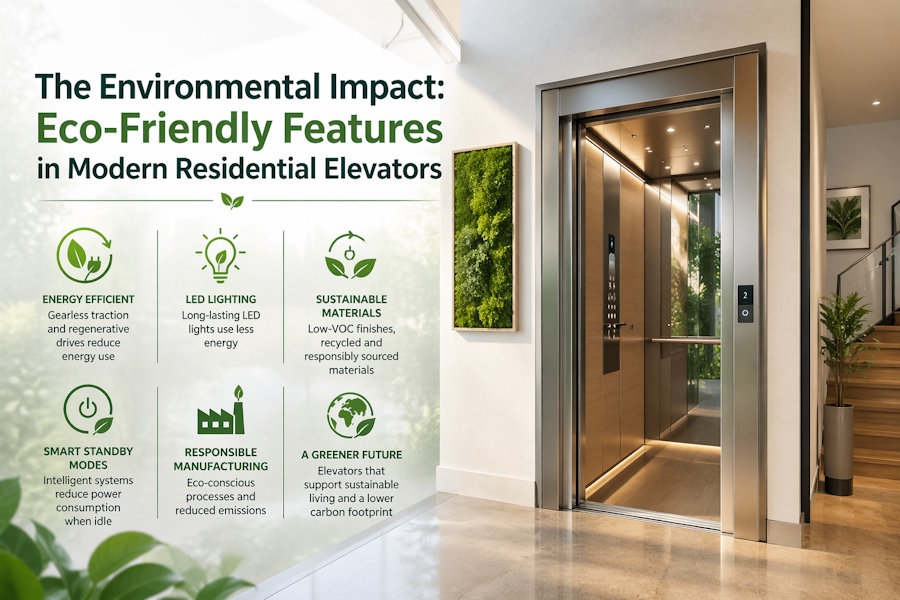
As sustainable building practices move from niche to mainstream, homeowners are looking at every component of their properties through an eco-friendly lens. We analyze HVAC systems, insulation, and windows, but what about home vertical mobility? Historically, residential elevators were not considered green technology, often viewed as energy-intensive luxuries.
However, a technological revolution driven by engineering innovation and environmental responsibility has transformed the industry. Today’s modern residential elevators are designed to minimize ecological footprints while maximizing efficiency. If you are building or renovating a sustainable home, here are the crucial eco-friendly features to look for in a modern lift.
1. The Shift to Gearless Traction Systems
The most significant environmental advancement in residential vertical transportation is the type of drive system used. Traditionally, hydraulic elevators were common in homes. While reliable, they require several gallons of hydraulic oil, which poses a risk of leaks and requires careful, sometimes hazardous, disposal.
Enter the gearless traction elevator. By utilizing a variable-frequency drive motor and a system of cables and counterweights, these units eliminate the need for hydraulic fluids entirely. Furthermore, because the counterweight offsets the cab's weight, the motor requires significantly less energy to operate. Switching to a gearless traction system is the number one way to make a residential elevator eco-friendly.
2. Regenerative Drive Technology
Imagine an elevator that actually puts energy back into your home. This isn't science fiction; it is regenerative drive technology. In a standard elevator, energy is consumed when ascending and dissipated as heat when braking on the way down.
A regenerative drive captures this kinetic energy during descent (when gravity is doing the work) and converts it into electricity. This electricity is filtered and fed back into your home’s electrical grid to power lights, appliances, or other systems. This technology can reduce an elevator's overall energy consumption by up to 30% or more, making it a cornerstone of a sustainable home strategy.
3. LED Lighting and Standby Modes
Residential elevators spend the vast majority of their time parked and idle between floors. In older models, the cab lights and ventilation fans stayed on 24/7, wasting an immense amount of power.
Modern "green" elevators utilize ultra-efficient LED lighting, which consumes a fraction of the power of halogen or incandescent bulbs and lasts much longer. Furthermore, these systems come standard with intelligent sleep modes. If the elevator detects no activity for a set period, it automatically powers down lighting, background displays, and fans, entering a deep standby mode until called again.
4. Eco-Friendly and Low-VOC Materials
Sustainability isn't just about energy consumption; it's about material sourcing and indoor air quality. The interior environment of a home elevator cab is a tight, enclosed space. If the elevator is constructed using materials that off-gas harmful chemicals, it can negatively impact your home’s air quality.
Manufacturers of sustainable residential elevators are now prioritizing low-VOC (Volatile Organic Compound) paints, finishes, and adhesives. Furthermore, cabs are being constructed using recycled materials for paneling, sustainably sourced woods certified by organizations like the FSC (Forest Stewardship Council), and rapidly renewable materials like bamboo.
5. Efficient Manufacturing and Supply Chains
An elevator’s environmental impact begins long before it is installed in your home. Leading "green" elevator companies are auditing their entire life cycle. This includes using recycled steel in the manufacturing process, implementing zero-waste-to-landfill policies in their factories, and sourcing components locally to reduce transportation emissions.
Conclusion
Installing a residential elevator no longer means compromising your commitment to the environment. By selecting a model that incorporates gearless traction, regenerative braking, smart standby modes, and sustainable materials, you are investing in a future-proof vertical mobility solution. Not only will these features reduce your monthly energy bills, but they will also decrease your home’s carbon footprint, proving that luxury and sustainability can go hand-in-hand.
Frequently Asked Questions (FAQ)
Do eco-friendly residential elevators cost more upfront?
Generally, yes. Models with advanced technology like regenerative drives and gearless traction systems have a higher initial purchase price than standard hydraulic models. However, the long-term savings in energy bills and reduced maintenance costs often offset the initial investment over the lifespan of the elevator.
Can I retrofit my existing, older residential elevator to be more eco-friendly?
To an extent. You can easily replace older lighting with LEDs and sometimes update the controller to include standby modes. However, upgrading from a hydraulic drive to a traction system is a major modernization project that requires significant architectural changes.
Are pneumatic (vacuum) elevators considered eco-friendly?
Yes, very much so. Pneumatic elevators use air pressure rather than oils or heavy cables. They consume almost zero energy during descent (using gravity to slowly release air) and generally have very small footprints, making them an excellent choice for green retrofits.

