

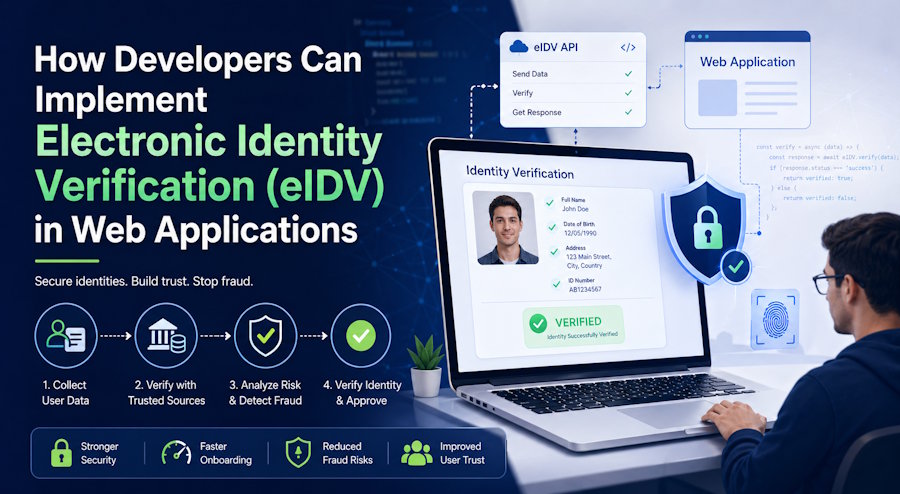
eIDV, also known as electronic identity verification, is a digital procedure that ensures the validity of the identity of a person based on the validity of data sources and automated authentication systems. Unlike manual document checks, eIDV verification enables systems to check personal data like name, address and date of birth with trusted databases. It usually takes a few seconds and assists the developers to make sure that the identity information provided by a user is valid. Cybersecurity studies posit that identity fraud has been on the increase throughout the world with electronic identity verification being a crucial element of security in current applications.
The need to have eIDV in Web Applications by Developers.
The onboarding of the users is usually the initial engagement between the platform and the user. Failure to have stringent verification measures at this stage means that the system can be easily abused by fraudsters.
eIDV verification is an effective way of ensuring that developers secure their applications against hacking issues like false accounts, bot accounts, and identity theft. In the case of electronic identity verification systems, suspicious or inconsistent information can be spotted at the initial stages of registration.
This not only increases the security of the platforms but also enhances user confidence. Social networks utilizing eIDV technologies prove that they value security and are responsible in data management.
Important Elements of an eIDV Implementation.
Web developers wishing to apply electronic identity verification in their custom-built web applications ought to be aware of the essential elements involved in the process.
User Data Collection
Basic information on identity is gathered and is the initial step in eIDV verification. This can be information like full name, address, date of birth or identification number.
This step is normally added to the user registration form by the developers to make sure that identity data is obtained during the onboarding process.
Data Source Verification
Once the information is gathered, it is compared with the known sources of data in the system. Such sources can be government databases, credit bureaus or other legitimate identity documents. It is an important step in the process of electronic identity verification since it validates whether the information provided is in line with the valid records.
Risk and Fraud Analysis
After the verification of identity data, a risk-assessment is conducted by the system. In the eIDV verification, high-order algorithms are used to examine patterns and identify anomalies that could be used as indicators of fraud. In case of inconsistencies, the system may indicate the account to be reviewed or asked to provide further verification.
Precautions to carry out Electronic Identity Checking on Web Applications
There are a few steps that developers can take in order to incorporate eIDV systems into their applications.
Select a Trustworthy Identity Checking Service.
The initial goal is to choose a trusted electronic identity verification provider that offers secure access to identity data sources and verification tools. An efficient service must facilitate automated eIDV validation and must comply with the data protection laws.
- Add the API of Verification.
A majority of the identity verification solutions offer APIs which can be incorporated by the developers into their web applications. These APIs enable the applications to transmit user information in a secure manner and get verification responses in real-time.
With these APIs, developers are able to automate the process of electronic identity verification in the onboarding process. - Develop a Verification Workflow.
The verification workflow presented to users should be easy to use and developers should create a balance between security and usability. When exercising eIDV verification, users must be taken through a simple procedure, and in the background, identity checks are carried out by the system.
A proper verification process enhances completion and lessens the onboarding friction. - Check and refine the System.
After the eIDV has been integrated, developers are advised to continuously check the performance of the verification. The performance of electronic identity verification systems can be enhanced by reviewing the results of verification and pattern of fraud over time. Frequent check-ups also guarantee that the platform is safeguarded against new ways of fraud.
Advantages of Electronic Identity Verification to Developers.
The concept of electronic identity verification in web applications has multiple benefits to both web developers and web application owners.
Stronger Platform Security
The application of eIDV technologies can assist developers to identify suspicious registrations and avoid fake accounts to access the system.
Faster User Onboarding
Administered eIDV verification enables users to bypass identity checks in the onboarding process and finish it in less time.
Reduced Fraud Risks
The threat of scams and identity-based fraud is lowered when electronic identity verification systems validate user identities when registering.
Improved User Trust
Websites with robust eIDV procedures are ones that exhibit a sense of security and this makes users trust the site.
Future of eIDV in Web development.
With the ever-expanding online services, identity verification will be a crucial part of web application security. The accuracy of electronic identity verification systems is already being enhanced by technologies like artificial intelligence, machine learning, and biometric authentication. Early adopters of eIDV verification will be in a better position to guard against fraud and identity abuse in their applications. As the importance of digital identity grows, electronic identity verification will be at the core of creating secure and trustful online platforms.
Conclusion
The problem of fake accounts and identity fraud is becoming more and more topical in web applications. Developers should put in place effective security to guard their platforms and their users. Incorporating eIDV into the onboarding service allows applications to verify user identities within a short amount of time and with high-precision. With the assistance of the latest electronic identity verification devices, developers are able to identify suspicious behavior, mitigate the risk of fraud, and establish safer digital spaces. With the ever-growing digital ecosystems, eIDV validation will also be an essential solution to developers wishing to create safe and dependable web applications.

