

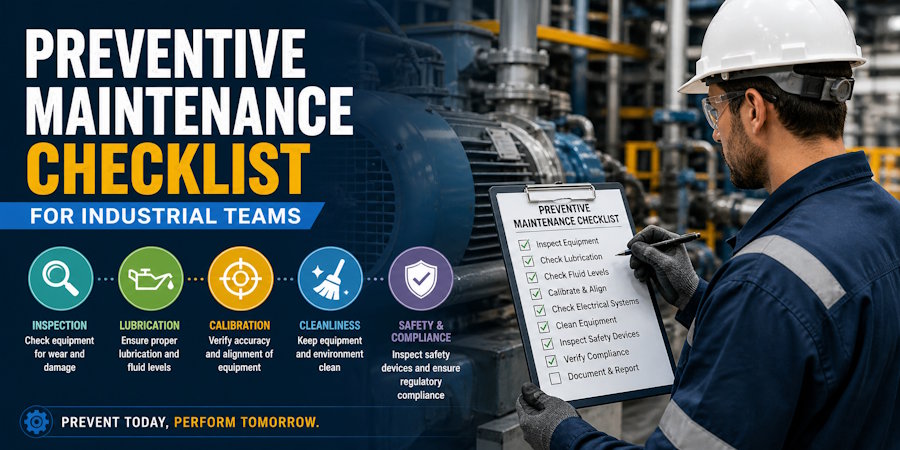
Optimal performance of industrial operations should not only rely on fixing malfunctioning machinery. Unexpected stoppages, accidents, and expensive maintenance are often a result of inadequate maintenance practices. What needs to be highlighted at this juncture is the need for individuals operating sophisticated machinery in different factories to identify an efficient way of ensuring optimal performance.
Having a preventive maintenance checklist would be very important in achieving this goal. Using preventive maintenance on a daily basis will help minimize human error while making sure that everything else is done properly.
Why Preventive Maintenance Matters
Preventive maintenance entails carrying out actions aimed at solving any problem that may arise and result in equipment malfunction. This form of maintenance is carried out before there is any equipment malfunction, unlike corrective maintenance, which is undertaken after there is a malfunction of the equipment.
Preventive maintenance helps increase efficiency by increasing asset life span and lowering downtime. Moreover, preventive maintenance ensures that all regulations are met regarding the performance of equipment. In industrial settings, preventive maintenance is extremely important.
Core Elements of an Effective Checklist
An effective checklist ensures that all critical maintenance tasks are clearly defined and consistently executed. Although the requirements differ from one business sector to another, there are some common components of these checklists.
Equipment Inspection
Equipment inspection forms the basis of preventive maintenance procedures. Technicians will look for signs of wear, leakage, strange noises, and other factors that might indicate equipment malfunction.
Regular inspection makes it easy to spot potential equipment faults and take necessary measures.
Lubrication and Fluid Maintenance
Fluid maintenance is important for minimizing wear and tear brought about by friction in machines.
Lubrication consists of changing fluids as well as checking fluid levels. Lubrication failure results in wear and expensive repair services.
Calibration and Alignment
The performance of machines working within an elevated range or below normal may be affected. Calibration and alignment require constant monitoring to ensure proper operation. Such maintenance is highly important for machines utilized in production activities.
Cleanliness and Environmental Control
Particles such as dust or dirt may affect the functionality of machines. Cleanliness involves cleaning any accumulation that causes overheating or obstructs machines.
Temperature and humidity are environmental conditions affecting machine efficiency.
Inspection for Safety and Compliance
Inspection for safety is mandatory during maintenance procedures. Inspection must confirm that all protective devices, alarm systems, and emergency services operate appropriately.
Safety inspection minimizes the likelihood of injuries and complies with safety standards such as OSHA.
Establishing Maintenance Schedules
Checklists work only if tasks are consistently done. Schedules for maintenance personnel should be set depending on how the machinery is used, manufacturers’ guidelines, and the importance of the machinery.
Some tasks, such as visual checks, will happen every day, while other tasks take place weekly or monthly. The frequency of maintenance on high-value machinery reduces risks.
The scheduling of maintenance activities is crucial in maintaining production schedules and supporting production processes.
Using Technology to Improve Execution
Manual management of preventive maintenance activities can result in overlooked tasks as well as a lack of transparency in the process. Manual processes using paper systems tend to complicate tracking the status of maintenance operations.
Using AI-driven maintenance and asset management solutions will make the above easier since checklists are digitalized and scheduled. Managers and technicians get access to assigned maintenance tasks and can view progress in real-time, receiving notifications about upcoming activities.
Such transparency allows managers to improve their decision-making.
Turning Maintenance Data Into Insights
Completion of each checklist provides useful information regarding the status of the assets and the efficiency of the maintenance processes carried out.
For instance, if a particular asset keeps requiring maintenance due to its inefficiency, it means that the asset should either be changed or redesigned. The use of data in this case ensures increased efficiency and eliminates inefficiencies.
Proper utilization of data makes it possible for organizations to enhance their maintenance practices.
Building a Proactive Maintenance Culture
Good preventive maintenance not only involves systems and tools but also a culture that emphasizes consistency, accountability, and constant improvement.
Through training, technicians will learn about the significance of different tasks and the right procedures. Proper communication between teams will help to avoid misalignments and misunderstandings.
It is when maintenance turns into a collaborative effort that companies can perform well.
Conclusion
A preventive maintenance checklist provides the structure industrial teams need to maintain asset performance and reduce operational risk. Failure can be prevented when essential activities are consistently carried out by organizations.
Inspection, lubrication, calibration, cleaning, and safety play crucial roles in enhancing the reliability of equipment assets and extending their lifespan. This can be done with the aid of technological development and information-driven insights.
It should be understood that when dealing with complex operations within a business setting, an efficient checklist goes beyond providing mere guidelines.

