

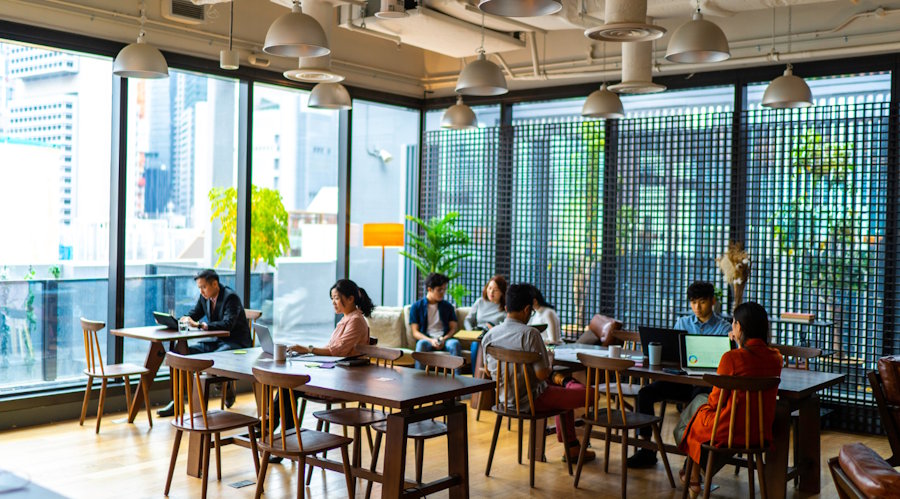
Here's a challenge traditional offices rarely have to solve: hundreds of people from different companies, different membership tiers, completely different schedules cycling through the same front door every single day.
Day-pass visitors, delivery couriers, event guests, touring prospects. It never really stops. That constant movement creates genuine security gaps that most keycards and manual check-ins simply weren't built to handle.
According to a 2024 report, 36 percent of end users are actively planning to invest in access control. And that number tells you everything about how urgent the problem has become in shared environments.
Why Shared Workspaces Face Unique Security Pressure
Ask any operator running smart access control for coworking spaces, and they'll tell you the same thing: the real threats aren't cinematic. Nobody's picking locks or cracking safes. The vulnerabilities are boring, everyday, and honestly pretty easy to miss, which is precisely what makes them so problematic.
Take Dallas as an example. It's one of the fastest-growing flexible workspace markets in the entire country right now, pulling in startups, remote-first teams, and enterprise satellite offices at a serious clip. That growth is great, but it also means Dallas coworking spaces are being held to corporate-grade security expectations while frequently operating without dedicated security personnel to back them up.
Traffic Patterns That Break Traditional Locks
Keys and fobs were designed for a simpler world. One company. Consistent staff. Predictable routines. They were never intended to handle environments where access requirements shift daily or hourly.
A propped door during a busy lunch rush. A shared keycard was passed around during a member event. A delivery person is waiting unattended at an unmanned entry. These aren't rare incidents. They're Tuesday. And shared amenities, phone booths, mailrooms, and storage closets quietly become additional weak points that often nobody's monitoring.
Unauthorized Entry Methods Operators Actually See
Tailgating is the most persistently common issue in coworking environments, and it's genuinely hard to address without some form of technology helping you. Add to that: former members whose credentials were never deactivated after cancellation, PINs casually shared between colleagues, and fire doors wedged open after hours. Every single one of these is a routine vulnerability in open-plan workspaces.
And the liability exposure here goes far beyond a missing laptop.
Member Trust as a Security Factor
The founders are taking investor calls. The agency team is managing confidential client data. The content creator has fifteen thousand dollars in camera equipment sitting in their suite. All of them chose your space expecting it to protect them. Security posture, whether you acknowledge it explicitly or not, directly influences renewal decisions. It's not just overhead, it's retention infrastructure.
Now let's look at what a genuinely modern system actually looks like.
Smart Access Control for Coworking Spaces: The Modern Baseline
The era of keycards and clipboards is over, or at least it should be. Cloud-managed access platforms have fundamentally changed what's possible for operators who want real control without real headaches.
Cloud-Managed Access Control vs. Standalone Locks
When a member cancels, cloud-based systems let you cut their access in seconds from any device, anywhere. Need to update permissions across twelve doors simultaneously? Done. Standalone locks can't touch that. The operational gap between the two becomes painfully obvious within the first week of managing a multi-door building.
Keyless Entry Systems for Offices: Credential Types
Well-configured keyless entry systems for offices aren't one-size-fits-all. They offer mobile app unlock, NFC wallet passes, Bluetooth, PIN codes, QR codes, and physical cards all under one platform. A day-pass visitor gets a time-limited QR code. A full-time member gets mobile app access tied to their account. A contractor gets a PIN that self-destructs at project completion.
Matching credential type to user type isn't a nice-to-have. It's the mechanism that keeps the whole system from becoming a mess.
Mobile Credential Access Control as the Default
Mobile credential access control has quietly become the expected standard, and members notice when it's missing. Nearly 60 percent of survey respondents said they'd select housing based on whether it offered mobile access control as an amenity, and that same preference absolutely carries over into workspace decisions.
Provisioning happens at signup. Revocation happens at cancellation. Zero staff involvement required.
Layered Security: What Pairs Best With Access Control
No single system does everything. Access control systems for shared workspaces are most effective when they're embedded into a broader security design, not standing alone trying to do it all.
Video + Access Events
When you link camera footage directly to door-event logs, incidents stop being mysteries and become documented timelines. A "door held open" alert paired with a corresponding camera clip gives you a clear, complete picture in under two minutes. That's genuinely valuable during a theft investigation or even just a routine member dispute.
Visitor Management as a Security Control
Pre-registration, host notifications, zone-limited credentials, and digital visitor management turn what used to be a front-desk guessing game into an actual security layer. Guests access only the areas they need, only during the window they're expected. Simple, trackable, defensible.
Intrusion Alarms and After-Hours Schedules
After-hours is when most serious incidents happen, full stop. Armed schedules for private zones, differentiated rules for 24/7 members versus business-hours-only users, escalation workflows that alert staff before triggering a full lockdown. These aren't premium features anymore. They're baseline expectations for any operator running a serious space.
Zoning Strategy That Prevents Whole-Building Access
One of the most consistent mistakes in shared workspaces is defaulting to broad access. Someone pays for a hot desk and suddenly has credential access to the server room. A smart zone model eliminates that problem before it starts.
Zone Model That Fits Coworking Layouts
Think in layers: public zones like lobby and reception, semi-private zones covering shared desks and kitchen, private zones for dedicated suites, and restricted zones, including IT infrastructure, cash handling, and records storage for credentialed staff only. Every membership tier gets a "least privilege" template built around what they actually need.
Time-Based Permissions
Day-pass users get business-hours access. Full-time vetted members get 24/7 credentials. Contractors get access that auto-expires when the project wraps. These rules run quietly in the background without requiring manual intervention from anyone on your team.
Anti-Tailgating Controls That Actually Work
Door position sensors, camera analytics, and consistent member education are the practical options available to most operators without requiring major infrastructure investment. Turnstiles make sense for very high-traffic or high-security environments, but in most standard coworking layouts, they're overkill.
Member Lifecycle Automation: The Biggest Security Win
If there's one change that will immediately close your biggest vulnerability, it's this: connecting your billing platform, agreement workflow, and membership tier directly to access permissions. Outdated credentials are the single most persistent gap in coworking security operations.
Onboarding That Issues Access Instantly
The moment a member completes signup and payment, access provisions are automatically assigned to the right doors based on their specific plan and suite. No manual setup. No waiting for the staff to remember.
Offboarding That Removes Access in Seconds
Cancellation triggers immediate revocation. Non-payment does the same. The days of ghost credentials from forgotten fobs and abandoned suites become a non-issue the moment your access system talks to your billing platform.
Resource-Based Access for Rooms and Studios
Booking a conference room? The system grants temporary door access during the reservation window and nowhere else. That eliminates room squatting and after-hours misuse without anyone needing to physically enforce anything.
Questions Operators and Members Ask Most Often
Smart Access vs. Smart Locks: Which is right for multi-tenant buildings?
Smart locks manage individual doors. Smart access control manages credentials, audit logs, and permission lifecycles across every door centrally. Multi-tenant buildings need the latter.
What happens if a member's phone dies?
Most platforms include a PIN or QR fallback. Operators can issue temporary credentials remotely without the member ever visiting the front desk.
Are PIN codes safe for coworking spaces?
Honest answer: they carry risk, because people share them. For long-term members, mobile credentials are the stronger default. Reserve PINs for short-term or contractor use with auto-expiry built in.
Final Thoughts
Doing security well in a coworking environment isn't about adding layers of complexity on top of already complicated operations. It's about replacing slow, manual processes with smarter, automated ones that work quietly in the background. Automated provisioning, zone-based permissions, and mobile credentials handle the daily operational weight while simultaneously creating a professional experience that members genuinely notice and appreciate.
When your access control works without anyone having to think about it, the space feels safer, runs leaner, and keeps members around longer. That's not just a security argument. That's a business argument, and honestly, it's a pretty compelling one.

