


Online shoppers have less patience than ever. If they can't find what they want in seconds, they leave, and there are dozens of other tabs open competing for their attention.
That pressure has pushed search and discovery to the top of the ecommerce priority list. The brands winning today are using AI to make every click feel personal, every search result feel intentional, and every product page feel like the right next step.
Below is a roundup of the most impactful trends and tools shaping how shoppers find products in 2026.
Key Takeaways
- AI-powered search now understands intent, not just keywords, dramatically cutting bounce rates.
- Personalization has shifted from a nice-to-have to a baseline expectation across ecommerce.
- Visual and conversational search are reshaping how shoppers discover products on mobile.
- Real-time merchandising lets teams react to demand signals within hours, not weeks.
- Headless and composable architectures are making advanced discovery tools accessible to more brands.
1. Semantic Search That Actually Understands Shoppers
Traditional keyword search frustrated everyone. A shopper searching for "warm winter coat" would miss results tagged "insulated parka" simply because the words didn't match.
Semantic search fixes this by understanding meaning rather than matching strings. Modern engines use vector embeddings and natural language models to recognize that "comfy sneakers for walking" and "cushioned trainers" describe the same thing.
The result is fewer dead-end searches and more conversions. Shoppers feel understood, and merchandisers stop losing sales to typos and synonyms they never thought to add.
2. Personalized Product Recommendations at Every Touchpoint
Recommendation engines have evolved far beyond "customers who bought this also bought." AI now factors in real-time browsing behavior, session context, weather, location, and even how long a visitor lingers on a particular image.
Strong recommendation systems work across the homepage, category pages, product detail pages, cart, checkout, and post-purchase confirmations. Each placement uses different logic depending on where the shopper is in their journey.
For Shopify and Shopify Plus brands looking to compare options, this guide from Nosto on the Best Shopify Product Recommendation Apps breaks down the leading platforms based on AI capabilities, integration depth, and merchandising controls. The right tool depends heavily on catalog size, tech stack, and how much customization the team needs over recommendation logic.
3. Visual Search Goes Mainstream
Mobile shoppers increasingly want to snap a photo and find similar products instantly. Visual search has moved from a Pinterest novelty to a real conversion driver, especially in fashion, home decor, and beauty.
Behind the scenes, computer vision models analyze color, shape, pattern, and style to surface visually similar items. Some platforms also let shoppers refine results with text prompts after the initial image search.
The brands seeing the biggest gains are those that combine visual search with strong product imagery, including AI product photos, and structured metadata. Without clean inputs, even the best AI struggles to deliver useful results.
4. Conversational and AI Chat-Driven Discovery
Generative AI has unlocked a new kind of shopping assistant. Instead of clicking through filters, customers can ask "what's a good gift for a friend who loves camping under $100" and get a curated list with reasoning.
These conversational interfaces work especially well for gift discovery, complex categories like electronics, and stores with deep catalogs. They reduce friction for shoppers who don't know exactly what they want.
For developers exploring how to build similar features, our JavaScript tutorials cover plenty of ground on integrating modern APIs and front-end frameworks that pair well with AI-driven search backends. The implementation details matter, especially when latency and result quality are both critical to the shopper experience.
5. Real-Time Merchandising and Dynamic Ranking
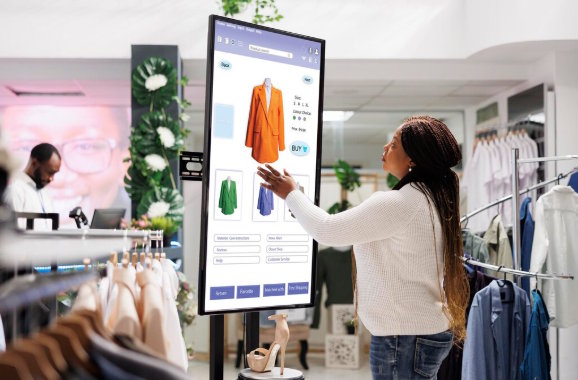
Static category pages are losing ground to dynamic ones that re-rank products based on live performance data. If a product suddenly sells out in one region, it drops down the page automatically. If another item starts trending, it gets surfaced higher.
This kind of merchandising used to require constant manual intervention. AI now handles much of it in the background, freeing teams to focus on strategy and storytelling rather than spreadsheet updates.
The best platforms also let merchandisers set guardrails. They can pin hero products, exclude low-margin items, or prioritize specific brands, then let the algorithm optimize within those rules.
6. Search Analytics That Surface Hidden Demand
Search query logs are some of the most valuable data in ecommerce, and most brands barely look at them. AI-powered analytics tools now flag failed searches, emerging trends, and category gaps automatically.
If shoppers keep searching for a product the brand doesn't carry, that's a buying signal. If a particular query returns zero results, that's a fix the merchandising team can make today rather than next quarter.
Some platforms even suggest synonym additions, redirect rules, and content updates based on real query patterns. Small tweaks like these often deliver outsized improvements in conversion rate.
7. Headless and Composable Discovery Stacks
Brands no longer have to commit to a single monolithic platform to get great search and discovery. Headless architectures let teams pick best-in-class tools for search, recommendations, content, and personalization, then stitch them together via APIs.
This flexibility has been a game-changer for fast-growing brands. They can swap out one component without rebuilding the entire site, and they can experiment with new technologies far more easily.
The trade-off is complexity. Composable stacks demand stronger engineering capabilities, clearer data governance, and careful attention to performance, since every API call adds latency.
8. Privacy-First Personalization
Cookie deprecation and tighter privacy regulations have forced a rethink of how personalization works. The brands doing this well rely on first-party data, on-site behavioral signals, and consent-based identifiers rather than third-party tracking.
AI helps here by extracting more value from less data. Modern models can deliver strong personalization from a single session of browsing behavior, with no need for long-term user profiles.
Done right, privacy-first discovery can actually feel more relevant than the old approach. Shoppers get suggestions based on what they're doing right now, not stale data from months ago.
How to Choose the Right Search and Discovery Tools
Start with a clear picture of where shoppers are dropping off. If search abandonment is high, prioritize semantic search and synonyms. If product page conversion is weak, focus on recommendations and merchandising.
Next, look at integration. The best tool in the world is useless if it can't connect cleanly to the existing platform, CMS, and analytics stack. Demo every option with real catalog data, not vendor sample sets.
Finally, weigh the team's capacity. Some platforms are nearly turnkey, while others require dedicated merchandising and engineering resources to reach their full potential.
Conclusion
Search and discovery are no longer back-end concerns. They are central to brand experience, conversion, and long-term customer loyalty.
The brands investing in AI-driven discovery today are setting themselves up for a meaningful edge as shoppers grow more impatient and competition intensifies. Those still relying on basic keyword search and static recommendations will keep losing ground, one abandoned session at a time.
Frequently Asked Questions
What is ecommerce search and discovery? It refers to all the tools and techniques that help online shoppers find products, including site search, filters, recommendations, navigation, and personalized merchandising.
How does AI improve site search? AI moves search beyond keyword matching by understanding intent, recognizing synonyms, handling typos, and ranking results based on relevance and likelihood to convert.
Are product recommendation apps worth it for small stores? For very small catalogs, the impact may be limited. Most recommendation tools start delivering meaningful returns once a store has at least a few dozen products and steady traffic.
What's the difference between search and discovery? Search is shopper-initiated, with the customer typing a query. Discovery is broader and includes recommendations, curated collections, and personalized homepages that surface products without an explicit query.
Do I need a headless setup to use modern search tools? No. Many leading platforms offer plug-and-play integrations with Shopify, BigCommerce, and other hosted platforms, so headless is an option rather than a requirement.
How quickly can a brand see results from upgraded search and discovery? Many brands see measurable lift in conversion rate and average order value within the first month of implementation, especially after addressing failed searches and adding personalized recommendations.

