

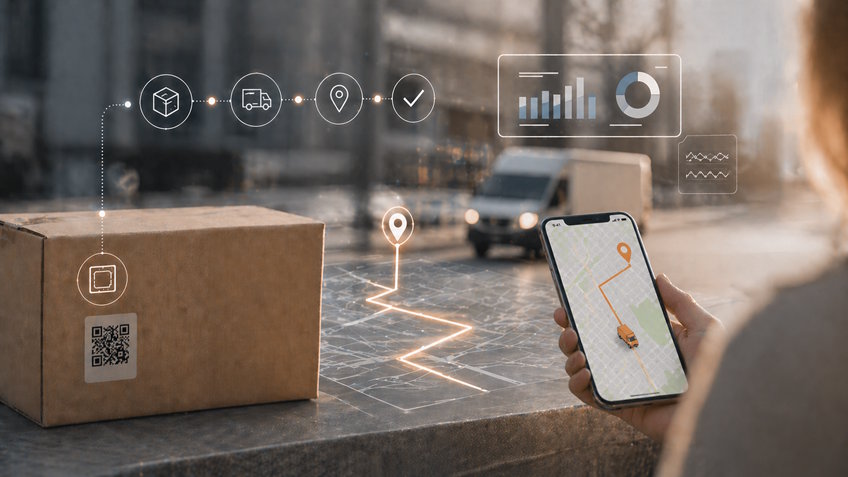
Tracking numbers started in the late 1970s when FedEx gave each package its own barcode and scanned it at every stop. In 1994 the company put these scans on the web, and the idea spread quickly. For decades shoppers have copied a long code into a courier’s website to watch their parcel move.
Today’s customers want more than a few status messages. Research shows that in 2026 shoppers expect continuous information. People would rather see their driver on a map and receive an alert when the parcel is near than type a string of digits. This expectation is driving a shift in how companies share information.
New tools for modern tracking
Radio‑frequency identification (RFID) chips and IoT sensors are making it possible to track shipments automatically. UPS rolled out RFID tags across its U.S. network in 2026 and called it the biggest upgrade in years. These tags can be read without a scanner and provide near‑real‑time data. Royal Mail attached battery‑free tags to hundreds of thousands of rolling containers; the tags harvest energy from ambient radio waves and send location and temperature data. Such systems give managers a full picture of where containers are and whether conditions are safe. Adoption is growing quickly across the industry.
Modern delivery apps tie this data together. They plan routes with artificial intelligence, assign drivers automatically and capture electronic signatures. The apps send alerts when a driver is approaching and allow customers to follow their parcel on a map. This level of visibility reduces delays and helps companies make better decisions.
Smarter software and secure records
Software plays a key role in the new approach to parcel tracking. Machine‑learning algorithms look at location and sensor data to predict when a delivery will arrive or spot problems before they happen. Digital twins—virtual copies of transport networks—let companies test changes before they make them. Reports note that digital twin platforms can recreate entire networks in software, helping managers find bottlenecks and cut waste.
Blockchain technology adds a layer of security by recording each handoff in a way that cannot be altered. This is valuable for high‑value or regulated goods because it provides proof that a shipment was handled correctly.
Digital product passports
Regulators are also pushing tracking forward. The European Union’s Digital Product Passport (DPP) project gives each item a digital record. The passport contains information about where an item came from, its materials and its environmental impact. It is linked to the product by a QR code, barcode or NFC tag and can be updated over the item’s life. Sector‑specific rules start in 2027 for industries such as batteries and textiles. To comply, companies must adopt global data standards that make information shareable. The passport essentially replaces the visible tracking number with a richer digital identity.
Will tracking numbers vanish?
Tracking numbers are unlikely to disappear entirely. The long code on a label may fade from view, but a unique ID will still exist inside the tag. The EU’s DPP assigns each product a digital ID. RFID chips and QR codes will encode this ID so computers can read it. Customers will scan a code or click a link instead of typing digits, but behind the scenes the systems still need an identifier to tie together sensor data and records. In other words, the tracking number will go undercover.
What it means for you
For shoppers, the change promises better communication and more confidence. Surveys show that most people consider real‑time tracking essential and expect proactive updates. Companies that meet these expectations build trust. To do so, they must invest in sensors, software and training, and they must protect data privacy. A FedEx blog reminds firms that a supply chain is only as strong as the quality of its data and recommends connecting digital systems with sensor feeds and scans.
Parcel tracking is evolving from simple codes to intelligent networks. Sensors, AI, digital twins and secure records now work together to show where a package is and how it was handled. Regulators are encouraging richer data through digital product passports. The visible string of digits may vanish, but the aim remains the same: to get your package safely from sender to receiver and to let you watch it happen in real time.

