

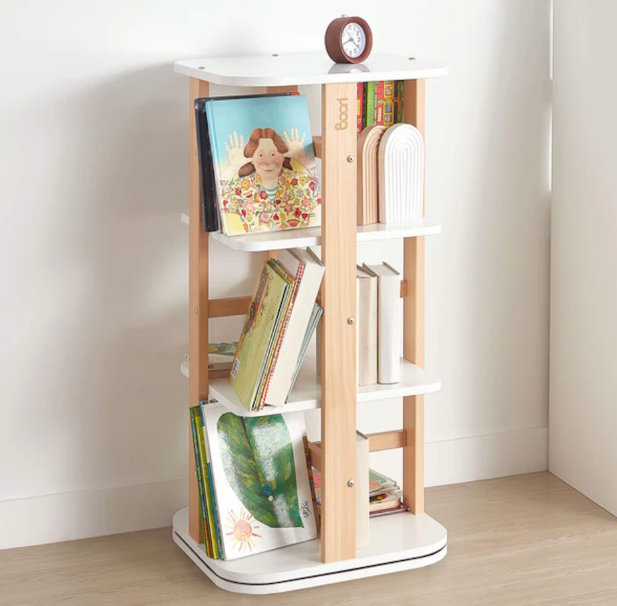
A bookshelf for kids rooms that gets used consistently is not the same as one that was purchased. A bookshelf gets used when it presents books visibly at the child's eye level, when the selection displayed on it is curated and regularly refreshed, when it is positioned in the room where the child naturally gravitates for quiet time, and when it is paired with a comfortable seat that invites the child to sit and read rather than simply stand and browse. A bookshelf for kids rooms chosen with these factors in mind creates a reading environment that draws the child toward books daily. One chosen only for visual appeal and price becomes a surface that holds books the child gradually stops engaging with.
Key Takeaways
- A bookshelf for kids rooms gets used consistently when it presents books visibly in front-facing display at the child's eye level, positioned where the child naturally spends quiet time.
- The display format, front-facing versus spine-out, is the most important single selection criterion for children under six, directly affecting independent book selection frequency.
- Position within the room matters as much as the bookshelf itself: near the bed and reading corner, not across the room from where the child naturally gravitates.
- A curated, regularly rotated active display of 15 to 20 books maintains reading engagement far more effectively than displaying the full collection at once on an overcrowded shelf.
- Safety specifications including non-toxic finish, wall anchoring, and rounded edges are non-negotiable baseline requirements for any bookshelf in a child's unsupervised bedroom.
What Makes a Bookshelf for Kids Rooms Get Used
|
Factor |
What It Requires |
What Happens Without It |
|
Front-facing display |
Covers outward at child's eye level |
Child cannot identify books; selects less independently |
|
Correct height |
Lowest shelf at or below child's eye level |
Adult help needed for every selection session |
|
Good position |
Near the bed or reading corner |
Child rarely walks across the room specifically to browse |
|
Curated selection |
15 to 20 actively displayed titles |
Overcrowded shelf overwhelms rather than invites |
|
Regular rotation |
Fresh titles appearing every 3 to 4 weeks |
Familiar selection loses appeal; browsing stops |
|
Comfortable nearby seat |
Low cushioned chair or floor cushion beside the shelf |
Child stands to browse but rarely settles to read |
Choosing the Right Bookshelf for Kids Rooms
Format for the Child's Age
For UK children under five, a low front-facing bookshelf with covers facing outward at floor or near-floor level is the format that produces the highest independent book selection rate. For children aged five to eight, a mid-height front-facing bookcase or a mixed front-facing and spine-out design suits the transition from pure picture books to early readers and chapter books. For children from about age eight onward, a standard adjustable bookcase with spine-out shelving accommodates the growing collection of chapter books and school texts that define this stage of the reading life.
Position in the Room
A bookshelf for kids rooms positioned near the bed and near the reading seat creates the physical reading environment where the habit forms most naturally. The child who can reach their book from their pillow, or who walks two steps from their bed to the reading corner bookshelf and sits down in the reading chair, reads before sleep and during quiet time consistently. The child whose bookshelf is across the room beside the wardrobe, positioned by convenience rather than by reading habit design, reads less frequently because the habit has no physical anchor in the part of the room they occupy during the times most conducive to reading.
Safety Specifications
Confirm before purchasing: non-toxic, lead-free finish certified to children's furniture safety standards. Wall anchoring provisions included. All edges and corners rounded on every accessible surface. Panel thickness of 15 to 18 millimetres minimum. Back panel for structural rigidity. These specifications are the minimum baseline for a bookshelf in a child's unsupervised bedroom, regardless of price or brand.
For a range of quality bookshelf for kids rooms options in front-facing and standard formats suited to UK children's bedrooms, browse the Boori bookshelf collection.
Frequently Asked Questions
Should a bookshelf for kids rooms be in the bedroom or in a shared space?
A bedroom bookshelf creates a personal reading environment associated with the child's own space and quiet time, which is where independent reading most naturally occurs. A shared family bookshelf in a living room or kitchen is useful for family reading sessions but does not replace the bedroom bookshelf for the before-sleep reading habit and daytime independent reading that the bedroom reading environment supports.
How do I stop a bookshelf for kids rooms becoming a dumping surface?
Establish a bookshelf surface rule from the first day: the shelves hold books only, with no toys, clothing, or miscellaneous items placed on the reading surfaces. Non-book items that appear on the bookshelf should be immediately relocated to their correct storage destination. A bookshelf that consistently holds only books maintains its identity as a reading destination rather than becoming part of the general bedroom storage overflow.
What is the minimum bookshelf size for a small UK bedroom?
A narrow wall-mounted front-facing ledge shelf of 40 to 60 centimetres in width displaying 8 to 12 books with covers facing outward provides the essential function of a bookshelf for kids rooms within the minimum possible wall space. In a very small UK bedroom, this format provides a reading environment foundation without the floor footprint of a freestanding bookcase.
Can a bookshelf for kids rooms serve multiple children?
Yes, with clearly designated sections for each child's books. Colour-coded labels, shelf dividers, or specific shelf assignments for each child keep the books organised by owner without requiring individual bookshelves for each child in a shared room. Each child's section should ideally be at a height appropriate for that specific child's reach, which may mean the younger child's books are on the lower shelves and the older child's books are on higher ones.
Final Thoughts
A bookshelf for kids rooms chosen with the correct format for the child's age, positioned thoughtfully near the reading corner and the bed, loaded with a curated and regularly rotated active selection, and built to the safety specifications appropriate for a child's unsupervised bedroom is one of the most consistently valuable pieces of furniture in a UK child's bedroom. It earns its place through daily contribution to the reading habit that shapes the child's relationship with learning across the full span of their education.

