

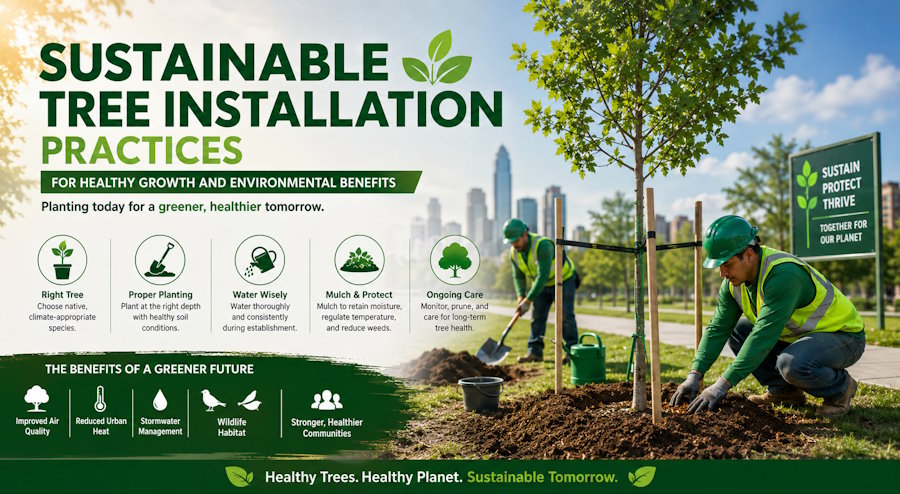
Sustainable Tree Installation Practices for Healthy Growth, Landscape Value, and Long-Term Environmental Benefits
Trees are among the most valuable living assets in any landscape. They provide shade, improve air quality, enhance property aesthetics, reduce soil erosion, and contribute to biodiversity. However, the success of a tree in any environment does not depend solely on the species or climate; it depends heavily on how it is introduced into the soil and how it is maintained during its early stages of growth. This is where proper Tree installation becomes a foundational process that determines whether a tree thrives for decades or struggles from the beginning.
Unlike simple planting, modern arboriculture treats tree establishment as a structured procedure involving soil preparation, root management, environmental assessment, and long-term care planning. When executed correctly, it ensures strong root development, stability, and resilience against environmental stress. Poor execution, on the other hand, can lead to stunted growth, disease susceptibility, or early tree failure.
The Importance of Proper Tree Establishment in Landscaping
The role of trees in urban and rural landscapes extends far beyond visual appeal. They regulate temperature, absorb carbon dioxide, support wildlife, and improve mental well-being in human environments. Because of these benefits, establishing trees correctly is not optional it is essential.Successful establishment begins before the tree even enters the ground. Site evaluation is necessary to understand soil composition, drainage capacity, sunlight exposure, and space availability. These factors determine which species will thrive and how the planting process should be executed. For example, compacted soil may require aeration, while clay-heavy soil may need amendments to improve drainage.A poorly planned planting site can limit root expansion, restrict oxygen flow, and cause waterlogging. These issues directly affect tree health and longevity. Therefore, careful preparation is the foundation of any successful landscape project involving trees.
Planning and Selection Before Planting
Choosing the right tree species is one of the most critical steps in the installation process. Each species has unique requirements related to soil type, water needs, temperature tolerance, and growth patterns. Selecting a tree that is incompatible with its environment often leads to long-term maintenance challenges.Equally important is considering the mature size of the tree. Many planting failures occur when trees are placed in areas too small for their eventual canopy or root spread. This can lead to structural interference with buildings, sidewalks, or utility lines.At this stage, Tree installation planning also involves understanding root ball condition and nursery quality. Healthy nursery stock with strong root systems increases the likelihood of successful establishment. Trees with circling or damaged roots may require corrective pruning before planting.Proper planning ensures that once the tree is installed, it has the best possible conditions to adapt and grow without unnecessary stress.
Soil Preparation and Site Conditioning
Soil quality is one of the most influential factors in tree development. Even the healthiest tree will struggle if planted in poorly prepared soil. Soil preparation typically involves loosening compacted layers, improving drainage, and enriching the soil with organic matter.Compacted soil restricts root expansion and limits oxygen availability. By loosening the soil, roots can spread more easily and establish stronger anchoring systems. Organic amendments such as compost can improve nutrient content and microbial activity, both of which are essential for healthy root development.Proper grading is also important to prevent water accumulation around the base of the tree. Excess water can lead to root rot and fungal infections. Ensuring that the planting area has adequate drainage helps maintain a balanced moisture level.Soil preparation is not just a technical step—it is a long-term investment in tree health and structural stability.
The Planting Process and Root Placement
The actual planting stage requires precision and care. The hole must be wide enough to allow root expansion but not so deep that the tree settles below its natural root flare level. Planting too deeply is one of the most common causes of tree failure.Roots should be gently spread out to encourage outward growth rather than circular or inward development. If the tree is root-bound, corrective pruning may be necessary to prevent long-term girdling issues.Backfilling the soil should be done in layers, ensuring that air pockets are minimized. Light compaction helps stabilize the tree while still allowing root penetration. Watering immediately after planting helps settle the soil and remove remaining air gaps.At this stage, Tree installation must be handled carefully to avoid damaging delicate root structures, as early root trauma can significantly affect long-term growth performance.
Watering Systems and Early Care
Water management is critical during the first few months after planting. Newly installed trees require consistent moisture to establish roots, but overwatering can be equally harmful.Deep watering encourages roots to grow downward, creating a stronger foundation. Shallow watering, on the other hand, can lead to weak surface roots that are vulnerable to drought conditions.Drip irrigation systems are often recommended because they provide slow, consistent moisture directly to the root zone. This reduces water waste and ensures even distribution.Monitoring soil moisture levels regularly helps maintain the right balance. Adjustments may be necessary depending on weather conditions, soil type, and tree species.
Mulching and Soil Protection Techniques
Mulching is an essential part of post-planting care. A layer of organic mulch placed around the base of the tree helps retain moisture, regulate soil temperature, and suppress weed growth.Mulch also improves soil quality over time as it decomposes, adding nutrients and organic matter. However, it is important not to pile mulch directly against the trunk, as this can lead to bark decay and pest infestations.Proper mulching techniques support the success of Tree installation by creating a stable and protective environment for young roots to develop.
Staking and Structural Support
In some cases, newly planted trees may require staking to provide stability against wind or external pressure. However, staking should not be overused, as excessive restriction can limit natural trunk movement, which is important for strength development.When staking is necessary, flexible ties should be used to allow slight movement. This encourages the trunk to develop strength and resilience over time. Stakes should typically be removed after the first growing season unless environmental conditions require continued support.Proper structural support ensures that trees remain upright while still allowing natural growth patterns to develop.
Common Mistakes in Tree Establishment
Several mistakes can negatively impact tree survival. One of the most common errors is improper planting depth. Planting too deep suffocates roots, while planting too shallow exposes them to drying and damage.Another frequent issue is neglecting soil conditions. Failing to address compacted or poor-quality soil limits root development and reduces nutrient absorption.Overwatering or underwatering is also a major problem. Both conditions can stress the tree and lead to long-term health decline.Additionally, improper pruning during or after planting can weaken the tree’s structure and slow growth. Avoiding these mistakes is essential for a successful establishment.
Environmental and Long-Term Benefits of Trees
When properly established, trees provide significant environmental benefits. They absorb carbon dioxide, produce oxygen, and filter pollutants from the air. They also reduce heat in urban areas by providing shade and releasing moisture through transpiration.Trees play an important role in preventing soil erosion by stabilizing the ground with their root systems. This is especially important in sloped or erosion-prone areas.They also enhance biodiversity by providing habitat and food sources for birds, insects, and other wildlife. In urban environments, trees contribute to improved mental health and overall quality of life.The long-term success of these benefits depends heavily on proper Tree installation and early-stage care.
Maintenance and Long-Term Care Strategies
After the initial establishment phase, ongoing maintenance becomes essential. Regular pruning helps maintain structure, remove dead branches, and promote healthy growth patterns.Fertilization may be required depending on soil quality and tree species. However, over-fertilization should be avoided, as it can lead to excessive but weak growth.Pest and disease monitoring is also important. Early detection allows for timely intervention and prevents widespread damage.Consistent care ensures that trees continue to grow strong and provide environmental benefits for many years.
Conclusion: The Foundation of Healthy Landscapes
Trees are long-term investments that require careful planning, precise execution, and ongoing care. Their success begins at the moment they are introduced into the soil. When done correctly, Tree installation ensures strong root development, structural stability, and long-term resilience.From soil preparation and species selection to watering systems and maintenance, every step plays a critical role in determining the future health of the tree. Avoiding common mistakes and following best practices significantly increases survival rates and enhances environmental benefits.Ultimately, well-established trees contribute not only to beautiful landscapes but also to healthier ecosystems and improved quality of life.

