

As modern web applications grow exponentially in complexity, evolving from simple document-based pages into intricate Single Page Applications (SPAs) powered by React, Vue, and Angular, the methodologies for testing them must also evolve. For QA engineers and web developers, ensuring that these applications function flawlessly across thousands of different user scenarios is a monumental task. The traditional approach of using basic Selenium scripts to automate clicks and form submissions is rapidly losing its effectiveness, particularly when dealing with modern security implementations.
Today, end-to-end (E2E) testing and web automation face an unprecedented challenge: aggressive bot mitigation. When deploying automated testing pipelines in a CI/CD environment, developers frequently find their scripts blocked by CAPTCHAs, Cloudflare Turnstile, or invisible reCAPTCHA v3. These security mechanisms are designed to keep malicious bots out, but they inadvertently break legitimate automated testing workflows. To build a resilient testing framework, developers must understand how to isolate environments and spoof hardware fingerprints.
The Bottleneck of Standard Headless Automation
When you launch a standard headless browser using Puppeteer or Playwright, you are essentially waving a massive red flag to any security system on the target website. The target server executes JavaScript to inspect the browser environment. It checks the User-Agent, inspects the navigator.plugins array (which is usually empty in headless mode), and looks for specific automated environment variables.
More importantly, traditional testing environments suffer from cross-contamination. If you are running concurrent tests to simulate 50 different users logging into a SaaS platform, running them in the same standard browser instance—even in incognito mode—can lead to shared cache leakage, local storage conflicts, and IP address rate-limiting.
To solve this, developers are shifting towards utilizing a virtual browser architecture. By containerizing the browsing environment, developers can spin up dozens of entirely isolated instances on a single machine. Each virtual instance maintains its own dedicated cookie jar, local storage, indexedDB, and cache. This absolute separation is critical for testing complex multi-tenant architectures or simulating diverse global user bases without the risk of session bleed or data corruption between parallel tests.
Deep Dive into Hardware Fingerprint Spoofing
However, merely isolating storage is not enough to bypass sophisticated anti-bot challenges during automated testing. Web Application Firewalls (WAFs) now rely heavily on hardware fingerprinting. They use the Canvas API to draw a hidden 3D graphic and calculate a hash based on how the specific GPU renders the pixels. They use the AudioContext API to measure the unique audio processing signature of the machine's sound card. If you are running 50 automated tests from a single AWS EC2 instance, all 50 instances will return the exact same hardware hash, immediately triggering a security lockdown.
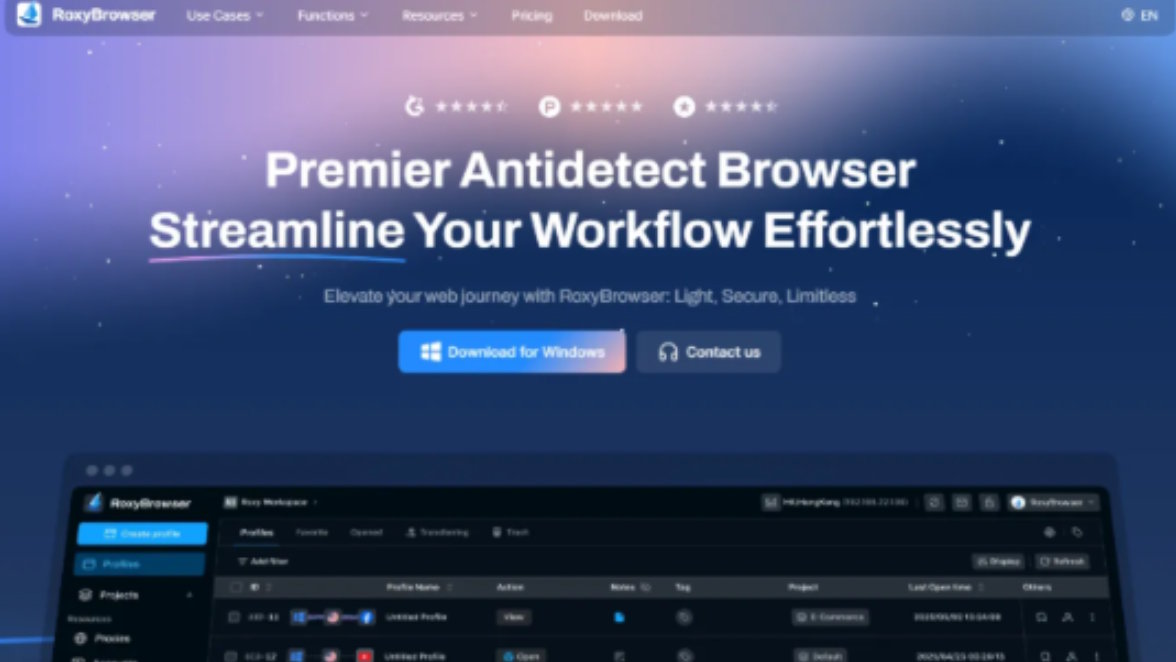
To achieve true automation autonomy, developers must integrate a robust antidetect browser into their Playwright or Selenium frameworks. For teams that need this type of setup without building every isolation layer from scratch, MoreLogin anti-detect browser can be used to create separated browser profiles for automation workflows. Each profile can keep its own cookies, local storage, fingerprint settings, and proxy configuration, helping developers run parallel Playwright, Selenium, or Puppeteer tasks in cleaner and more reusable environments. This is especially useful for QA teams, growth teams, and developers who need stable browser sessions instead of temporary headless instances that reset after every run.
Unlike basic extensions that merely inject JavaScript to override variables (which WAFs can easily detect), a true anti-detect solution operates by modifying the underlying Chromium or Firefox source code.
When the target website requests the Canvas hash or WebGL vendor information, the modified browser engine intercepts the call natively. It then supplies a mathematically consistent, unique hardware profile for each separate automated instance. You can programmatically instruct Instance A to behave like a Windows 11 machine with an NVIDIA RTX 3080 graphic card, while Instance B perfectly mimics a macOS environment running on an Apple M2 chip.
Practical Implementation with Playwright
Integrating this advanced isolation technology into a Python-based workflow is surprisingly elegant. Playwright, with its native support for asynchronous execution and the Chrome DevTools Protocol (CDP), allows developers to connect to these hardened, pre-configured anti-detect profiles over web sockets.
Instead of launching a local, easily detectable Chromium binary, your Python script connects to the remote or virtualized browser profile. You can dynamically assign different proxy IPs (such as high-quality ISP or Residential proxies) to each profile. The resulting automation script executes DOM manipulations, form submissions, and complex state changes with the exact network and hardware signature of a real human user. By mastering this combination of Playwright automation and deep fingerprint isolation, web developers can guarantee that their E2E testing pipelines remain stable, scalable, and completely immune to false-positive security blocks.

