

The metal key had a good run. Genuinely. But somewhere between the third locksmith call of the quarter and yet another emergency rekey after an employee departure, most facility managers reach the same conclusion: this system was never built for how modern businesses actually operate.
The momentum behind electronic access is real and, frankly, accelerating faster than most people expected. According to Gartner, 63% of organizations worldwide have fully or partially implemented a zero-trust strategy, and inadequate physical access control remains one of the most glaring vulnerabilities inside that framework. That single data point explains a lot about where security budgets are flowing right now.
If you're still running metal keys across your facility, this breakdown is worth your time. We'll cover exactly what's driving the shift, what modern systems actually look like, and why the ROI case is harder to ignore with every passing year.
What Modern Business Access Control Systems Look Like
Understanding the why is step one. The ‘what’ matters just as much, especially if you're evaluating options for the first time or planning a system upgrade.
Smart Hardware: The Physical Foundation
The hardware layer covers more ground than most people assume. Smart locks, electrified strikes, magnetic locks, turnstiles, cabinet locks, and well-built electronic door lock systems can protect everything from a data center to a loading dock, all managed from a single interface. No separate systems, no overlapping vendor relationships. The pattern lets facility teams extend access control to assets that traditional door-only systems leave exposed — equipment cabinets, server racks, vehicle fleets, vending and ATM enclosures, lockers, and remote outdoor cabinets — using electromechanical locks that audit every unlock event the same way the main door does.
Cloud Platforms: Where the Real Power Lives
Credential selection solves only part of the equation. The management platform tying everything together is where operational efficiency actually shows up day-to-day. For instance, electronic access control systems deliver centralized dashboards, remote lock and unlock capabilities, role-based access grouping, and clean integrations with HR software, video surveillance, and visitor management tools, without requiring a complete infrastructure overhaul.
Credentials: Reimagining Keyless Entry for Businesses
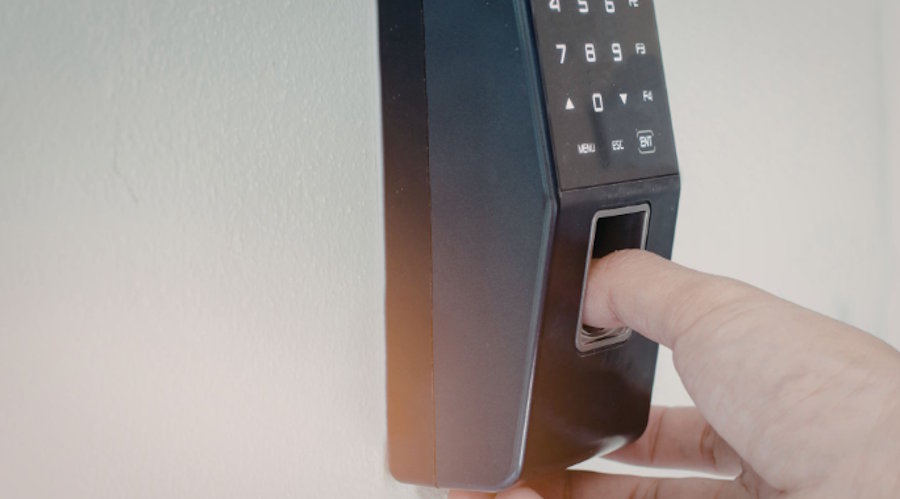
Keyless entry for businesses has evolved well past the basic key card. Today's credential options include mobile access via smartphone, fobs, PIN codes, and biometric verification, each suited to different environments and risk levels.
Mobile credentials win on flexibility and instant revocability. Biometrics offer the highest verification certainty. Cards and fobs still hold up well in lower-risk, higher-volume environments where speed matters more than granularity. The right choice depends on your specific context, not a one-size-fits-all recommendation.
The Pressures Pushing Businesses Toward Electronic Access Solutions
Let's be direct, today's workplace barely resembles what it was a decade ago. Hybrid schedules, distributed teams, multi-site footprints, and contractor-heavy operations have created access demands that traditional lock hardware was never designed to accommodate.
Real Operational Risks You Can't Afford to Overlook
Lost keys. Copied keys. Tailgating through a propped door. These aren't just minor nuisances; they're documented security failures that leave businesses exposed to theft, insider threats, and meaningful liability.
Hybrid work has also redefined when people need access and where. A predictable nine-to-five, single-location workforce is the exception now. Managing multiple buildings, tenant spaces, or rotating shift workers demands centralized visibility, something no physical key ring will ever deliver.
Why Traditional Keys Can't Keep Pace With Commercial Security Solutions
Here's an uncomfortable truth worth sitting with: keys are expensive to manage and nearly impossible to audit. Every rekeying job, every locksmith visit, every "we're not sure who has a copy" conversation adds friction and cost to your operations.
There's also zero documentation trail. No record of who opened which door, at what time, on which day. For businesses with compliance obligations, healthcare, finance, and legal, the absence of data isn't a mild inconvenience. It's a genuine audit liability. Commercial security solutions built on electronic infrastructure solve this directly, generating time-stamped access logs and exportable records your compliance team will actually appreciate.
The Strategic Advantages Worth Knowing
Replacing a key with a smartphone is the surface-level story. The deeper value proposition is about security posture, operating costs, and employee experience, and the advantages compound quickly.
Stronger, More Configurable Protection
Granular permissions mean each person accesses exactly what their role requires, during appropriate hours only. Multi-factor options, mobile plus PIN, card plus biometric, add meaningful protection for sensitive areas. Real-time alerts flag forced entries or unusual access patterns before a small incident becomes a serious one. That's active security, not reactive damage control.
Lower Costs Than Most Decision-Makers Anticipate
According to SDM's 2025 Industry Forecast, 61% of security professionals expect revenue from business access control systems to increase, reflecting sustained demand driven by measurable ROI.
Direct savings include eliminating rekeying costs and fewer emergency locksmith calls. Indirect savings show up in faster employee onboarding, reduced administrative overhead, and lower shrinkage rates. The math tends to favor electronic systems faster than most finance teams expect.
Better Day-to-Day Experience for Everyone
84% of smart lock purchase intenders want tap-to-unlock via smartphone or smartwatch, clear proof that frictionless access isn't an IT preference, it's a user expectation baked into how people already move through their lives. Staff don't get stranded outside because they forgot a badge. Visitors complete check-in without stacking up at reception. Contractors receive time-limited credentials without anyone cutting a physical key or chasing down a spare.
Frequently Asked Questions
1. What are the five core goals of access control?
Access control frameworks typically center on five phases: authorization, authentication, access, management, and auditing. Each phase builds toward a complete, enforceable security posture, and skipping any one of them creates a gap worth addressing.
2. Which keyless entry option works best for small businesses with tight budgets?
Cloud-managed mobile credentials and basic key fob systems consistently offer the lowest upfront costs while still delivering the essentials, remote management, instant revocation, and basic audit logging. Small businesses don't need enterprise complexity to get meaningful security improvements.
3. Can electronic access control systems integrate with existing cameras and HR platforms?
Yes, and this is one of the more underappreciated advantages. Most modern platforms offer API connections to video surveillance, alarm systems, visitor management tools, and HRIS platforms, creating a unified security ecosystem without forcing you to rip out existing infrastructure.
The Honest Case for Making the Move
Electronic access isn't simply a hardware upgrade. It's a foundation decision, one that shapes how your building operates, how your team experiences their workday, and how confidently your compliance team faces an audit.
The businesses accelerating through this transition aren't doing so because it's trendy. They're doing it because the operational and security gaps in traditional systems are widening, and the cost of staying put is quietly growing every quarter.
Start with an honest assessment of where your current system falls short. Define what your building actually requires. Then partner with a provider who understands the difference between a standardized installation and a solution genuinely tailored to where your business is heading. The sooner you start, the more control you'll have over the outcome.

