

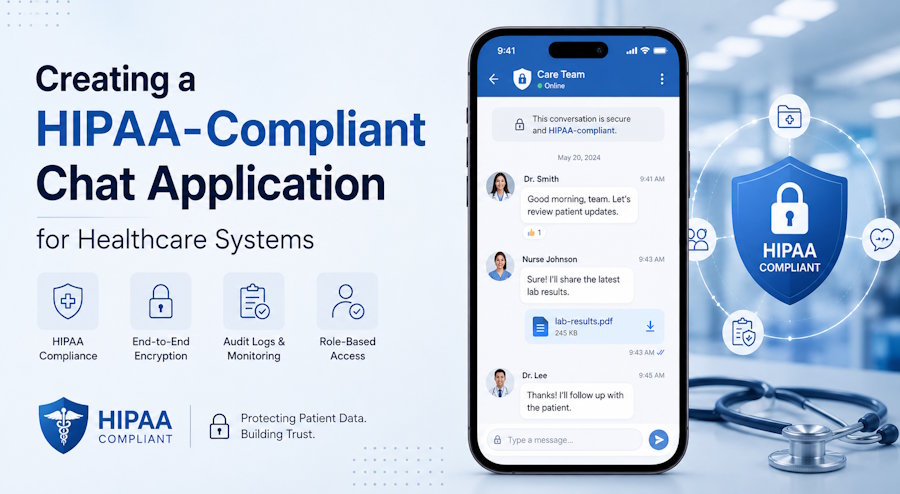
Building a HIPAA-compliant chat application for healthcare systems is no longer just a technical challenge—it is a regulatory necessity. As digital communication becomes central to patient care, providers must ensure that every message containing protected health information (PHI) is securely transmitted, stored, and accessed according to HIPAA (Health Insurance Portability and Accountability Act) requirements.
A modern healthcare chat system must support real-time communication between doctors, patients, administrative staff, and billing teams while maintaining strict privacy and security controls. In this article, we will explore how to design and build such an application, the core compliance requirements, and how solutions like CureMD integrate with broader healthcare ecosystems including Medical Practice Management Software, EMR Systems, and affordable ehr for small practices.
Understanding HIPAA Requirements for Chat Applications
Before building a chat system, it is essential to understand what HIPAA demands. Any application that creates, receives, stores, or transmits PHI must comply with the HIPAA Security Rule, which enforces administrative, physical, and technical safeguards.
In simple terms, a HIPAA-compliant chat application must include:
- End-to-end encryption (in transit and at rest)
- Strong authentication mechanisms (multi-factor authentication)
- Role-based access control (RBAC)
- Audit logs for every message and access event
- Secure data storage with strict retention policies
- Business Associate Agreements (BAA) with vendors
Without these components, even a basic chat feature can become a compliance risk.
Core Architecture of a HIPAA-Compliant Chat System
A secure healthcare messaging system typically follows a layered architecture:
1. Frontend Layer (User Interface)
This is the interface used by doctors, nurses, and patients. It should be designed for simplicity but must enforce:
- Secure login sessions
- Session timeouts
- No local storage of sensitive chat data
2. Application Layer (Messaging Logic)
This layer handles:
- Message routing
- Encryption/decryption
- User authentication checks
- Role-based permissions
3. Data Layer (Storage & Compliance)
All stored data must be:
- Encrypted using AES-256
- Segregated by user role and access level
- Logged for auditing purposes
4. Integration Layer (Healthcare Systems)
This is where integration with healthcare platforms happens, including:
- EMR Systems
- Medical Practice Management Software
- Billing and scheduling systems
This layer ensures that chat is not isolated but part of a unified clinical workflow.
Security Requirements for HIPAA-Compliant Chat
A HIPAA-compliant chat application must go beyond basic security practices. Healthcare data is highly sensitive, so systems must include advanced safeguards.
Encryption
All data must be encrypted using TLS 1.3 during transmission and AES-256 when stored. This ensures PHI cannot be intercepted or exposed.
Access Control
Each user must have a unique identity, and permissions should be tightly controlled. For example:
- Doctors can access patient chats
- Administrative staff can only view scheduling messages
- Patients can only access their own records
Audit Logging
Every action—sending a message, viewing patient data, or downloading attachments—must be logged in an immutable audit trail. This is essential for compliance audits.
Secure Authentication
Multi-factor authentication (MFA) is now considered a baseline requirement in healthcare applications to prevent unauthorized access.
Key Challenges in Building HIPAA-Compliant Chat Systems
1. Managing PHI Exposure
Even a simple chat message or HIPAA-compliant SMS workflow can contain PHI if it includes a patient name, diagnosis, or appointment detail. This means the entire messaging flow must be treated as sensitive.
2. Vendor Compliance and BAAs
Any third-party service used (cloud hosting, messaging APIs, or analytics tools) must sign a Business Associate Agreement (BAA). Without it, the system cannot be HIPAA compliant.
3. Data Integration Complexity
Healthcare chat systems must integrate with existing hospital infrastructure, including:
- EMR platforms
- Billing systems
- Appointment scheduling tools
4. Scalability and Performance
Healthcare environments require real-time communication with zero downtime. Systems must be designed for high availability and fault tolerance.
Role of CureMD in Healthcare Communication Ecosystems
In modern healthcare technology ecosystems, platforms like CureMD play a crucial role in connecting communication with clinical workflows.
CureMD operates as a comprehensive healthcare technology platform that integrates clinical documentation, billing, and workflow automation. When developing HIPAA-compliant chat systems, integration with CureMD can help unify communication with core healthcare operations such as:
- Patient record management via EMR Systems
- Workflow automation through Medical Practice Management Software
- Revenue cycle and administrative coordination
- Secure clinical messaging within structured workflows
By connecting chat applications with CureMD, healthcare organizations can reduce data silos and improve care coordination while maintaining compliance.
Integration with EMR Systems
EMR Systems are the backbone of digital healthcare records. Integrating chat applications with EMRs allows clinicians to:
- Access patient history during conversations
- Attach lab results or reports securely
- Document communication directly into patient records
This integration ensures that communication is not fragmented but becomes part of the patient’s official medical history.
Medical Practice Management Software and Chat Integration
Medical Practice Management Software helps healthcare organizations manage appointments, billing, and administrative workflows. When integrated with HIPAA-compliant chat applications, it enables:
- Automated appointment reminders via chat
- Secure billing communication between staff
- Faster coordination between front desk and clinical teams
- Reduced administrative workload
This combination significantly improves operational efficiency and patient experience.
Building for Small Practices: Affordable EHR Integration
For smaller healthcare providers, affordability is a major concern. Many practices look for affordable ehr for small practices that can still support secure communication features.
When building chat systems for small clinics:
- Lightweight cloud-based architecture is preferred
- Pre-built HIPAA-compliant APIs reduce development cost
- Integration with affordable EHR solutions ensures scalability
By combining chat systems with cost-effective EHR platforms, even small clinics can achieve enterprise-level communication security without heavy infrastructure investment.
Best Practices for Development
To ensure a successful HIPAA-compliant chat application, developers should follow these best practices:
1. Build Security First
Security should not be an afterthought. It must be embedded in system design from the beginning.
2. Minimize Data Storage
Store only essential chat metadata and avoid long-term storage of sensitive messages unless required.
3. Implement Zero Trust Architecture
Assume every request is untrusted until verified.
4. Regular Compliance Audits
Perform frequent internal audits to ensure continued HIPAA compliance.
5. Use Healthcare-Grade Infrastructure
Cloud providers used must support HIPAA compliance agreements.
Future of HIPAA-Compliant Chat Systems
The future of healthcare communication is moving toward:
- AI-powered clinical messaging assistants
- Automated patient triage systems
- Voice-to-text clinical documentation
- Deep integration with EMR and billing platforms
However, as systems become more intelligent, compliance requirements will become stricter. Auditability, encryption, and access control will remain the foundation of all innovation in this space.
Conclusion
Creating a HIPAA-compliant chat application for healthcare systems requires more than just secure messaging—it requires a full compliance-first architecture. From encryption and audit logs to system integration with EMR Systems, Medical Practice Management Software, and affordable ehr for small practices, every component must be designed with patient data protection in mind.
Platforms like CureMD demonstrate how integrated healthcare ecosystems can support secure communication while improving clinical efficiency. As healthcare continues to digitize, HIPAA-compliant chat systems will become a core part of modern patient care infrastructure, enabling safer, faster, and more connected healthcare delivery.

