

A few years ago, shipping a web app was a project in itself. You'd spend days setting up the environment, wiring together tools, writing configuration files, and praying that nothing broke when you finally pushed to production.
Today, that same app can go from an idea to live on a weekend, sometimes less.
Something has genuinely changed. It's not hype. Developers across the board are building and shipping faster than ever before, and it comes down to a handful of real, practical shifts in how they work.
Here's what's actually driving it.
The Numbers First
Before getting into the how, it's worth anchoring this in data.
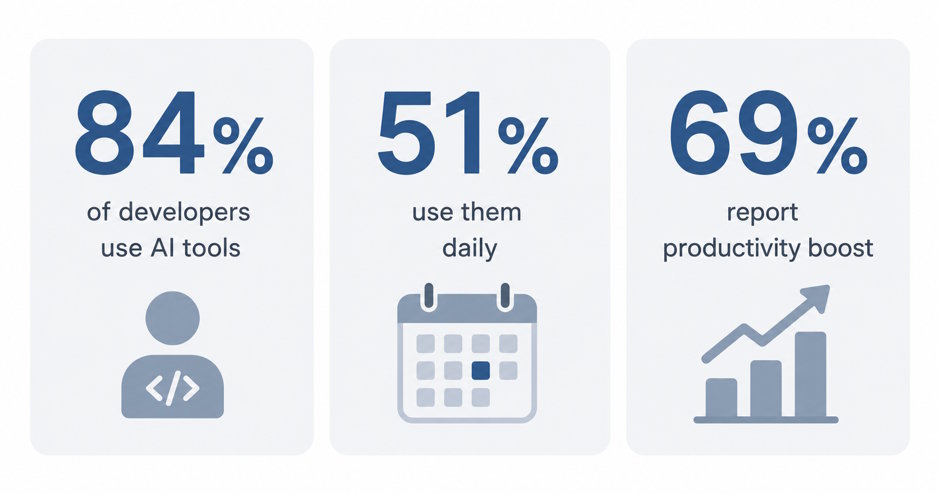
According to the 2025 Stack Overflow Developer Survey, the largest annual survey of developers, with responses from 49,000+ people across 177 countries, 84% of developers are now using or planning to use AI tools in their workflow, up from 76% the year before. More than half (51%) use them every day.
Stack Overflow's own analysis notes that 69% of developers who use AI agents report a boost in personal productivity.
These aren't vanity metrics. They reflect a genuine shift in how software gets built and why the pace of shipping has accelerated so dramatically.
1. Writing Code Got a Whole Lot Faster

The most obvious change is the code-writing itself.
AI coding assistants have gone from novelty to necessity. Tools like GitHub Copilot, Cursor, Windsurf, and Claude Code don't just autocomplete lines anymore. They can write entire functions, suggest refactors, catch bugs as you type, and explain code you've never seen before.
What used to take an hour of googling, reading docs, and trial-and-error now takes minutes. You describe what you want, the AI drafts it, you review and adjust. The grunt work, the part that chewed through your day is largely gone.
The practical result: developers are spending more time on the interesting parts of their work. Architecture. User experience. Solving the actual problem. Less time copy-pasting boilerplate from Stack Overflow.
2. You Can Go from Prompt to Working App in Hours
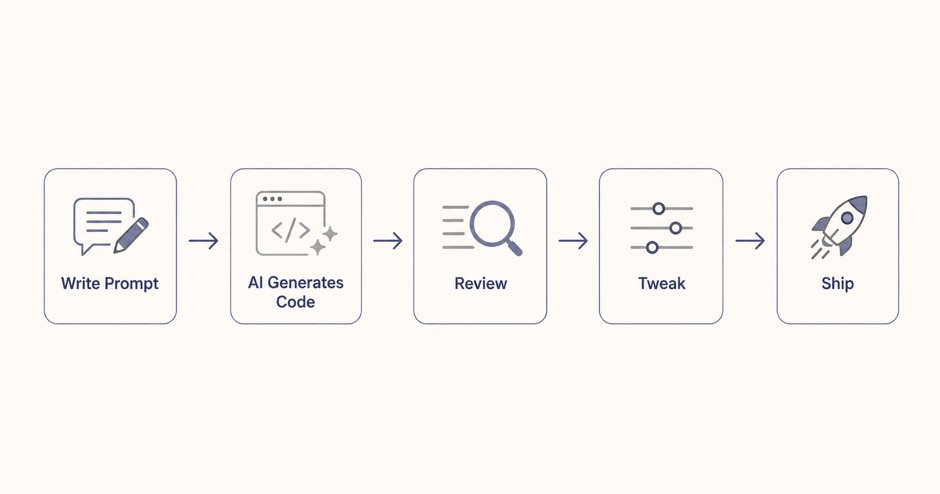
One of the bigger shifts in 2026 is a workflow called vibe coding, a term introduced by AI researcher Andrej Karpathy that describes building software by writing what you want in plain language and letting AI generate the code.
It sounds futuristic, but it's quite practical. Tools like Bolt.new, Lovable, and v0 by Vercel let you describe an app, its purpose, screens, features and get a working skeleton back in minutes.
A real example of a vibe-coding prompt, taken from daily.dev's breakdown of the workflow:
"Build an expense tracker for freelancers. Users add expenses with amount, category, date, and optional receipt photo. Show a monthly summary by category with totals. Include a CSV export. Use React with Tailwind. Store data in localStorage for the MVP."
Feed that into one of these tools and you have a working app skeleton, not a mockup, not a wireframe, but actual runnable code, before you've had a second coffee.
Worth noting: the Stack Overflow survey found that nearly 72% of developers say vibe coding is not part of their professional work yet. That means there's still a big gap between early adopters and the mainstream and those early adopters are getting a significant head start.
3. Deployment Stopped Being a Full-Day Job
Ask any developer what slows them down most, and deployment usually comes up.
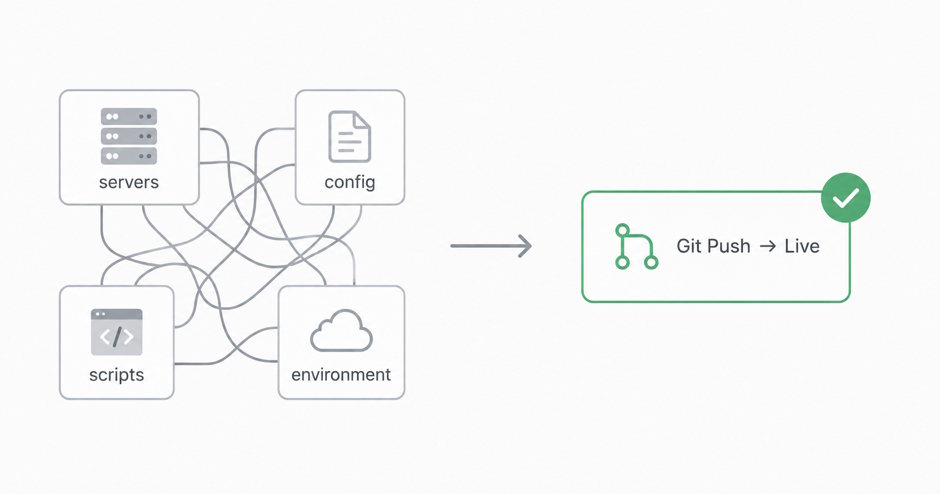
Getting code from your laptop to a real, running server used to involve a lot of moving parts: setting up servers, managing environment variables, writing deployment scripts, debugging why production behaved differently from local. It was tedious, error-prone, and ate time.
That friction has largely disappeared.
Modern deployment platforms handle the infrastructure for you. You connect your repository, push your code, and the platform takes care of building, running, and scaling your app. Platforms like Railway, Render, and Vercel have made this the default experience for web apps.
For teams that need more flexibility and control over how their apps run, Agentic AI platforms like Kuberns go further, using AI agents to handle cloud operations and deployment end-to-end, including the configuration decisions that used to require a dedicated DevOps person. The idea is zero config, zero manual effort.
When deployment goes from a multi-hour process to a git push, the feedback loop between writing code and seeing it live shrinks from days to minutes. That speed compounds fast.
4. Automated Testing and CI/CD Are Now Beginner-Friendly
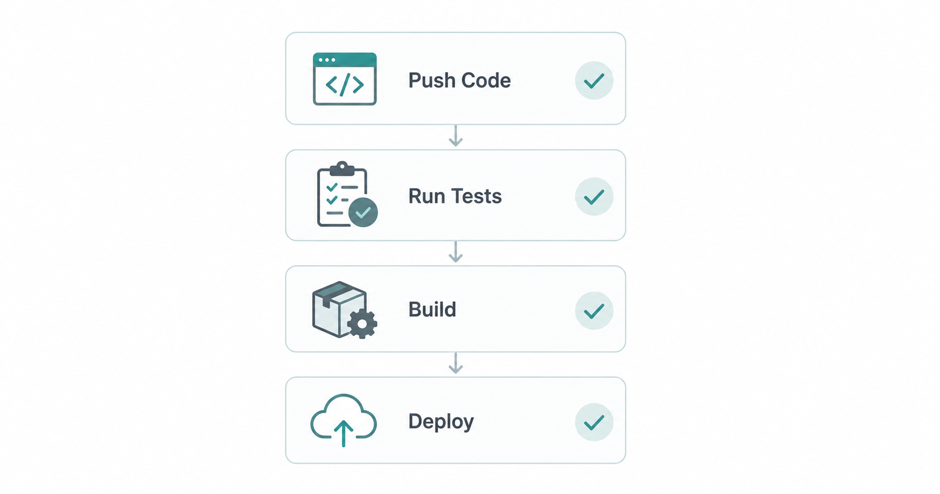
A few years ago, setting up a proper CI/CD pipeline, automatic testing and deployment every time you push code was something only larger teams bothered with. It required expertise, time to configure, and often a dedicated person to maintain it.
GitHub Actions changed that. It brought automated workflows directly into GitHub, with enough templates and documentation that even solo developers can set one up in an afternoon. And now, AI assistants can generate a working workflow from a simple description.
The result: every push to your main branch can automatically run tests and deploy to production, no manual steps, no forgotten scripts, no "works on my machine" moments.
For speed, this matters because it removes an entire category of manual, error-prone work from the process. You focus on writing code. The pipeline handles the rest.
5. The Modern Dev Stack Is Simpler Than It's Ever Been
Here's something that often gets overlooked: the tools themselves have gotten dramatically less complicated.
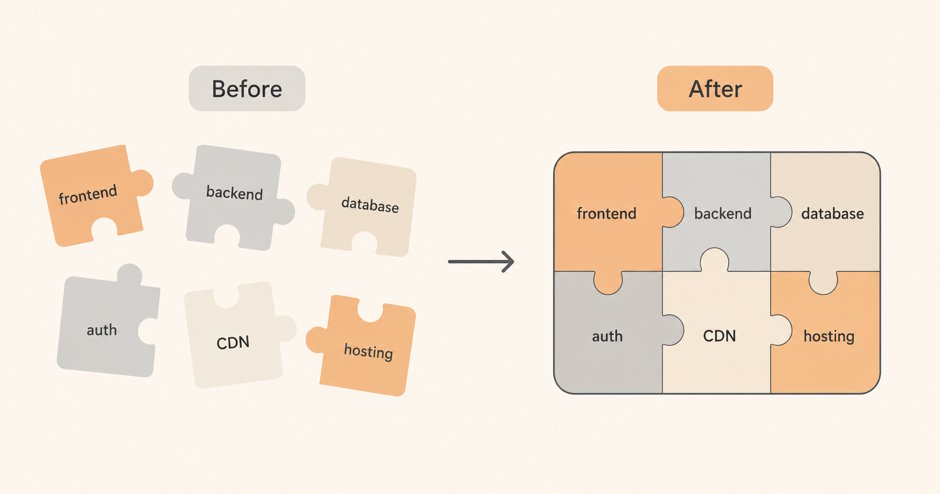
A few years ago, building a production-ready web app meant assembling a lot of separate pieces, a frontend framework, a backend server, a database layer, authentication, hosting, a CDN. Each piece had its own setup, its own configuration, its own way of breaking.
Today, meta-frameworks like Next.js, Nuxt, and Remix have pulled most of this together. Your API, your server logic, your UI, and your data fetching all live in the same project. You don't need a separate backend repo. You don't need to context-switch between five different tools.
For a solo developer or small team, this is huge. What used to require separate frontend and backend engineers can now be built and maintained by one person who knows a single framework well.
6. Shipping Early Has Become the Strategy, Not the Compromise
Underlying all of these tools is a mindset shift that might be the most important change of all.
There used to be a strong pull toward getting everything right before shipping. Polish the UI. Cover all the edge cases. Make sure the architecture can scale. Ship when it's ready.
The problem is that "ready" has a way of never arriving.
The developers moving fastest in 2026 have largely abandoned this model. They ship early, get real feedback, and improve fast. They treat v1 as a learning tool, not a finished product. And the modern toolchain supports this, deployment is easy, rollback is fast, and AI assistants make it straightforward to implement changes quickly once you know what users actually want.
This isn't about shipping broken software. It's about recognising that real user feedback is more valuable than theoretical perfection, and that the cost of shipping early has dropped dramatically when deployment and iteration are this fast.
What a Fast Workflow Actually Looks Like
To make this concrete, here's what a typical speed-optimized developer workflow looks like today:
1. Start with a prompt: Describe the app to a vibe-coding tool like Bolt.new or v0 to get a working skeleton fast
2. Develop with AI assistance: Use Cursor or GitHub Copilot for ongoing feature work; let AI handle the boilerplate
3. Set up CI/CD on day one: Configure GitHub Actions so every push is tested and deployed automatically
4. Deploy to a platform Use a deployment platform that handles infrastructure for you, so you never touch a server config
5. Ship early, iterate fast: Get real users on it quickly, use AI to implement feedback, keep the cycle tight
None of this requires a big team, a large budget, or years of DevOps experience. It requires knowing which tools to use and being willing to change how you work.
Final Thoughts
The speed gap between developers who have adopted these tools and those who haven't is growing. Not because the fast developers are smarter or working longer hours but because they've removed friction at every step of the process.
The good news is that every part of this workflow is available right now, to anyone. You don't need permission. You don't need a team. You just need to start.
Pick one thing from this list. Try an AI coding assistant, set up your first GitHub Actions workflow, or deploy your next project with a platform that handles the infrastructure for you. The compounding starts immediately.
The developers shipping faster in 2026 aren't different from you. They just changed their process.