

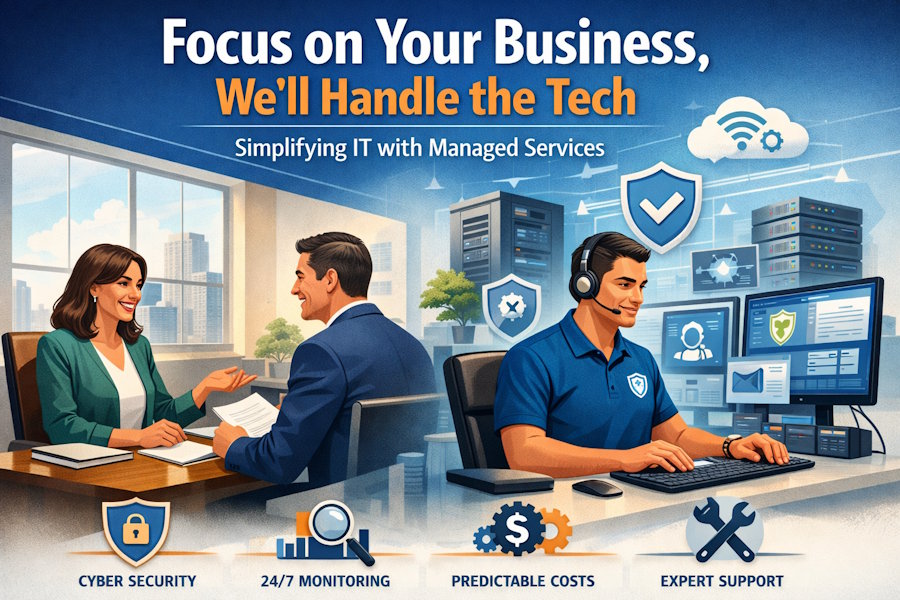
Running a business means managing many responsibilities at once. One moment you are reviewing finances or preparing for a client meeting, and the next you are trying to figure out why the internet stopped working or why the office printer suddenly refuses to cooperate. Instead of focusing on growth and customer service, many business owners end up spending valuable time dealing with technology problems.
For small and mid-sized businesses, technology should support daily operations rather than slow them down. However, many companies still operate with a reactive approach to IT, only addressing problems after something breaks. This often leads to stress, lost productivity, and unexpected expenses.
That is where the right technology partner can make a difference. By working with managed IT services in Honolulu, businesses can rely on experienced professionals to manage, monitor, and protect their systems while they stay focused on running their company.
Moving to a managed IT model is not just about fixing computers. It is about creating a stable, secure, and efficient technology environment that helps businesses operate with confidence.
Key Takeaways
- Shift from Reactive to Proactive: Managed services focus on preventing issues before they disrupt business operations.
- Predictable Budgeting: Instead of unexpected repair costs, businesses pay a consistent monthly fee for IT support.
- Improved Security: Proactive monitoring and security tools help reduce the risk of cyberattacks and data loss.
- Local Expertise Matters: A Hawaii-based IT partner understands local infrastructure challenges and can provide reliable on-site support.
Break-Fix vs. Managed Services: What’s the Real Difference?
To understand why more businesses are moving toward managed services, it helps to compare the two most common IT support models: break-fix and managed services.
The break-fix model works exactly as it sounds. A company uses its technology until something stops working. When a server crashes, email goes offline, or a computer becomes infected with malware, the business calls an IT technician to diagnose and fix the issue. Payment is usually based on hourly rates or per-incident service fees.
While this may seem simple, it often leads to unpredictable costs and stressful downtime. In this model, support only happens after a problem has already disrupted operations.
The managed services model takes a more proactive approach. Instead of waiting for something to break, businesses pay a monthly fee for ongoing monitoring, maintenance, and support. A managed service provider installs tools that monitor systems continuously and identify potential issues before they turn into major problems.
Think of it like maintaining a vehicle. Regular oil changes and inspections help prevent expensive breakdowns later. Managed IT support works the same way by identifying and resolving small issues early.
Another key difference is access to expertise. Managed service providers typically offer a full team of IT professionals with experience across networking, cybersecurity, cloud services, and infrastructure management. This gives businesses access to a broader range of knowledge than most internal teams can provide.
Rather than simply repairing technology, managed services focus on keeping systems stable and reliable.
The Hidden Costs of the “Wait Until It Breaks” Approach
Many business owners hesitate to move to managed services because they view the monthly cost as an added expense. However, the break-fix model often comes with hidden costs that are easy to overlook.
One of the biggest challenges is unpredictability. Businesses may go several months without any IT problems and then suddenly face a major issue that requires expensive repairs or equipment replacement. These unexpected costs can disrupt financial planning and strain budgets.
Downtime is another serious concern. When critical systems fail, employees may not be able to access files, communicate with clients, or complete important tasks. Even a few hours of downtime can significantly affect productivity and revenue.
There are several costs associated with system outages:
- Emergency repair services that often require urgent attention from technicians.
- Lost productivity when employees are unable to complete their work.
- Missed opportunities when customers cannot reach the business or complete transactions.
In contrast, managed services aim to reduce these risks by maintaining systems regularly and monitoring networks around the clock.
Why Cybersecurity Is No Longer a DIY Task
Cybersecurity has become one of the most critical concerns for businesses of all sizes. In the past, small companies could rely on basic antivirus programs and simple firewalls to stay protected. Today, cyber threats are far more sophisticated.
Small and mid-sized businesses are increasingly targeted by cybercriminals because they often have fewer security resources than large enterprises. Unfortunately, even a single successful attack can disrupt operations and cause serious financial damage.
This is why cybersecurity should not be treated as a do-it-yourself responsibility. Managed service providers use layered security strategies designed to detect and prevent threats before they cause harm.
These security measures often include:
- Endpoint protection that monitors devices for suspicious activity.
- Email filtering that blocks phishing attempts and malicious attachments.
- Secure data backups that allow businesses to restore systems quickly if an incident occurs.
- Security monitoring that identifies unusual network activity in real time.
With these protections in place, businesses reduce their risk of data loss, downtime, and operational disruptions.
How Managed IT Simplifies Your Daily Operations
Beyond improving security and cost predictability, managed IT support can make everyday business operations much easier.
One major benefit is having a single point of contact for technology issues. Without a managed provider, businesses often deal with several different vendors. They might call their internet provider for connectivity problems, a printer company for hardware repairs, and various software vendors for application support.
A managed IT partner simplifies this process. Instead of contacting multiple companies, employees can reach out to one support team that coordinates everything behind the scenes.
Managed service providers also help businesses choose the right technology solutions. Rather than recommending products based on sales incentives, they focus on tools that best match the company’s workflow, budget, and long-term goals.
Over time, this relationship becomes more strategic. A good IT partner will identify opportunities to improve efficiency, streamline processes, and adopt new technologies that support business growth.
The Value of a Local Partner in Hawaii
Even though many technology services can be delivered remotely, having a local IT partner still offers significant advantages.
Local providers understand the specific challenges businesses face in Hawaii, including infrastructure limitations and logistical considerations for hardware and connectivity. They can also provide on-site assistance when technical problems require physical support.
When a server fails, network equipment stops working, or new hardware needs to be installed, having technicians nearby can significantly reduce downtime.
Local providers also tend to build stronger working relationships with their clients. Over time, they become familiar with the company’s staff, systems, and workflow. This familiarity allows them to provide faster and more effective support.
For many businesses, this level of personalized service makes a meaningful difference in how smoothly their technology operates.
Conclusion
Technology should help businesses operate efficiently, not create constant disruptions. Yet many organizations still rely on reactive IT support that only addresses problems after they occur.
Switching to a managed services model allows businesses to take a proactive approach to technology. With ongoing monitoring, stronger cybersecurity, and predictable support costs, companies can reduce risk and improve operational stability.
Most importantly, business owners no longer need to spend their time troubleshooting technical problems. With the support of experienced professionals, they can focus their attention on customers, growth, and long-term success.

