

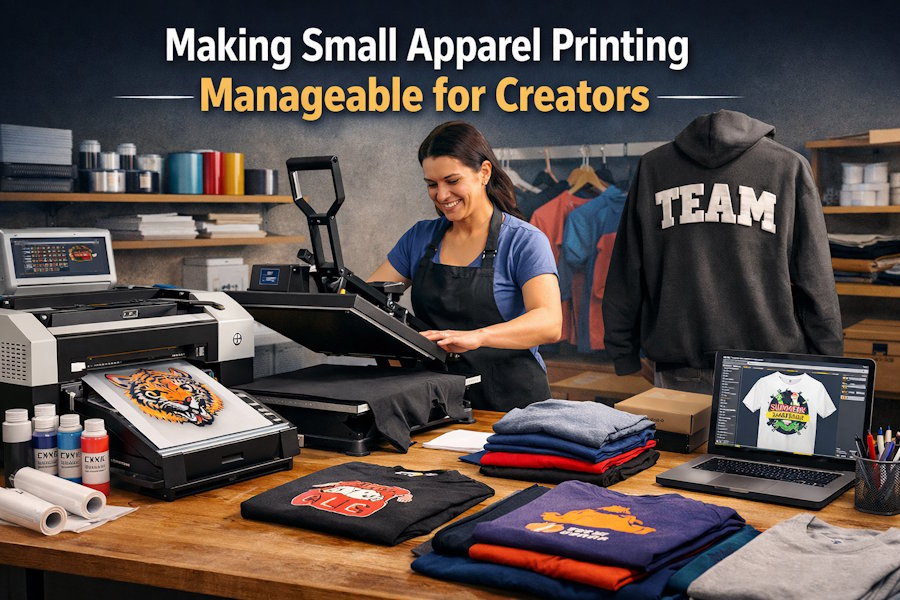
Running a small apparel business is more complex than just designing graphics. Balancing daily orders, managing materials, and keeping equipment running smoothly can quickly become overwhelming. Many shop owners discover that the real challenge is avoiding downtime caused by finicky machines. A desktop printing setup that emphasizes reliability and minimal maintenance transforms the workflow, letting creators focus on producing quality designs rather than troubleshooting technical issues.
Why Consistency Is Vital for Small Studios
Small shops often operate on unpredictable order patterns. One day may bring a single shirt for a custom request, and the next could require multiple team orders for a local event. In these situations, equipment consistency is critical. A dependable printing system ensures that each session delivers the same high-quality output without the need for constant monitoring or adjustment. This stability is particularly valuable when you are running a solo operation and need to multitask between packaging, design, and customer communication.
Reducing Downtime Stress
Weekend breaks or idle periods often reveal the shortcomings of traditional printing machines. Clogs, misaligned prints, and dried ink can turn a Monday morning into a frustrating troubleshooting session. Small shops benefit from a system designed to handle periods of inactivity without producing errors. Returning to a ready-to-print setup saves time and reduces stress, making daily operations smoother and more predictable.
Small-Batch Production Without Hassle
For home studios or weekend makers, producing small quantities can feel fragile if the equipment is temperamental. A printer built for low-maintenance operation ensures steady output for modest runs such as club merch, team tees, or event giveaways. The ability to complete several small orders in one evening without interruptions keeps production efficient and helps shop owners meet deadlines reliably.
Beginner-Friendly Operation
Many new creators transitioning from htv heat press or dye sublimation printing find DTF technology intimidating. A printer with intuitive controls and simple software lowers the learning curve. Family members, helpers, or new employees can quickly learn the process, allowing the business to expand without the constant need for supervision. Reducing the complexity of setup and operation ensures that even first-time users can produce professional-quality prints consistently.
Managing Ink and Materials Efficiently
Mistakes with ink or film can be costly. Wasted materials, stained garments, or ruined transfers reduce profit margins and create unnecessary frustration. A well-designed system includes built-in alerts to catch potential issues early, such as low ink levels or misfeeds. These safeguards are particularly useful when you are printing solo and need to focus on other aspects of the shop, such as packaging orders or updating online listings.
Planning for Order Fluctuations
Small businesses rarely have perfectly predictable daily volumes. A printer that handles both steady small-batch production and occasional bursts gives operators flexibility. For instance, a weekend sale or local market restock can be accommodated without worrying about overloading the system. Having a reliable machine ensures that even sudden increases in demand don’t disrupt your workflow or compromise print quality.
Integrating Puff Heat Transfer Vinyl
While DTF printing is excellent for full-color designs, puff heat transfer vinyl offers unique texture effects for certain elements. Small studios can combine these approaches to create custom products with added dimension and visual appeal. Learning to use both methods efficiently allows shop owners to expand their offerings while maintaining workflow consistency and avoiding unnecessary errors.
Using HTV Heat Press for Durable Transfers
After printing, a htv heat press ensures that designs adhere properly and last through repeated washes. Consistent pressure and temperature are key to achieving smooth, durable results. Pairing a reliable dtf transfer printer with a quality heat press reduces returns and improves customer satisfaction. For solo operators, understanding the workflow for both printing and pressing is crucial to maintaining a high standard of production.
Streamlining Small-Shop Operations
Even with only a few orders per day, efficient workflow management makes a difference. Operators can print while packaging, preparing shipments, or handling online queries. Built-in safeguards allow the printer to run safely unattended for short periods, giving the operator flexibility to manage multiple tasks simultaneously. This approach maximizes productive time and minimizes errors, helping small businesses operate smoothly without sacrificing quality.
Preparing for Short-Term High Volume
Special events or promotions sometimes create spikes in demand. A desktop printer designed for both daily operations and occasional high-volume output allows creators to meet these challenges without constant intervention. Consistent quality during busier periods builds trust with customers and encourages repeat business. Being able to rely on a system for both regular and peak orders is invaluable for small shops.
Maintaining Quality Across Multiple Orders
Customers expect uniform results, especially when ordering multiple items with the same design. A reliable dtf transfer printer ensures that each piece meets quality standards, even when production stretches over several hours. This consistency reduces waste, prevents rework, and enhances the shop’s professional reputation. Small shops benefit from predictable output that allows them to focus on creative design rather than fixing technical mistakes.
Combining Beginner-Friendly Tools
For new operators, integrating intuitive tools for both printing and pressing simplifies the learning curve. Understanding how puff heat transfer vinyl interacts with printed designs, along with the proper use of htv heat press, allows for a seamless workflow. Beginner-friendly systems minimize trial-and-error learning, helping new business owners gain confidence quickly and produce quality results from day one.
Investing in Reliable Equipment
Choosing equipment designed for small-shop use prioritizes stability over speed. A printer that offers consistent output, minimal maintenance, and practical throughput pairs well with a heat press and supplementary vinyl options. This combination provides flexibility and efficiency for a range of small-batch projects. For creators looking to start or upgrade their workflow, reliable tools support growth without adding operational stress.
Practical Setup Tips
Organizing your workspace with designated areas for the printer, heat press, and vinyl storage streamlines production. Scheduling print runs, monitoring ink levels, and planning batch sizes help maintain smooth operations. Small shops benefit from structured workflows that allow operators to manage design, packaging, and order fulfillment simultaneously without compromising print quality.
Reducing Mistakes and Waste
Downtime and material waste are the hidden costs of apparel production. Systems with built-in alerts and beginner-friendly interfaces help minimize these issues. By addressing potential problems before they escalate, small businesses save money and reduce frustration, ensuring a smoother workflow and more satisfied customers.
Scaling Production as Business Grows
A low-maintenance dtf transfer printer scales with your business. Start with small orders and gradually increase output as demand grows. Maintaining consistent quality and reliability ensures that your workflow remains manageable, even as your shop expands. Combining efficient printing with a htv heat press and puff heat transfer vinyl gives small shops creative flexibility while keeping operations stress-free.
Conclusion
For small apparel businesses, the biggest challenge is balancing production, design, and customer service without letting technical issues slow growth. A desktop setup that emphasizes reliability, minimal maintenance, and beginner-friendly operation allows shop owners to focus on creativity and order fulfillment. Pairing a dtf transfer printer with a htv heat press and occasional use of puff heat transfer vinyl creates a versatile, efficient workflow. Whether handling steady daily orders or occasional bursts of demand, this combination helps small shops maintain quality, reduce waste, and manage time effectively. For creators seeking a stress-free starting point, exploring options at HTVRONT D2 DTF Printer can be the first step toward smoother, more reliable apparel printing.

