

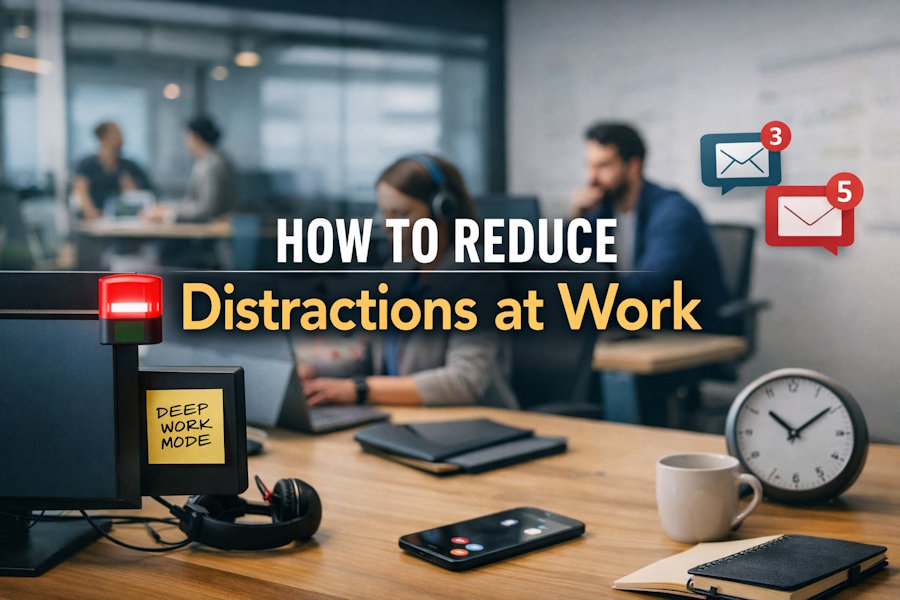
The busy light technology introduces a structured method for managing workplace interruptions through visible status communication. Modern productivity problems rarely originate from insufficient skills. They arise from uncontrolled attention fragmentation across physical and digital environments.
Reducing distractions requires redesigning workflow signals rather than demanding stronger personal discipline. When availability becomes visible and automated, collaboration shifts from interruption-driven behavior toward intentional coordination.
Types of Workplace Distractions
Workplace distractions form predictable operational patterns that can be analyzed and engineered away. Organizations typically encounter two dominant categories: human interruptions and digital notification overload. Effective distraction management depends on identifying these categories separately.
Frequent Interruptions
Unplanned colleague interaction remains the most disruptive factor in open offices and hybrid workspaces. Employees often interrupt others not out of urgency but due to uncertainty about availability.
Visible presence indicators reduce this uncertainty by externalizing work status. Social friction decreases because employees no longer need to verbally defend focus time.
- Lack of availability visibility encourages spontaneous interruptions.
- Open office layouts amplify social pressure to respond immediately.
- Meeting overlap generates cascading workflow disruptions.
- Manual status updates fail because they depend on user memory.
Interruption reduction is fundamentally a communication problem. Teams perform better when availability signals replace assumption-based collaboration.
Digital Notifications
Digital distractions operate continuously and silently, creating fragmented attention cycles. Messaging platforms, alerts, and real-time collaboration tools compete for cognitive resources even when tasks require sustained concentration.
A technically mature workspace filters communication rather than eliminating it.
|
Notification Source |
Typical Behavior |
Productivity Impact |
Recommended Control |
|
Instant messaging |
Continuous alerts |
Context switching |
Status automation |
|
Email notifications |
Reactive checking |
Task delay |
Scheduled batching |
|
Video meeting alerts |
Forced attention shifts |
Focus loss |
Presence signaling |
|
Project tools |
Excess updates |
Cognitive overload |
Priority filtering |
|
Mobile devices |
Parallel distractions |
Reduced deep work |
Unified workspace signals |
Digital systems must support focus rather than compete with it. Integration between communication platforms and smart office devices allows teams to coordinate without excessive notification traffic.
Strategies to Minimize Them
Minimizing distractions requires aligning physical workspace design with digital workflow automation. Productivity improves when interruption prevention becomes part of infrastructure instead of individual effort.
Organizations that implement systematic distraction management observe improvements in execution speed and employee well-being simultaneously.
Create an Efficient Workspace
Workspace efficiency emerges from predictable environmental signals. Lighting conditions, acoustic management, and visual indicators collectively define how interruptions occur.
An optimized workspace removes ambiguity around engagement states. Employees should immediately understand whether collaboration, discussion, or deep work is appropriate.
- Dedicated focus zones separate collaboration from concentration tasks.
- Visual signaling tools communicate Do Not Disturb status instantly.
- Structured scheduling minimizes overlap between meetings and deep work.
- Ergonomic and environmental optimization supports cognitive endurance.
Efficient workspace design also lowers stress exposure. When employees trust that their focus time will be respected, mental fatigue decreases despite unchanged workload intensity.
Use Tools like Luxafor Busy Light
Smart office devices transform distraction control into an automated process. Luxafor develops productivity gadgets designed to synchronize human activity, software status, and physical workspace signaling.
The busy light operates as a real-time availability indicator connected to workplace platforms such as Microsoft Teams, Zoom, and automation services through Zapier integrations. Employees communicate meeting status, deep work sessions, or availability without manual explanation.
Luxafor’s ecosystem extends beyond a single device. Presence indicators, Do Not Disturb lights, interactive buttons, and environmental sensors collectively create a smart office infrastructure supporting focus, collaboration awareness, and workspace optimization.
- Automatic status synchronization prevents communication conflicts.
- Deep work signaling protects high-concentration tasks.
- Team awareness indicators improve open office productivity.
- USB and Bluetooth devices integrate seamlessly into existing workflows.
Technology adoption succeeds when tools reduce behavioral friction. Luxafor solutions allow organizations to implement focus culture without imposing rigid communication rules on employees.
Boosting Concentration
Concentration improves when distraction reduction becomes continuous rather than temporary. Long-term focus emerges from consistent signaling, predictable workflows, and integrated workplace technology.
Luxafor emphasizes practical productivity improvements grounded in real office processes. Smart office ecosystems combine availability indicators, productivity tools, and well-being solutions such as air quality monitoring to support sustainable performance.
Employee well-being directly influences concentration capacity. Employees maintain higher engagement levels and demonstrate improved decision quality.
Focus-friendly workplaces promote psychological safety by eliminating constant responsiveness pressure. Employees gain autonomy over attention management while remaining fully integrated into collaborative workflows.
Conclusion: Working Without Distractions
Working without distractions does not mean eliminating communication. It means structuring communication intelligently. Organizations achieve sustainable productivity when attention protection becomes an operational standard supported by workplace technology.
Luxafor provides practical tools that translate productivity theory into measurable workplace outcomes. Through smart availability indicators, automation integrations, and workspace optimization solutions, teams reduce interruptions, strengthen collaboration culture, and create healthier working environments.
The modern office succeeds when focus becomes visible and respected. Smart signaling systems, integrated productivity devices, and intentional workspace design allow employees to work efficiently without sacrificing teamwork or well-being.
Implement Luxafor smart office solutions today to reduce distractions, protect focus, and build a workplace where productivity and employee comfort operate together.

