

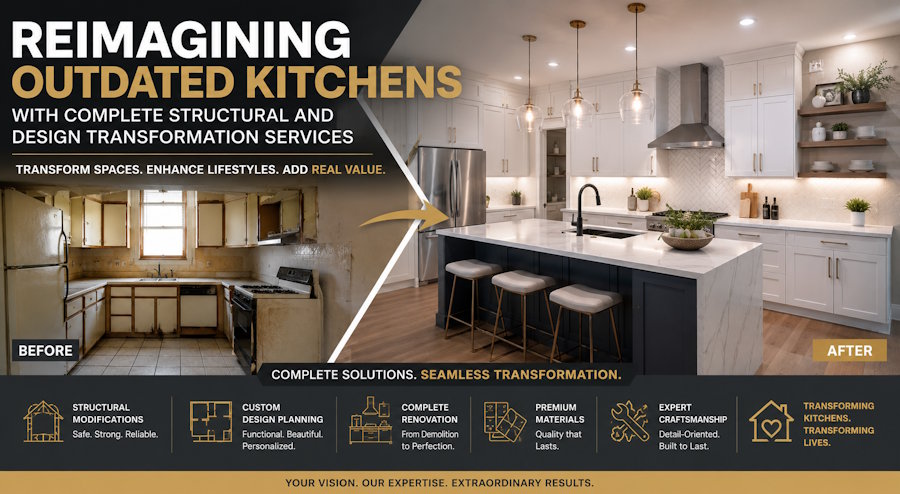
Introduction to Kitchen Remodeling and Its Growing Importance
Kitchen remodeling has become one of the most popular home improvement projects because the kitchen is no longer just a cooking space but the central hub of modern homes where families gather, meals are prepared, and daily routines often begin and end. A well-planned kitchen remodel improves functionality, enhances aesthetics, increases property value, and makes daily tasks more efficient and enjoyable. Homeowners today are not only focused on visual upgrades but also on improving storage, optimizing layout, upgrading appliances, and integrating modern design trends that support convenience and sustainability.
A successful kitchen remodeling project requires careful planning, budgeting, material selection, and professional execution. Whether it is a minor upgrade or a complete transformation, the goal remains the same: to create a space that is practical, durable, and visually appealing while matching the lifestyle of the homeowner.
Key Reasons Homeowners Invest in Kitchen Remodeling
There are several reasons why homeowners choose to remodel their kitchens, and most of them go beyond appearance. One of the primary motivations is improved functionality, as outdated kitchens often lack proper storage, counter space, and efficient layouts. Remodeling allows homeowners to redesign the space in a way that supports better movement, cooking efficiency, and organization.Another major reason is property value. A modern and well-designed kitchen significantly increases resale value, making it one of the highest-return investments in home improvement. Energy efficiency is also a strong factor, as new appliances and lighting systems reduce utility costs over time. In addition, many homeowners simply want to update old designs and create a more comfortable and modern living environment.
Planning Phase of a Successful Kitchen Remodeling Project
The planning stage is one of the most important parts of kitchen remodeling because it determines the overall success of the project. This phase involves evaluating the current layout, identifying problems, setting a realistic budget, and defining design goals. Homeowners must decide whether they want a full renovation or partial upgrades such as cabinet replacement, countertop installation, or appliance upgrades.Space utilization is a critical factor during planning. A well-designed kitchen should ensure smooth movement between the sink, stove, and refrigerator, often referred to as the kitchen work triangle. Proper planning also includes selecting materials, choosing color schemes, and determining lighting requirements. Working with professionals during this stage helps avoid costly mistakes and ensures that the final design meets both aesthetic and functional expectations.
Importance of Hiring Professionals for Kitchen Remodeling
Although some homeowners attempt DIY renovations, kitchen remodeling is a complex process that often requires professional expertise. A skilled contractor ensures that plumbing, electrical systems, cabinetry installation, and structural modifications are completed safely and efficiently. Professionals also help in selecting durable materials that can withstand daily wear and tear.Experienced designers understand how to maximize space usage and improve kitchen flow while maintaining visual harmony. They also ensure compliance with building codes and safety regulations, which is essential for long-term reliability. Hiring experts reduces the risk of errors, delays, and unexpected expenses, making the entire process smoother and more efficient.
Cabinet Design and Storage Optimization
Cabinets are one of the most important elements in kitchen remodeling because they directly affect storage capacity and organization. Modern kitchen designs focus on maximizing storage while maintaining a clean and minimal appearance. Custom cabinetry solutions allow homeowners to utilize every inch of available space efficiently.
Features such as pull-out shelves, corner units, deep drawers, and vertical storage systems help improve accessibility and reduce clutter. Material selection is also important, as cabinets must be durable enough to withstand moisture, heat, and frequent use. The choice of finishes and colors plays a significant role in defining the overall kitchen style, whether it is modern, traditional, or transitional.
Countertops and Material Selection
Countertops are another key aspect of kitchen remodeling because they serve both functional and aesthetic purposes. Popular materials include granite, quartz, marble, and engineered stone, each offering different levels of durability, maintenance requirements, and visual appeal.Quartz countertops are widely preferred due to their durability and low maintenance, while granite offers a natural and luxurious appearance. The choice of material should align with cooking habits, budget, and design preferences. Proper installation ensures long-term performance and resistance to scratches, stains, and heat.
Lighting and Its Role in Kitchen Remodeling
Lighting plays a crucial role in both functionality and ambiance. A well-lit kitchen improves safety, enhances visibility, and creates a welcoming environment. Kitchen remodeling projects often include a combination of task lighting, ambient lighting, and accent lighting.Task lighting is essential for cooking and food preparation areas, while ambient lighting provides overall illumination. Accent lighting is used to highlight design features such as cabinets or countertops. Modern kitchens often incorporate LED lighting systems for energy efficiency and long lifespan.Upgrading appliances is a common part of kitchen remodeling because modern appliances are designed to be more energy-efficient and user-friendly. Refrigerators, ovens, dishwashers, and cooktops now come with advanced features that improve performance and reduce energy consumption.Energy-efficient appliances not only lower electricity bills but also contribute to environmental sustainability. Built-in appliances are increasingly popular because they create a seamless and integrated kitchen design. Smart appliances that can be controlled through mobile devices are also becoming a standard feature in modern kitchens.
Flooring Options in Kitchen Remodeling
Flooring is an essential component that affects both durability and aesthetics. Since kitchens experience heavy foot traffic, spills, and heat exposure, flooring materials must be strong and easy to maintain. Common options include ceramic tiles, vinyl, hardwood, and stone flooring.Ceramic tiles are widely used due to their durability and water resistance, while vinyl offers affordability and design flexibility. Hardwood flooring provides a warm and natural look but requires proper sealing and maintenance. Choosing the right flooring ensures long-term performance and enhances the overall kitchen design.Kitchen remodeling often involves upgrading plumbing and electrical systems to support modern appliances and layouts. Plumbing modifications may include relocating sinks, installing new faucets, or improving drainage systems. Electrical upgrades ensure that the kitchen can handle increased power demands from appliances and lighting systems.Proper installation of wiring, outlets, and circuits is essential for safety and efficiency. These upgrades should always be handled by licensed professionals to avoid hazards and ensure compliance with building regulations.
Modern Design Trends in Kitchen Remodeling
Kitchen design trends continue to evolve, with a strong focus on simplicity, functionality, and sustainability. Open-concept kitchens are highly popular because they create a spacious and connected living environment. Minimalist designs with clean lines and neutral colors are also widely preferred.Smart kitchens equipped with automated systems, touchless faucets, and voice-controlled appliances are becoming more common. Eco-friendly materials and energy-efficient solutions are also gaining importance as homeowners become more environmentally conscious.
Budgeting and Cost Factors in Kitchen Remodeling
The cost of kitchen remodeling depends on several factors including size, materials, labor, and design complexity. High-end materials and custom designs increase the overall cost, while basic upgrades are more affordable. Proper budgeting helps homeowners prioritize essential upgrades and avoid unnecessary expenses.Unexpected costs can arise during remodeling, especially when hidden issues such as plumbing or structural damage are discovered. Working with experienced professionals helps manage costs effectively and ensures transparency throughout the project.Kitchen remodeling projects often face challenges such as budget overruns, delays, and design changes. Material shortages or incorrect measurements can also cause setbacks. Proper planning and communication with contractors help minimize these issues.Another challenge is maintaining functionality during the remodeling process, especially in homes where the kitchen is heavily used. Temporary arrangements may be needed until the project is completed.
Conclusion
Kitchen remodeling is a valuable investment that enhances both the functionality and aesthetics of a home. From planning and design to material selection and installation, every step plays an important role in achieving a successful transformation. A well-executed kitchen remodel improves daily living, increases property value, and creates a more enjoyable cooking and dining experience.By focusing on smart design choices, quality materials, and professional execution, homeowners can create a kitchen that is both modern and long-lasting.

