

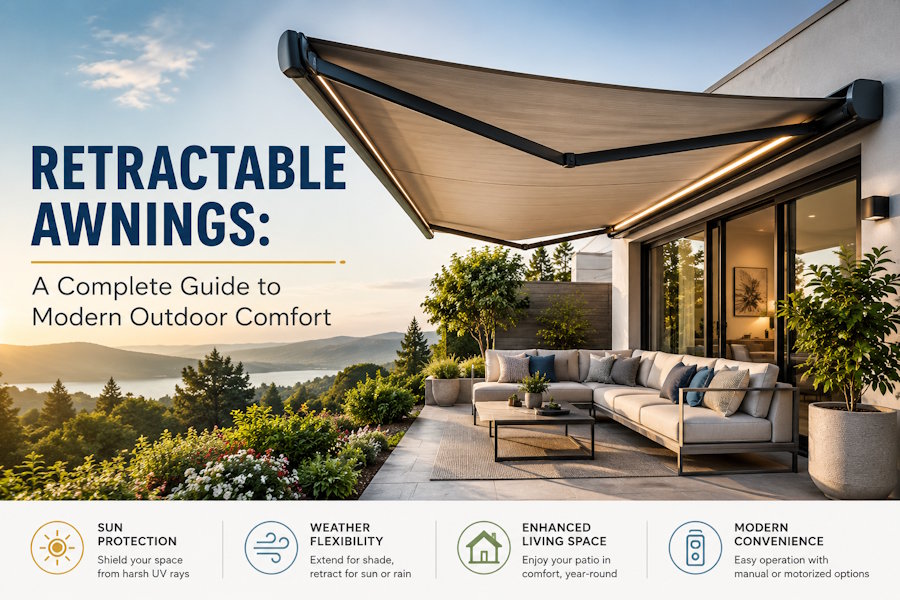
Introduction to Retractable Awnings
Retractable awnings are versatile outdoor shading systems designed to provide adjustable protection from sunlight, heat, and light rain. Unlike fixed awnings, these systems can be extended or retracted based on weather conditions or user preference, making them a flexible solution for both residential and commercial spaces. Over the years, retractable awnings have become increasingly popular due to their combination of practicality, aesthetic appeal, and energy-saving benefits.
They are commonly installed over patios, balconies, windows, storefronts, and outdoor seating areas, offering comfort and protection while enhancing the overall appearance of a space. With growing awareness of energy efficiency and outdoor living trends, retractable awnings have become an important feature in modern architectural design.
How Retractable Awnings Work
Retractable awnings operate using a mechanical or motorized system that allows the fabric canopy to extend outward or retract back into a protective housing. The structure typically includes a frame, support arms, a roller tube, and a durable fabric cover.Manual versions are operated using a hand crank, while motorized systems use an electric motor controlled by a switch, remote, or even smart home integration. Some advanced models also include sensors that automatically adjust the awning based on sunlight, wind, or rain conditions.This flexibility allows users to control shading and exposure with ease, adapting quickly to changing weather throughout the day.
Types of Retractable Awnings
There are several types of retractable awnings available, each designed to suit different needs and spaces.
Manual Retractable Awnings are operated by hand using a crank system. They are cost-effective and suitable for smaller installations where frequent adjustments are not required.
Motorized Retractable Awnings use an electric motor for effortless operation. These are ideal for larger spaces or for users who prefer convenience and automation.
Freestanding Retractable Awnings are not attached to a building and can be placed anywhere in an outdoor area. They are often used in gardens, poolside areas, or open patios.
Window and Door Awnings are smaller installations designed specifically to reduce sunlight entering through glass surfaces, improving indoor comfort and reducing glare.
Each type serves a specific purpose, allowing homeowners and businesses to choose based on their functional and design requirements.
Benefits of Retractable Awnings
One of the primary benefits of retractable awnings is their ability to provide adjustable shade. This helps regulate outdoor comfort by reducing direct sunlight and heat exposure during hot weather while allowing sunlight when needed.They also contribute to energy efficiency by reducing indoor cooling costs. By blocking sunlight from entering through windows, retractable awnings help maintain cooler indoor temperatures, reducing the need for air conditioning.Another major advantage is protection from weather elements. While not designed for heavy storms, they can shield outdoor spaces from light rain and UV rays, extending the usability of patios and seating areas.In addition, retractable awnings enhance the aesthetic appeal of buildings. With a wide variety of colors, patterns, and materials available, they can complement architectural styles and improve curb appeal.
Materials and Fabric Options
The performance and durability of retractable awnings depend largely on the materials used. The frame is typically made from aluminum or steel, offering strength and resistance to corrosion.The fabric is usually made from acrylic, polyester, or vinyl-coated materials. These fabrics are designed to be UV-resistant, water-resistant, and fade-resistant, ensuring long-lasting performance even in outdoor conditions.High-quality fabrics also help maintain color vibrancy and structural integrity over time. Some modern options include breathable materials that reduce heat buildup underneath the awning, enhancing comfort.
Installation Process and Considerations
Installing retractable awnings requires careful planning to ensure stability, safety, and optimal performance. The process begins with selecting the appropriate location based on sun exposure, structural support, and intended use.Wall-mounted awnings require secure anchoring into strong surfaces such as brick, concrete, or reinforced wood. Freestanding models require a stable base or weighted support system.Professional installation is often recommended, especially for motorized systems, to ensure proper alignment and electrical connections. Incorrect installation can lead to operational issues or reduced lifespan.Proper measurement is also critical, as the awning must provide adequate coverage without obstructing movement or access.
Maintenance and Care Tips
Retractable awnings are relatively low-maintenance, but regular care is essential to preserve their appearance and functionality.Cleaning the fabric periodically helps prevent dirt, mold, and mildew buildup. This can usually be done using mild soap and water with a soft brush.
It is also important to retract the awning during strong winds, heavy rain, or storms to prevent damage. Motorized systems with sensors often handle this automatically.Checking mechanical components such as arms, hinges, and motors ensures smooth operation and helps identify any signs of wear early.Proper maintenance significantly extends the lifespan of the system and ensures consistent performance.
Safety Considerations
Safety is an important factor when using retractable awnings. Because they are exposed to environmental conditions, they must be operated correctly to avoid damage or accidents.
Wind resistance is a key concern, as strong gusts can strain the structure. Many modern systems include wind sensors that automatically retract the awning when conditions become unsafe.Electrical systems must also be installed and maintained properly to prevent malfunctions. Regular inspections help ensure that all components are functioning safely and efficiently.Avoiding overextension and ensuring proper locking mechanisms are engaged can also prevent structural issues.
Energy Efficiency and Environmental Benefits
Retractable awnings contribute to energy efficiency by reducing heat gain inside buildings. By blocking direct sunlight, they help lower indoor temperatures naturally, reducing reliance on air conditioning systems.This not only lowers energy bills but also reduces overall energy consumption, making them an environmentally friendly addition to any property.They also help protect furniture, flooring, and interior decor from UV damage, extending the lifespan of indoor materials and reducing replacement costs.
Retractable awnings are widely used in both residential and commercial settings due to their versatility.In residential spaces, they are commonly installed over patios, balconies, decks, and windows to create comfortable outdoor living areas. They allow homeowners to enjoy outdoor spaces without excessive sun exposure.In commercial environments, such as restaurants, cafes, and retail stores, retractable awnings provide shaded seating areas and improve customer comfort. They also serve as branding opportunities when customized with logos or colors.Their adaptability makes them suitable for a wide range of architectural styles and functional needs.
Cost Factors and Investment Value
The cost of retractable awnings varies depending on size, materials, type, and automation features. Manual models are generally more affordable, while motorized systems with advanced features tend to be more expensive.Although the initial investment may be higher compared to fixed shading options, retractable awnings offer long-term value through energy savings, durability, and enhanced property appeal.Choosing high-quality materials and professional installation ensures better performance and reduces long-term maintenance costs.Recent advancements in technology have significantly improved retractable awning systems. Smart controls now allow users to operate awnings through mobile apps or voice assistants.Automated sensors can detect sunlight, wind, and rain, adjusting the awning without manual input. This improves convenience and protects the system from weather-related damage.Design innovations have also introduced sleeker frames, improved fabric technology, and more customizable options, making retractable awnings more functional and visually appealing than ever before.
Conclusion
Retractable awnings are a practical and stylish solution for enhancing outdoor spaces while improving comfort and energy efficiency. Their ability to adapt to changing weather conditions makes them a valuable addition to both homes and commercial properties.
With proper installation, maintenance, and thoughtful design selection, retractable awnings can provide long-lasting benefits, including reduced energy costs, improved aesthetics, and increased usability of outdoor areas.As technology continues to evolve, these systems are becoming smarter, more durable, and more efficient, making them an excellent investment for modern living and outdoor comfort.

